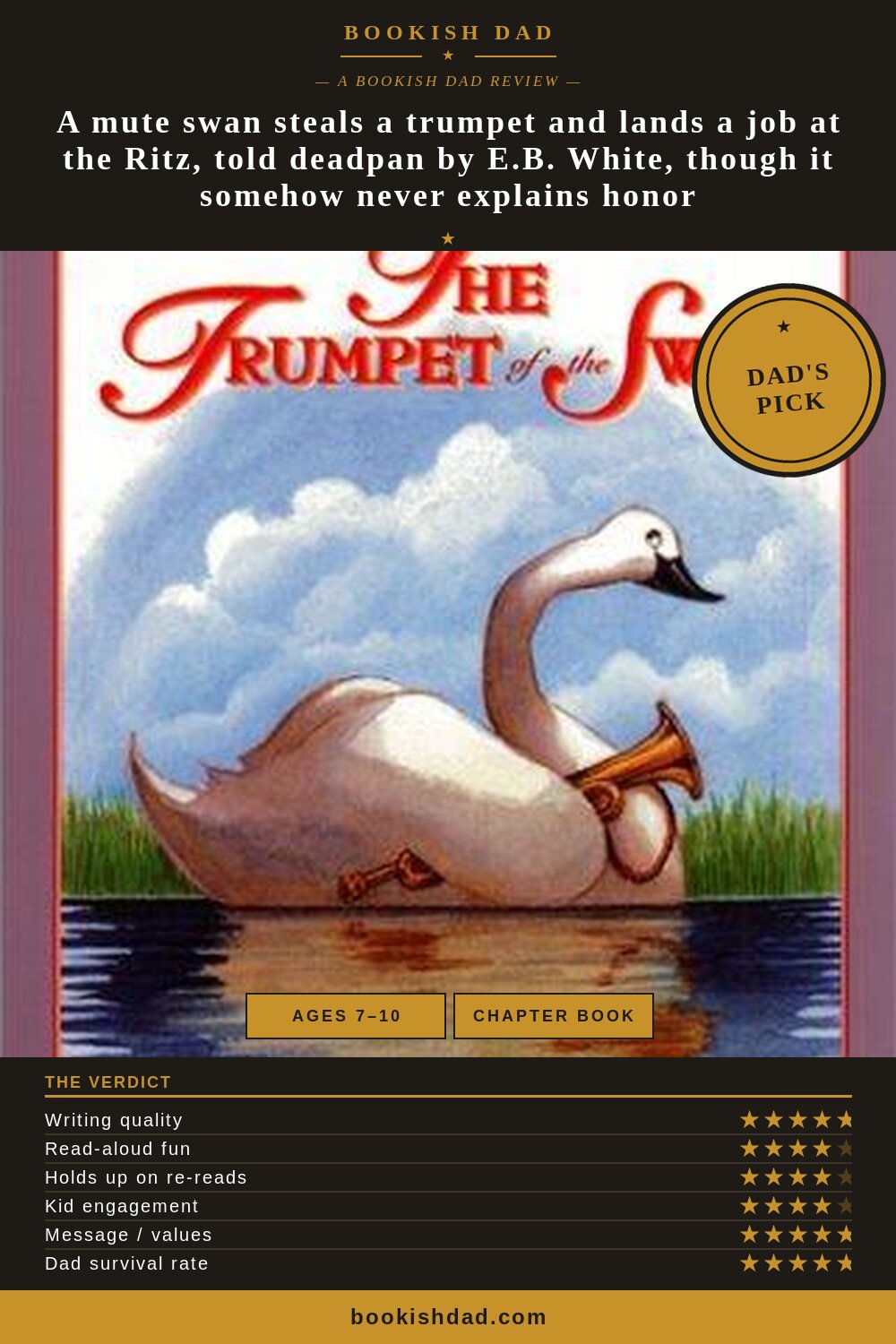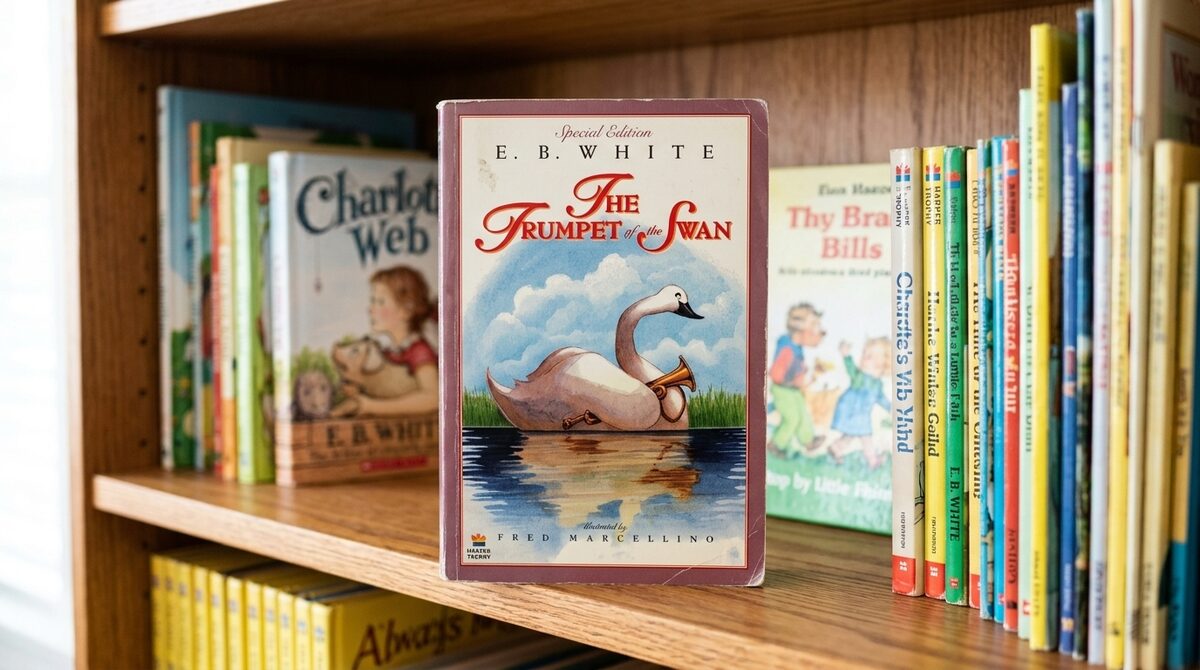

E.B. White wrote three books for children. As a culture we handed one of them a permanent seat at the head of the table (correct), gave the mouse one a movie franchise, and then agreed to never mention the swan again. I would like to formally appeal this decision. I read Charlotte's Web as a kid and it still owns a piece of me; it also makes me cry in front of my children, which my daughter has weather-related opinions about. The Trumpet of the Swan makes nobody cry, asks nothing of your tear ducts, and is somehow the White book my kids talk about at breakfast. It's the loose, funny, slightly ridiculous one, and I don't understand why nobody handed it to me in 1992.
The premise sounds like a bit, and White plays it dead straight
Louis is a trumpeter swan born without a voice. His father, a magnificent windbag of a swan who cannot say anything in fewer than four sentences, promises to fix it, and his solution is to crash through the window of a music store in Billings, Montana and steal an actual brass trumpet. That's the book. A swan learns to read and write at a human school, plays taps as a camp bugler, works the Swan Boats in Boston, stays in a private suite at the Ritz, and takes a $500-a-week nightclub offer in Philadelphia, and White reports all of it in the same calm, factual voice he'd use to describe a barn. That deadpan is the whole engine. The sentences are clean and unhurried and never once wink at you, which is exactly why an eight-year-old accepts a swan with a salary as ordinary news. Nobody wrote a plainer beautiful sentence than White, and this book is full of them, stretched over a plot that is, objectively, unhinged.
The father swan is also the best read-aloud gift I've been handed in months. I gave him the voice of a small-town mayor at a ribbon cutting, all rolling vowels and unearned confidence, and I regret nothing except that I now have to do it for the rest of the book's natural life. My son had zero interest in swan romance but total interest in the trumpet parts; by night four he'd fitted a paper towel tube into the bedtime routine and was providing his own brass section, which is not what taps is supposed to sound like but is close enough for 8:10pm. When we got to the chapter where the father swan returns the money, gets nicked by the storekeeper's shot, and faints at the sight of his own blood, my son reenacted the faint in stages on the bedroom rug, checking between stages that I was watching.
My daughter audits the crime
The moral spine of this book is genuinely good, and my daughter stress-tested it the entire way. Louis feels real guilt about the stolen trumpet, so he works: camp bugler, Boston, Philadelphia, a hundred dollars in a waterproof pouch around his neck, all of it aimed at paying back the music store for the trumpet and the window. That's a whole arc about debt and honor that never once stops to explain itself, which is why it works. My daughter ruled early that the theft was wrong "even for a bird dad," tracked the repayment plot like a loan officer, and when the storekeeper fired at the swan who was literally arriving with the money, she said "he got shot for returning it," in the tone of someone filing a complaint with the universe. She also had questions about the scene where Sam splits Louis's webbed foot with a razor blade so he can play more notes. Specifically: "doesn't he need that for swimming?" I did not have an answer. White apparently didn't feel he owed us one either.
Engagement-wise, this one split my kids cleanly along their natural lines. My daughter stayed for the whole run and treated the Serena romance and the Philadelphia Zoo standoff as legitimate suspense; the deal Sam strikes to keep Louis and Serena free got an approving nod, which from her is a parade. My son treated it as a highlights package (trumpet, faint, more trumpet) and drifted during the migration stretches, which is fair, he's four and there's a lot of Montana in this book.
Re-reads, survival, the whole ledger
As a read-aloud it's a pleasure with one honest caveat: the father swan's speeches run long, and around night seven you'll be performing them at slightly higher speed than White intended. That's the full extent of the toll. Chapter books like this don't get the picture-book death-by-repetition treatment, so my survival rate here is excellent, and I'd start it over tomorrow without complaint, which I cannot say about most of the basket. Re-read prospects are real too; my daughter has already gone back to the camp chapters on her own, and the ending, where a grown-up Sam hears Louis's horn across a lake years later, is the kind of last page that improves once you know the whole road that led there. It got me a little, honestly. Not Charlotte's Web got me. But something in the same weather system.
The message, if you want one for the fridge: the kid who's different isn't fixed, he's equipped, and then he goes out and settles his accounts. White never says any of that out loud. He just has a swan buy back his own trumpet, and lets your kids do the math.