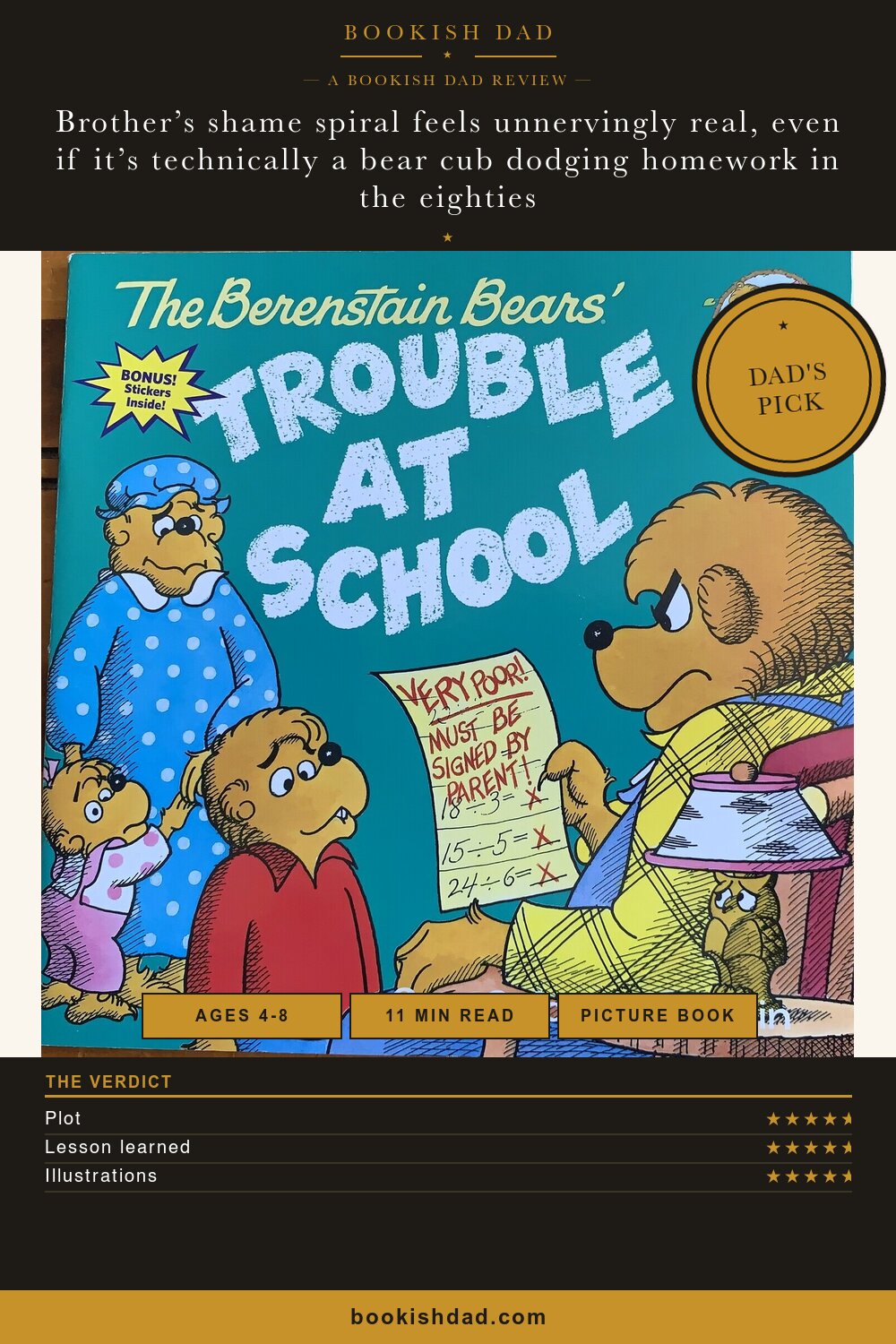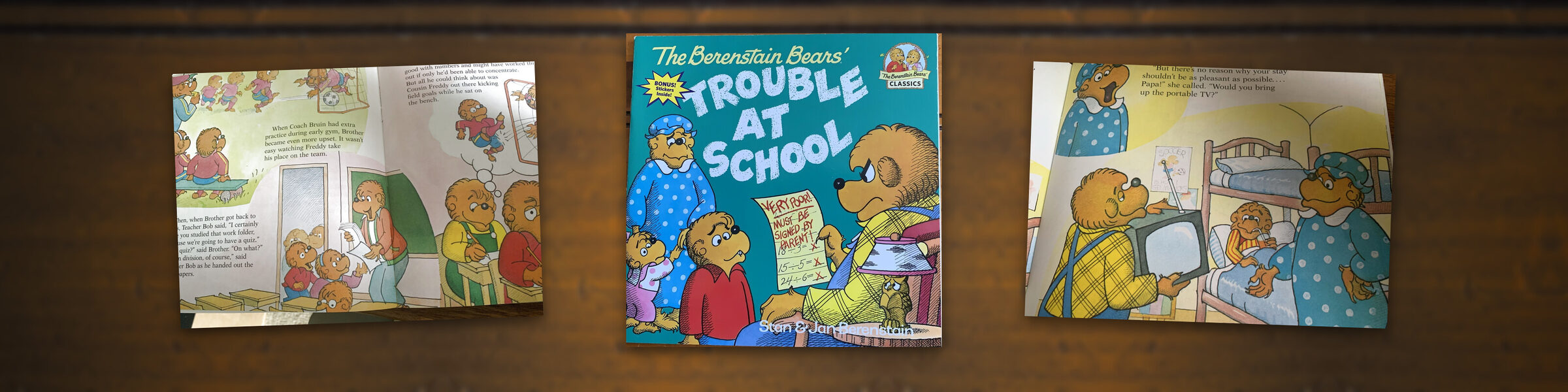

The plot is really straightforward. We have a very realistic scenario: Brother gets sick, misses school as a result of it, and then falls behind. That's something that all kids are going to experience at some point. They're going to miss school, and they're never going to be super motivated to do any take-home work packets. Even if you go on vacation, it would be kind of the same way.
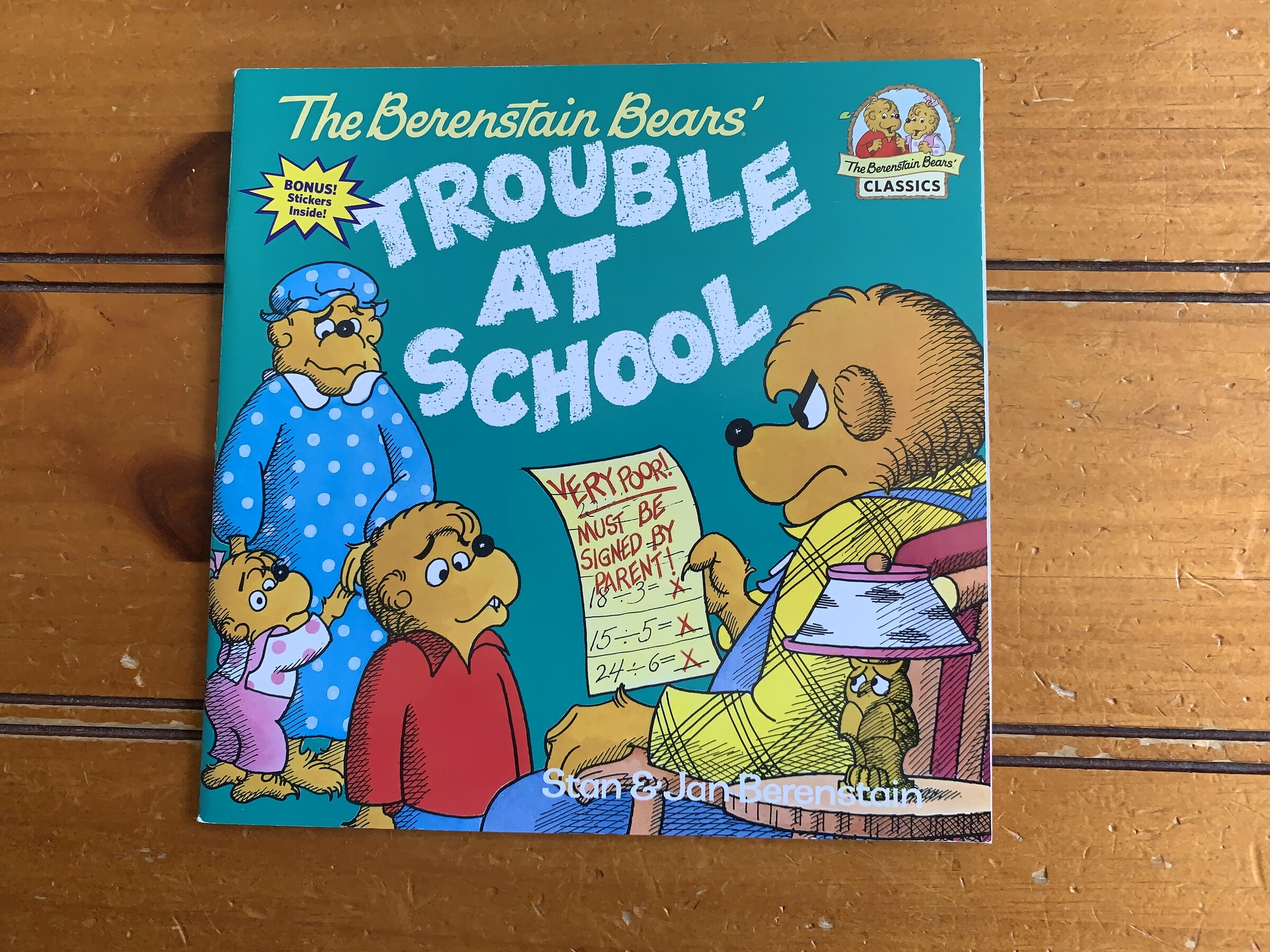
My kids sit through this one. They ask questions about it, and the questions are funny: why would Brother skip school? Then I can pat myself on the back. If my kids ever get in bad trouble, hopefully at least they don't skip the bus and go MIA on me. I don't know, maybe that's just what they say while reading this book, and it would be different if it was them. Either way, this is definitely a Dad's Pick. It's one of the best books in our collection.
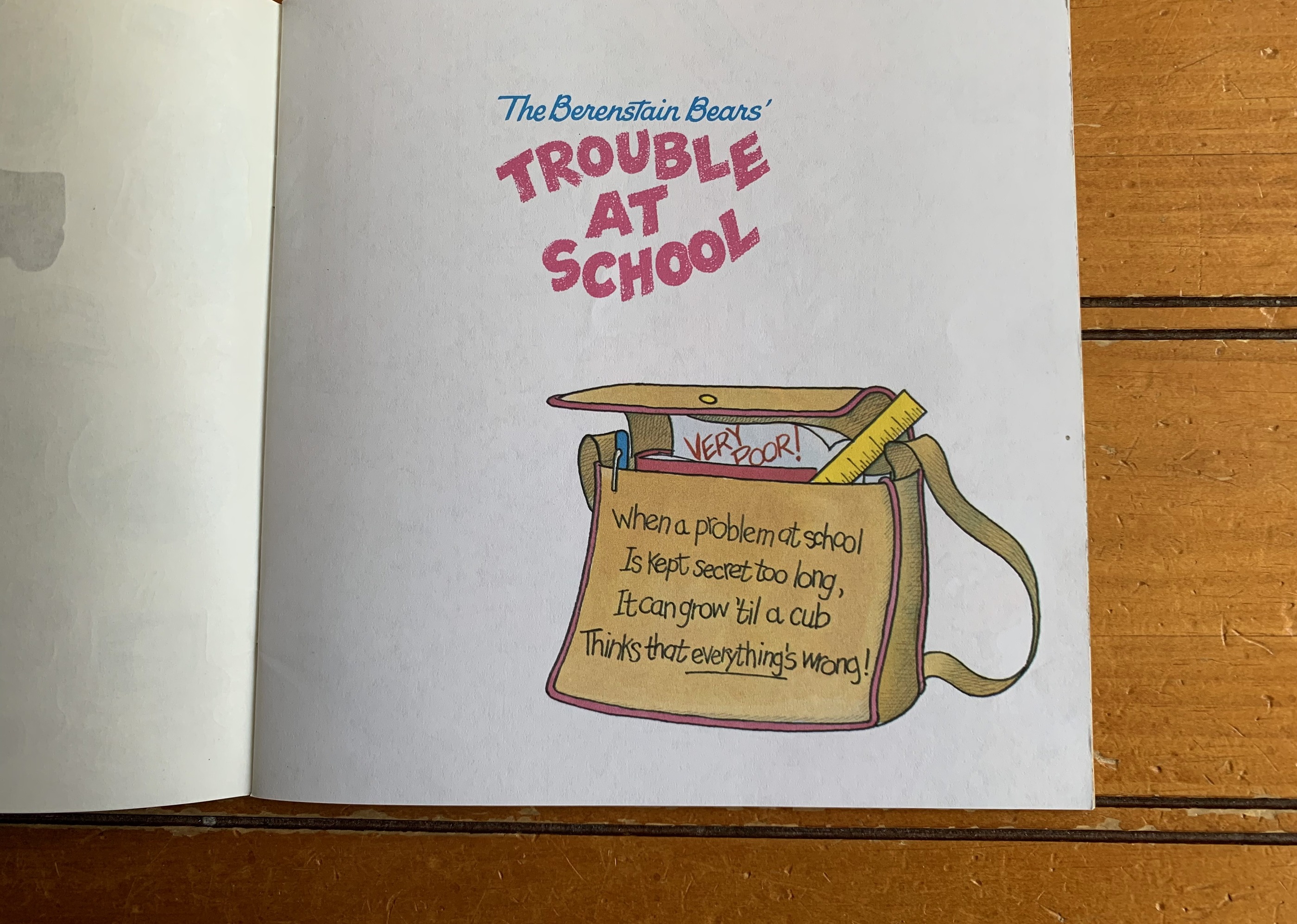
The Opening Rhyme
Top tier rhyme, top tier foreshadowing, and we get a "'til" in there for icing on the cake.
Obviously he gets a little unlucky. He gets slammed with a quiz on the first day back. Maybe the teacher could have been like, "Oh, Brother Bear, you missed class. Maybe you sit this one out, study, and then you can take it tomorrow." But back in the '80s, I'm guessing there wasn't any type of specialized student treatment like that going around.
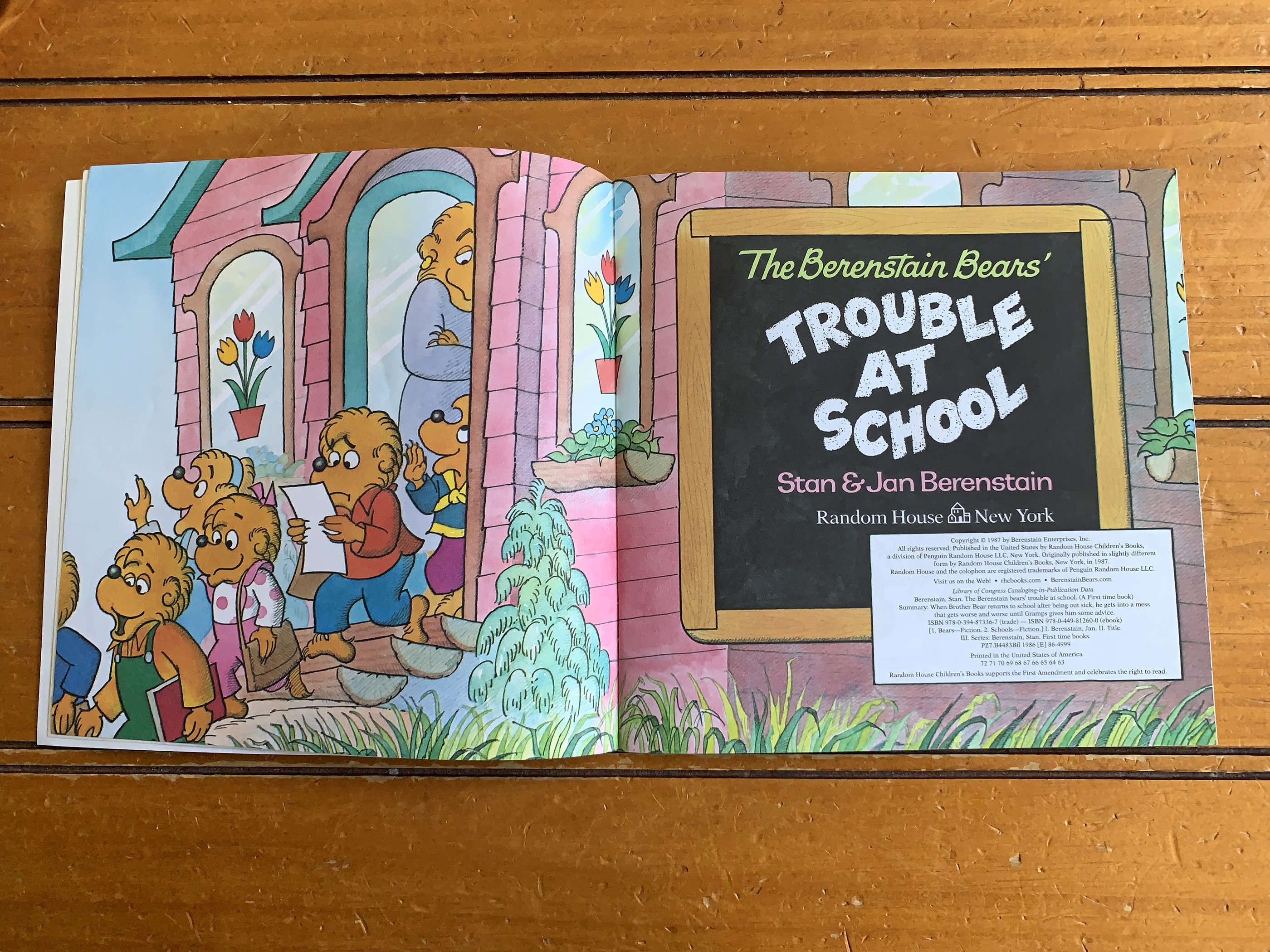
The Title Page
Brother Bear looking concerned around all the other cubs who seem to be doing well. But did the teacher end up saying everybody did poorly on the quiz?
Problems stacked on problems
Then very quickly, it spirals on Brother. He misses practice, Cousin Freddy ends up taking his spot on the team, and it all just goes downhill from there. Then he takes that extreme step, and this is maybe the most interesting part of the book: he's so mad, he straight up just doesn't even get on the bus. He's totally self-defeating himself here. Now he's going to just stack problems on problems. Not only did he fail his test and not tell his parents, now he's going to get an unexcused absence at school. You can only imagine what Mama and Papa Bear would do if they got a call from his school saying, "Hey, he's absent. Where is he?" Apparently that never comes through. Maybe they just assume he's sick, I guess, especially considering he'd just gotten over being sick.
So we get Brother probably at his lowest moment at any point in any of the books. He's lashing out, he throws the paper airplane down, and then works his way to Grizzly Gramps. And that's where the healing process starts.
Grizzly Gramps starts the healing process
I think this is where the book stands out to me: there's something unique about the relationship between grandparents and kids, generally speaking. There's going to be some level of disappointment there, but it's not the same way a parent would view the situation. A parent, we've all been there. I've been there: anger comes to mind first. I'm not saying that parents are going to scream at their kids as a result of this, but you'd skew more towards punishments. What the grandparents can see is that different perspective of teaching a lesson.
Grizzly Gramps immediately identifies the situation, that Brother got in over his head, and instead of reaming into him, takes him out and explains a mistake of his own. I think Brother is able to really understand that.
It's also a way to connect. Not everybody's perfect. Grizzly Gramps is somebody Brother probably looks up to as somebody who doesn't really make mistakes, and all of a sudden he's hearing a truthful, heartfelt story from him. He's able to connect a little bit more with the idea that it's okay to make a mistake. What really matters is how you react to it. What is the next step you do?
As a parent, it's very clear that that's the right way to go about it, and it's something that I've now used multiple times for my kids, where they might do something wrong. Let's say they break something by not being very careful, and I have a lot of those stories that I could pull from in my background. You can start with, "Oh, when I was your age, I did the same thing, and maybe I didn't react to it very well, and it ended up coming in and biting me, and this is your opportunity to do better."
And then of course he goes back to his parents. Mama and Papa definitely aren't happy. This is a very realistic part of the book; there's just no way the parents can not be stern. It does seem like Papa Bear was able to restrain himself somewhat due to the help of the cookies, which is probably very much in character for Papa Bear, although it's also in character for him to do a little bit of screaming here or there.
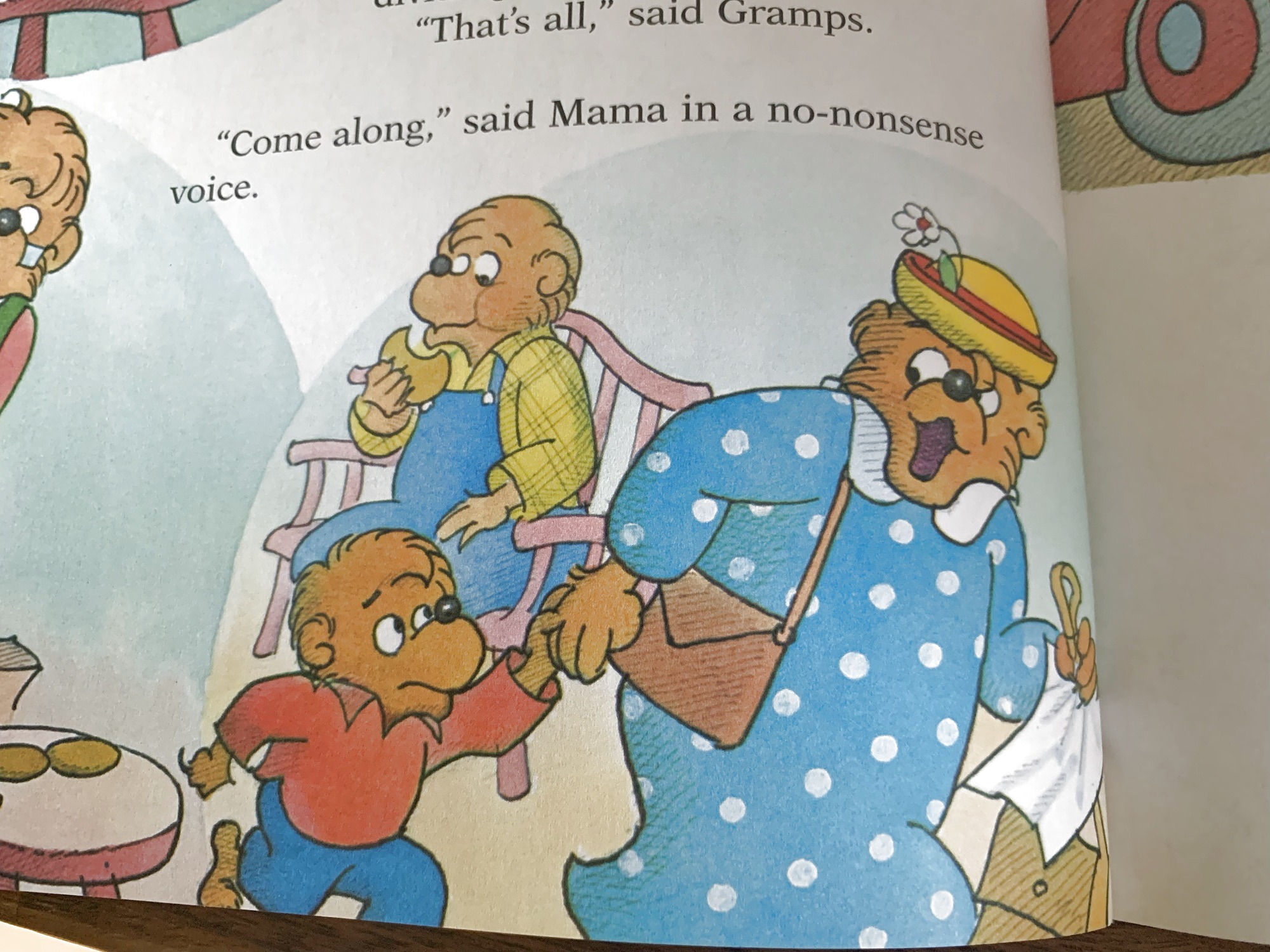
Thank goodness for Grizzly Gran's cookies, otherwise we'd have gotten a signature Papa Bear meltdown.
And then we get the nice happy ending wrap-up. Brother gets a second chance on his test, he gets a second chance at soccer, and happily ever after. I get why they do the nice tidy wrap-up. They want it to end on a happy note for Brother Bear, and obviously this isn't always how it plays out. Sometimes you just have to own the mistake. Maybe that means you just get a permanently bad grade on that assignment, or with soccer, maybe you don't earn your spot back on the team immediately.
But kids want to connect everything together. They want to connect this good lesson of "do the right thing and good things will happen for you as a result." If they had the same story, where Brother does the right thing and then bad things kept happening to him, it doesn't really enforce the fact that you should do the right thing just because it's the right thing. So I understand why they did that, even if it is a little bit rosy at the end.
Freddy is also almost the ultimate loser of the book, in a way. He gets his starting role, then he gets yanked and badmouthed by Coach Bruin at the end there, maybe not in Coach Bruin's best coaching moment. And then Brother makes maybe the sassiest remark of the whole book, saying that Coach Bruin made a mistake by putting in Cousin Freddy. As a parent reading aloud, I laugh at that. I think sometimes they struggle closing out books. You always want this moment where the lesson is landing at the end, and they have a very Stan and Jan Berenstain way of doing this, and sometimes it works and sometimes it doesn't. I see what they're doing there, but at the same time, it's a child soccer player calling his coach out for a mistake, and I don't really know if that's the appropriate thing for Brother Bear to be doing. Anyways, I am glad he made it back on the soccer team, even if it comes a little bit at Cousin Freddy's expense.
From a plot standpoint, this is a five out of five. It's a longer book, a 10, 11 minute read, but unlike some of the previous ones we had done with a lot of filler, all of this felt really important to the plot and kept things going. Every bit of it is worthwhile.
A moral I can lean on myself
We have a really straightforward moral of the story here, said very clearly, and I do think it could fit a lot of different situations that aren't necessarily exactly school. The feeling is when you get in over your head, maybe you fall behind on something, it feels like insurmountable odds to get through it, and maybe you do some self-defeating type of behaviors instead of trying to take the correct road and, as they say in the book, work your way back to the right path.
For a moral, five out of five. It's not an unpopular topic, but it's less popular than some of the other typical SEL books out there, and it's a very hard one for kids to deal with, because everybody's going to run into it. It's a hard thing to admit mistakes, finding the correct path, using a support system around you to get back on it. The way they approach it, beginning to end, is just covered really well. And honestly, it's something that I could even lean on as a parent for how to handle these situations, let alone giving a kid the right tools for doing it. It doesn't have to come out when the kids are in the middle of a crisis like Brother Bear is here. Let's say there's a subject that's difficult for my kids at any given time; it could be pulled out for that. Just let them know that hey, it's not the end of the world, don't let it get to this point, and if you're in this situation, you don't have to implode.
Angry Brother Bear lines
Illustration-wise, this is a very strong book by them. Brother's the centerpiece here, so we get the full experience of him, from being really sick to this over-enjoyment of being home sick, which I think a lot of kids feel. Kids almost want a sick day at home. They get to skip school, they get pampered by their parents, and you see that on Brother Bear's face throughout. The pages with all the different fun things Brother gets to do during his day sick are something the kids always really liked looking at.
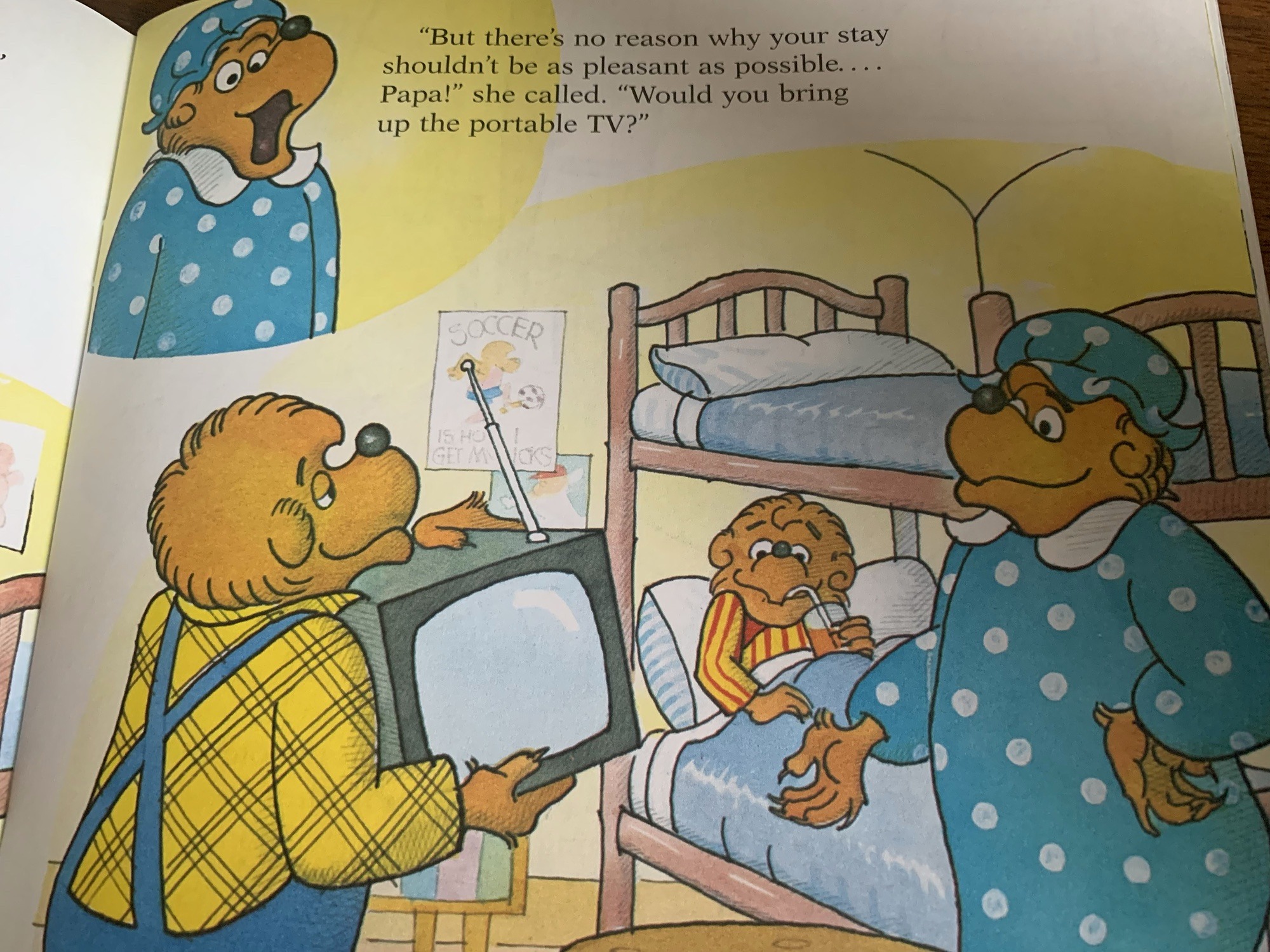
The Berenstain Bears were on the cutting edge of technology in 1987.
Then we get the nervousness as things go downhill for him. This daydreaming look on his face as he's picturing Freddy scoring goals when he should be taking the test, all the way to the sly look on his face as he's getting away from his parents while they look after Sister, who's getting sick coming home.
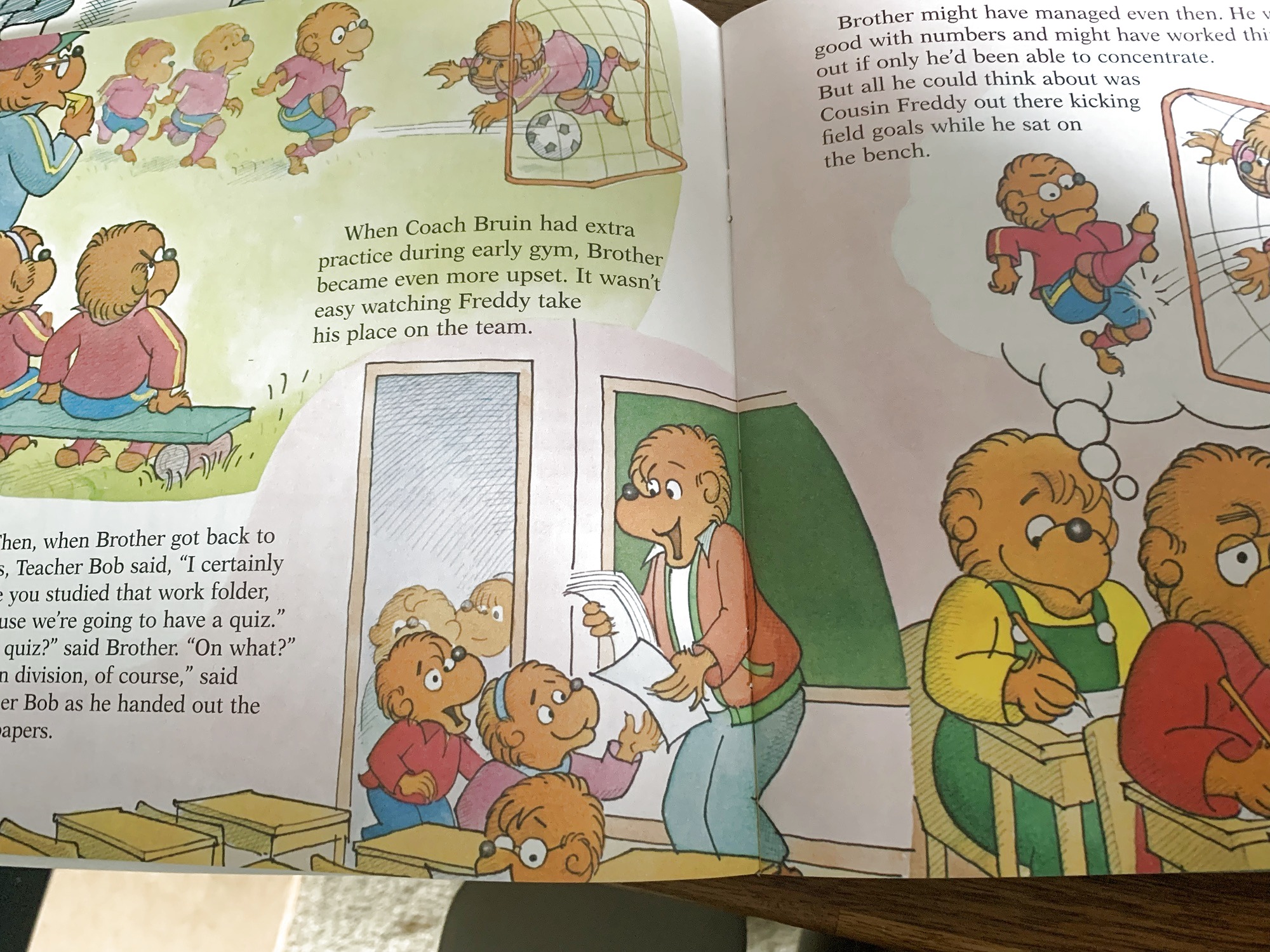
If Cousin Freddy was this good the whole time, maybe Coach Bruin should have been giving him more playing time to begin with.
And then just the downright angry Brother lines. V pointed over his eyes, stomping through the woods as angry as he gets. It's the angriest face you've ever seen from any bear, outside of maybe Too-Tall Grizzly's dad, Two-Ton Grizzly, who gives us a pretty mean look in a future book. We'll get to that. For Brother Bear in particular, this is definitely the maddest we've seen him. Stomping through the woods, we also get the reactions from all the animals, who are like, what is going on here, fleeing the scene or just watching with stunned looks on their faces. The bears are anthropomorphized a little here, and even the animals are more aware than normal. I think that's funny.
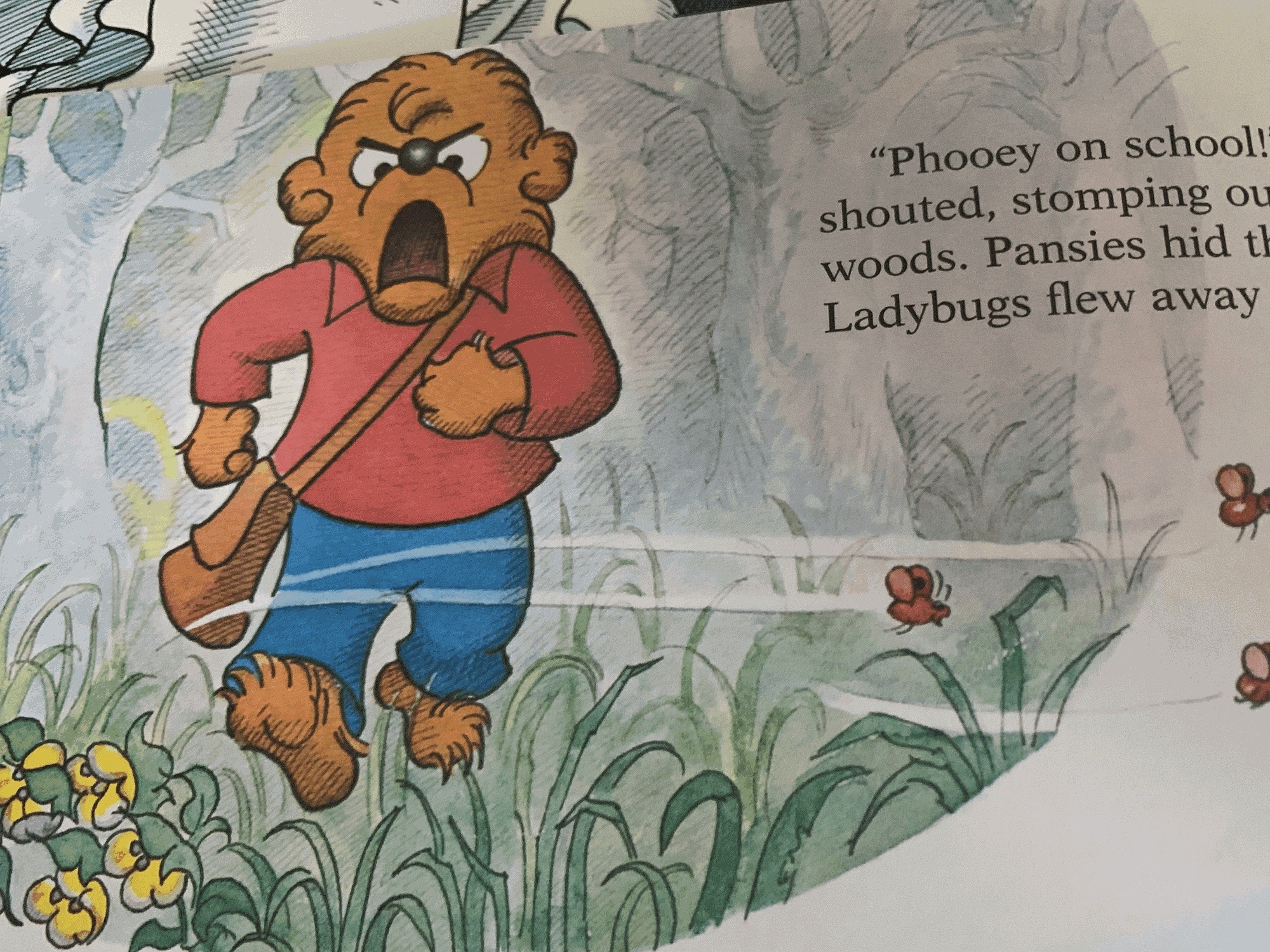
Brother Bear MAD!!
Then all the way to Grizzly Gramps and Gran and that grandfatherly, grandmotherly type of look on their faces. They're not mad. I think they're thinking of this as an opportunity to learn a lesson.
And we get the look at the dingy old wagon in the swamp. It's got moss all over it, it's broken down, you can tell it's been there for a while. They just really went all out here. Every single page has multiple images on it, all of them are really detailed, and they add a lot to the story. While there's no standout thing for a kid to have imprinted on their mind forever, it's good from beginning to end, and I think it's really one of their overall better works.
An 11-minute picture book read-aloud for ages 4-8, none of it filler. 5/5 and a Dad's Pick, best for kids who've fallen behind on something and think it's the end of the world. So I really enjoy reading this one, and the kids always enjoy it as well, even if it's not necessarily a lesson that they're needing to directly deal with. It's just a nice story to listen to.