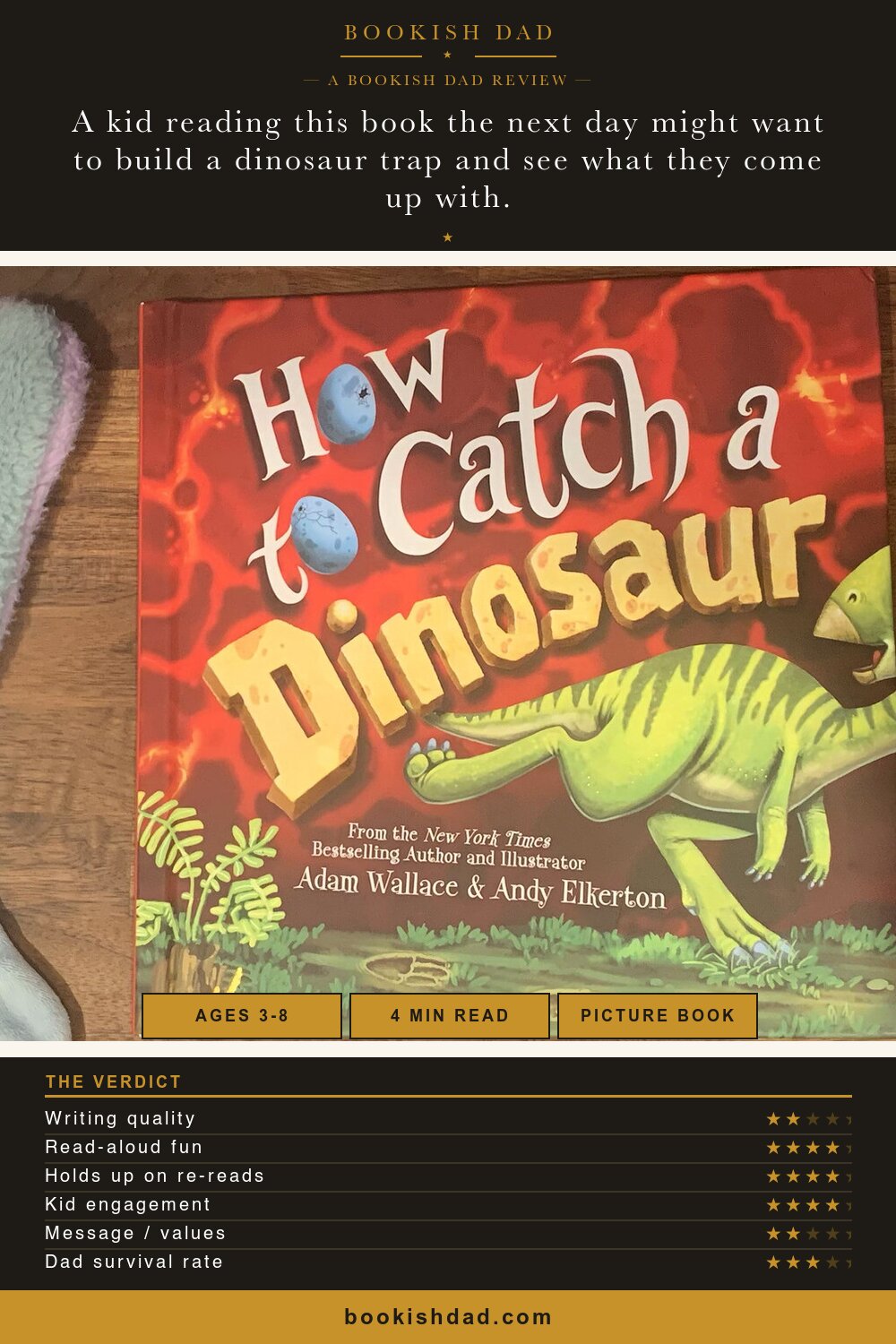

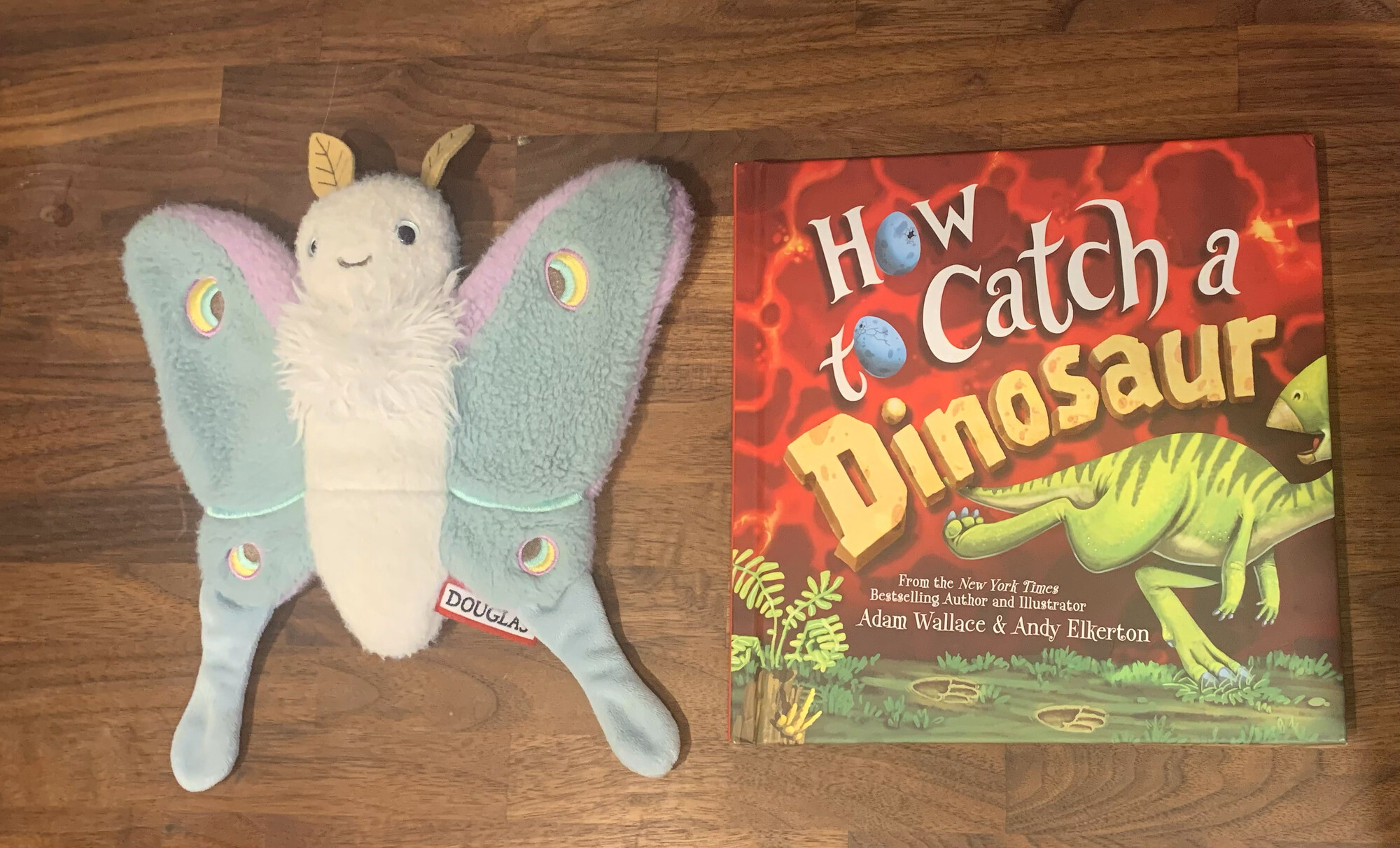
There's a lot of book series that take certain topics and just provide their own unique flair to them. One really recognizable version of this is the holiday style. That'll just be some series of books that covers each of the holidays with its own special characters or style of plot points. It's a nice way to sell books because people are always going to be buying books for holidays. It almost reminds me of the Danny Go style with his music videos; he pretty much has a music video song for every single holiday and in some cases multiple ones, because kids are always in some seasonal mode. The how-to series by Adam Wallace and Andy Elkerton is similar to that. Maybe it started out that way if their first one was How to Catch a Leprechaun, but now it's become more of a mythical creatures type of series. We have a couple of these books: How to Catch a Leprechaun, How to Catch a Dinosaur, How to Catch a Unicorn. There might be one more, How to Catch a Bigfoot, I think.
I don't know where we initially found the how-to books. I know How to Catch a Dinosaur wasn't the first one we got. I believe it was How to Catch a Leprechaun. I'm actually going to look it up right now. It looks like How to Catch a Leprechaun was the first one published, so maybe that's their signature one. But I picked How to Catch a Dinosaur off the shelves for this review.
Each page ups the ante
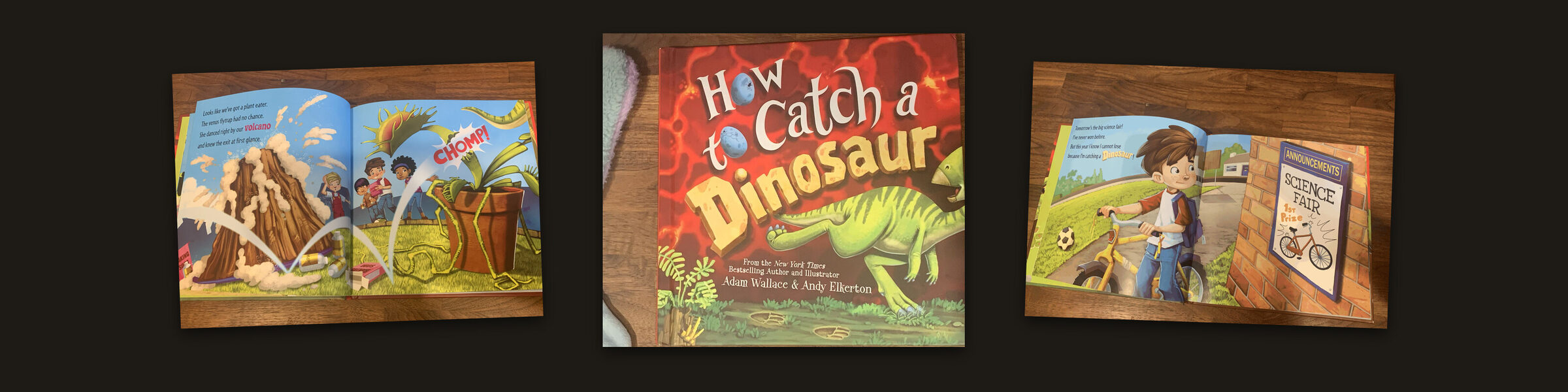
In this story, there's a boy. He really wants to win the science fair and he's convinced that the way he can do it is by catching a dinosaur, and he won't be convinced otherwise. We get a glimpse of his room where he has all types of dinosaur toy figurines and stuff on the wall. My personal favorite is the megalodon model he has perched on his dresser. The book just goes page by page while the kids try various plans to catch the dinosaur, and that's really the heart of the story. Each page is upping the ante in some way, so when kids are reading this they sense they're in that same mode: okay, we tried this, it didn't work, we've got to get more serious, let's try this. Each page gets crazier and crazier with the ideas, and of course the clever dinosaur is always just one step ahead, always able to escape. We always see a tiny bit of the dinosaur in each of the pictures, so we're almost getting teased that, oh, you almost had them.
I feel like this is the case with kids a lot of the time. They'll think they see something. Oh, I caught a glimpse of it. Their imaginations run wild, and they can believe it is whatever their mind makes up to believe. When I read this book, I think of it through a child's imagination perspective. There's not a real dinosaur there. Even though the dinosaur is drawn in the world, even though the dinosaur is blasting through all of their traps, I still think of it as a child's imagination playing some game, and they're caught up in this and they believe all of it's real. Then at the end, it's almost that reality check when the game ends. We didn't actually end up catching it. And then there's always the pick-me-up at the end: in this case they still won the science fair, because some of the contraptions they had built along the way were good enough to place well.
At the very, very end of all these books we get the big payoff: we get to see whatever mythical creature was there. Here the dinosaur is sitting in some underground-ish cave, reading the newspaper about how these kids won the science fair, and looks happy. We get teased the whole time with this animal escaping the traps, only ever seeing the backside, and in all the books you get to see them at the very end, happy, not exactly smug for escaping. It's almost like this nod at the end: oh, actually dinosaurs are real. I kind of like that bit, and it's a nice way to close out the books.
Trap quality report
What matches the story really well is that the illustrations in the book are really, really vivid. Each page is a full spread of whatever the kids are up to at any given moment, and it really takes hold once the kids start trying to catch the dinosaur. We get to see the traps they built. You see the disappointment on their faces. You see how the dinosaur broke through, through markings, footprints, or parts breaking. As you flip, you want to spend extra time on each page to really see, okay, what is it they were trying to do here? How is this expected to catch the dinosaur? Some of them are ridiculous. Some of them are actually really good and you're kind of surprised. Some of them are just crazy. In this one they somehow emptied out a pool and put a whole bunch of slime in there, and somehow the dinosaur skips over the slime. It must be a very fast runner.
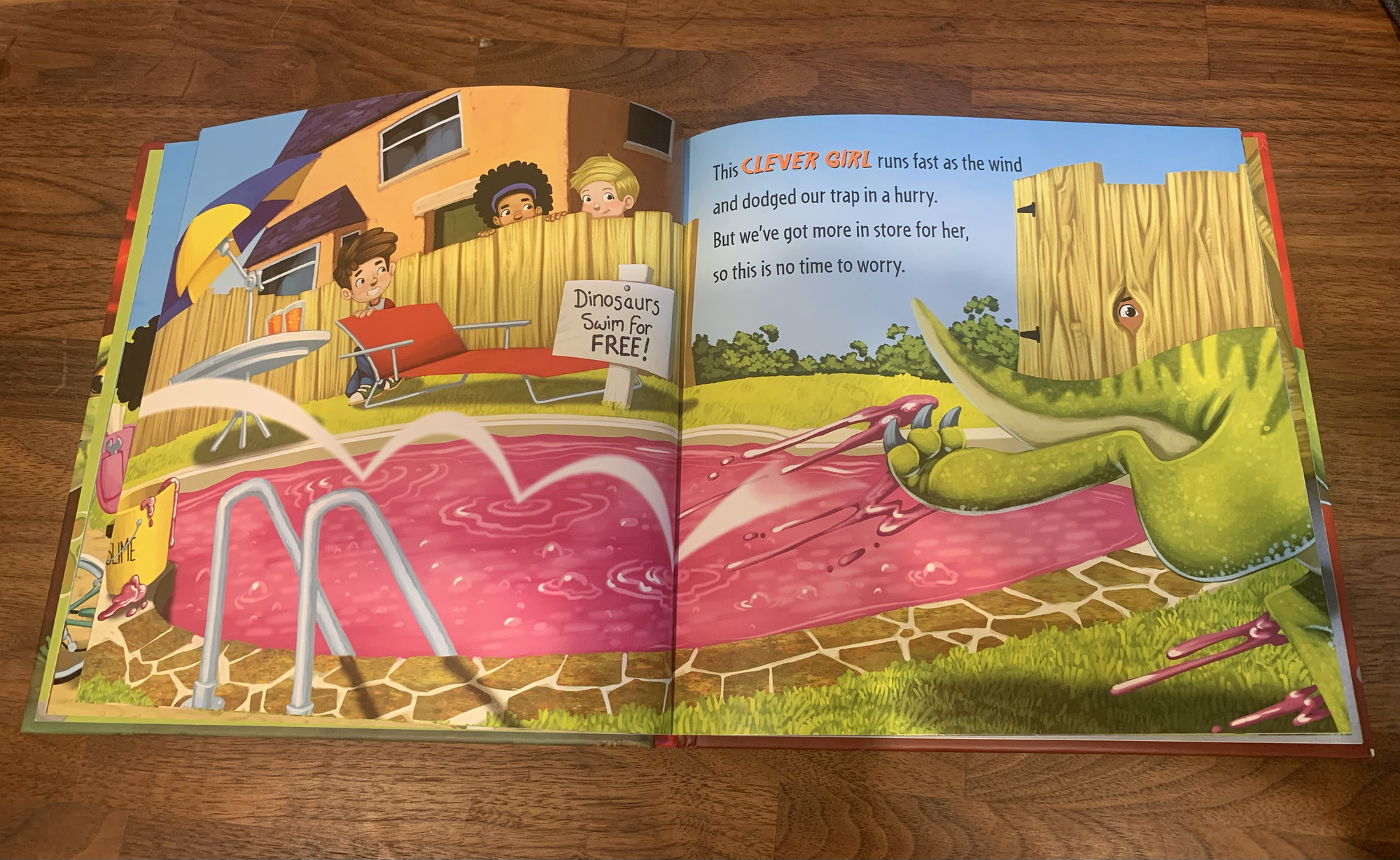
Bookish Mom is having a meltdown thinking about that much slime
It starts with just a cage with some bird seed in it. Then it goes to this volcano and Venus flytrap, the pool of slime, some magnet-related trap that actually looks actively dangerous for the dinosaur, possibly.
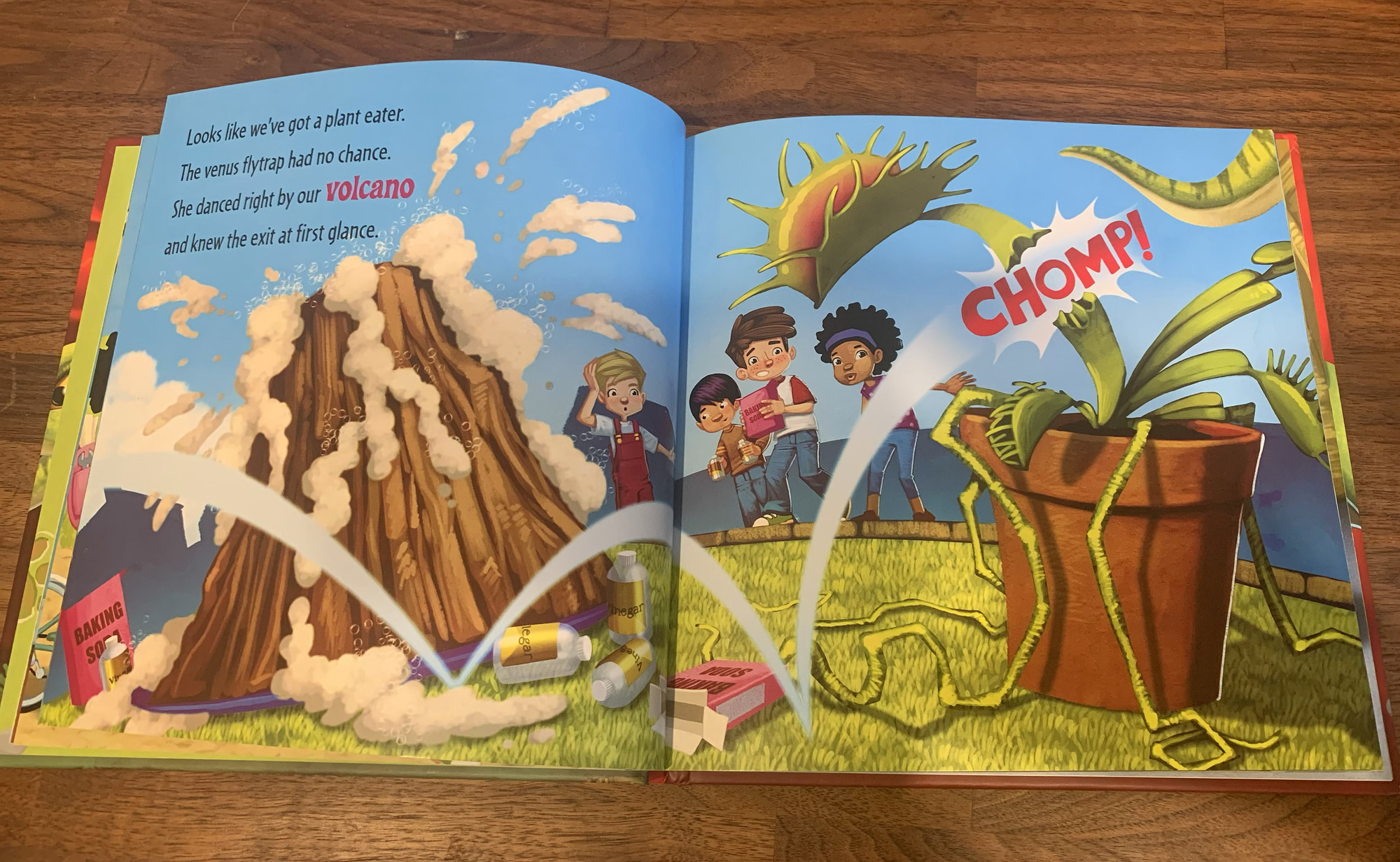
I have no idea how the kids expected this to work, but A for effort.
So where does this book fall flat for me? There's ones that maybe aren't quite as appealing. They're just trying to chase her with burlap sacks and the dinosaur tramples through the roses. And at the very end you get the robot, which it seems like they always decide to add at the end, some crazy robot. I don't know if it's the best book when it comes to making every page crazier and funnier than the last, but none of them are outright bad. We still get to see the dinosaur make some pretty daring escapes, and we still spend a good amount of time on each page just looking through it.
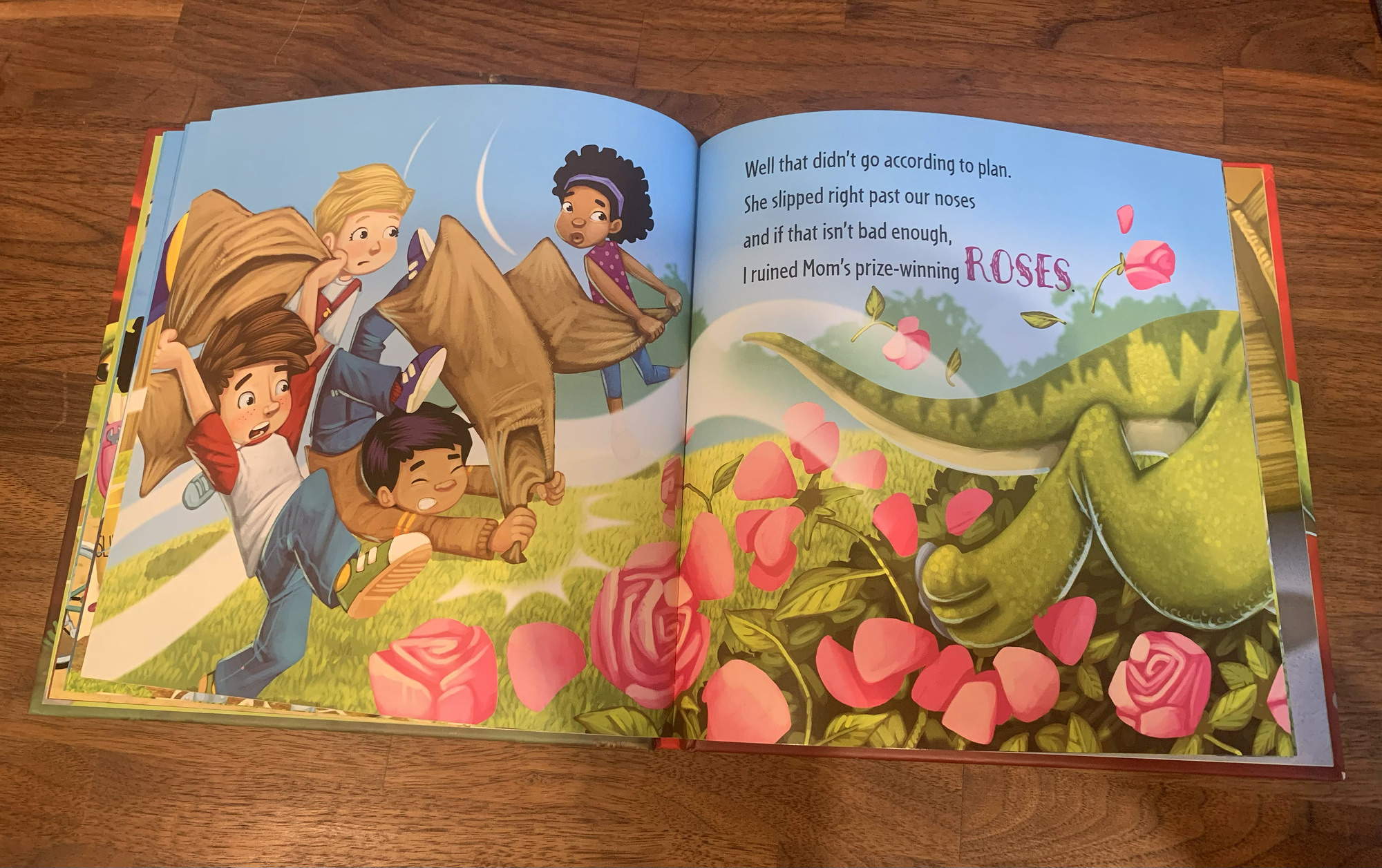
Not their most ambitious idea....
The rhymes are squeezed in, and that's fine
They make everything into a rhyme. It's definitely a rhyming book, but the rhymes are, without having a better way of saying it, not that great. There's some clunkier rhymes where they're clearly just squeezing things in. But I've thought about this before: let's say you took the same book and did the same plot, but without rhyming words. It would lose something, because it's a whimsical, playful book, and if you just had normal words there, it would lose some of that playfulness. Even if the rhymes aren't great, the playfulness they add to this adventure is a good match for all of it.
On the reading itself: that was about a four minute read. Readability is pretty high, and it's definitely a book I don't mind reading. It's not a long read, and it's not super annoying trying to figure out the right cadence to the rhymes. After a few reads, you can get it down. Dad survivability is probably a three out of five; it's never one that I'm going to complain about. And there's no morals in this one. It's just fun.
Who actually builds the traps
Child engagement on these books is always really, really high. I remember with the first one, How to Catch a Leprechaun, which I'll review at some point, our kids just ate it up. They pulled it out multiple nights in a row. We got millions of questions about whether leprechauns are real, whether those traps would actually catch them. And every morning there'd be some new leprechaun trap built. I even remember some of them. There was one with tape all over the ground and gold coins in the middle, some kind of adhesive sticky trap the kids were trying to set. They're really great books for that purpose. Here, a kid gets to think about their own ideas for how they would catch the dinosaur and how they would alter some of these plans. A kid reading this book the next day might want to build a dinosaur trap and just see what they come up with.
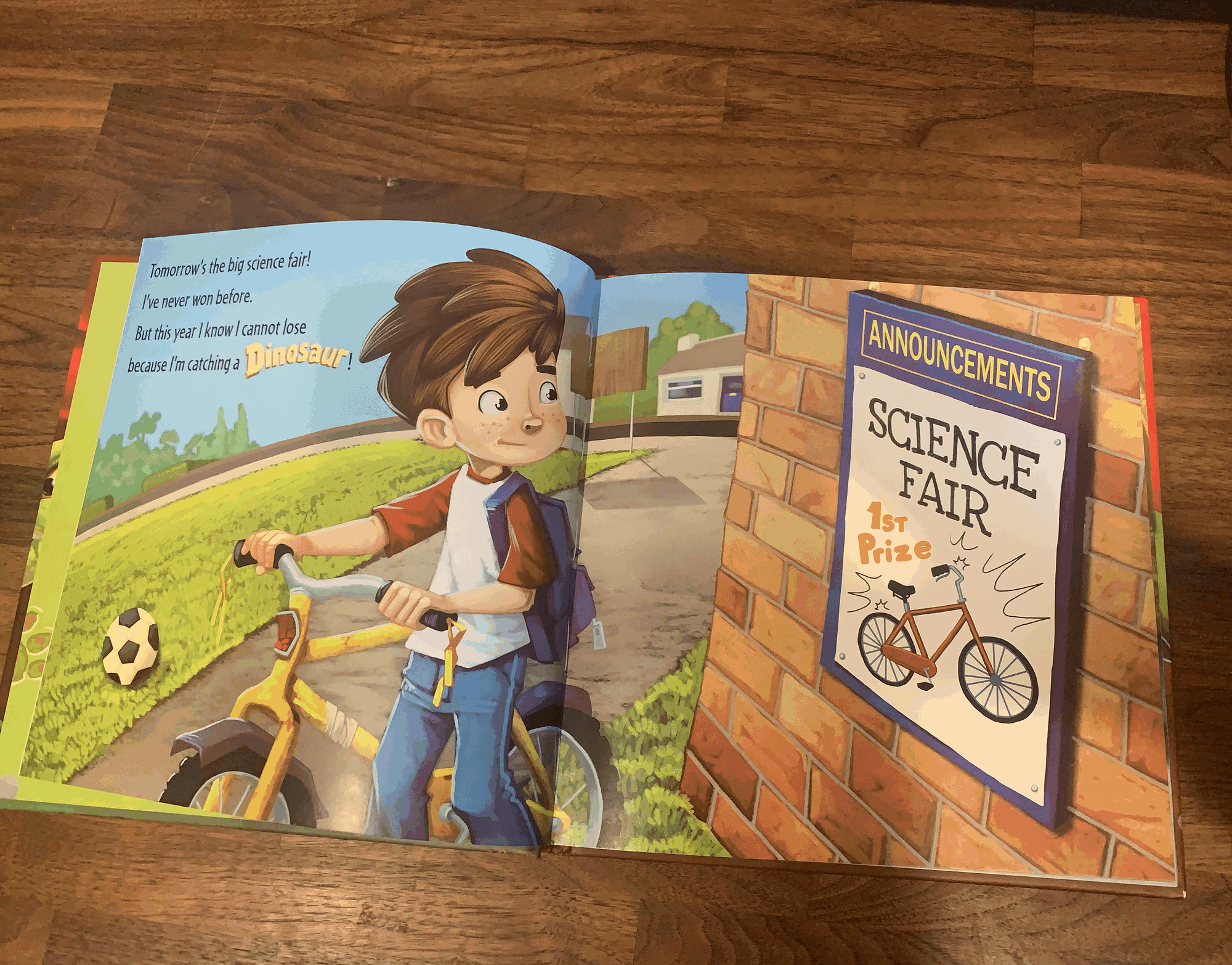
That bike honestly isn't that beat up...
The beginning of the book promises a first place prize of a bicycle, and we're shown this boy with a really beat up bicycle. By beat up, I mean he's wrapped some tape around it; it's still probably serviceable. At the end they won, and the boy gets his new bike. But the problem is he was working with a team of kids, and it's clearly this one boy who gets to keep the bike. Are the other kids okay with that? My kids want to know what is happening with that bike. How are they sharing it? How did they decide it's just that boy who gets it? Did the other kids get something? It's probably something the author didn't think was going to be a big deal, but in the Bookish Dad household, stuff involving fairness is almost always a big deal.
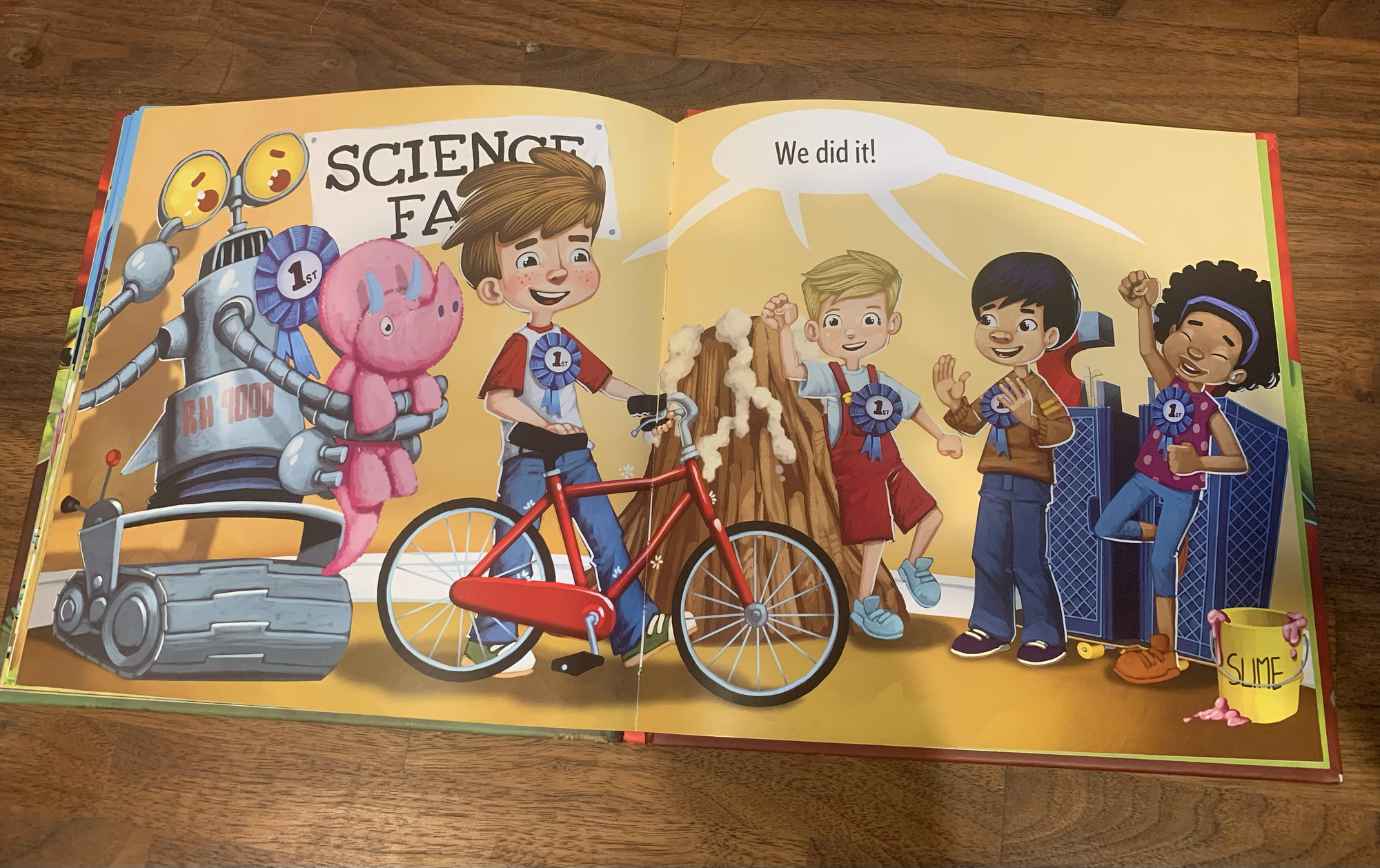
So, who gets to keep the bike?