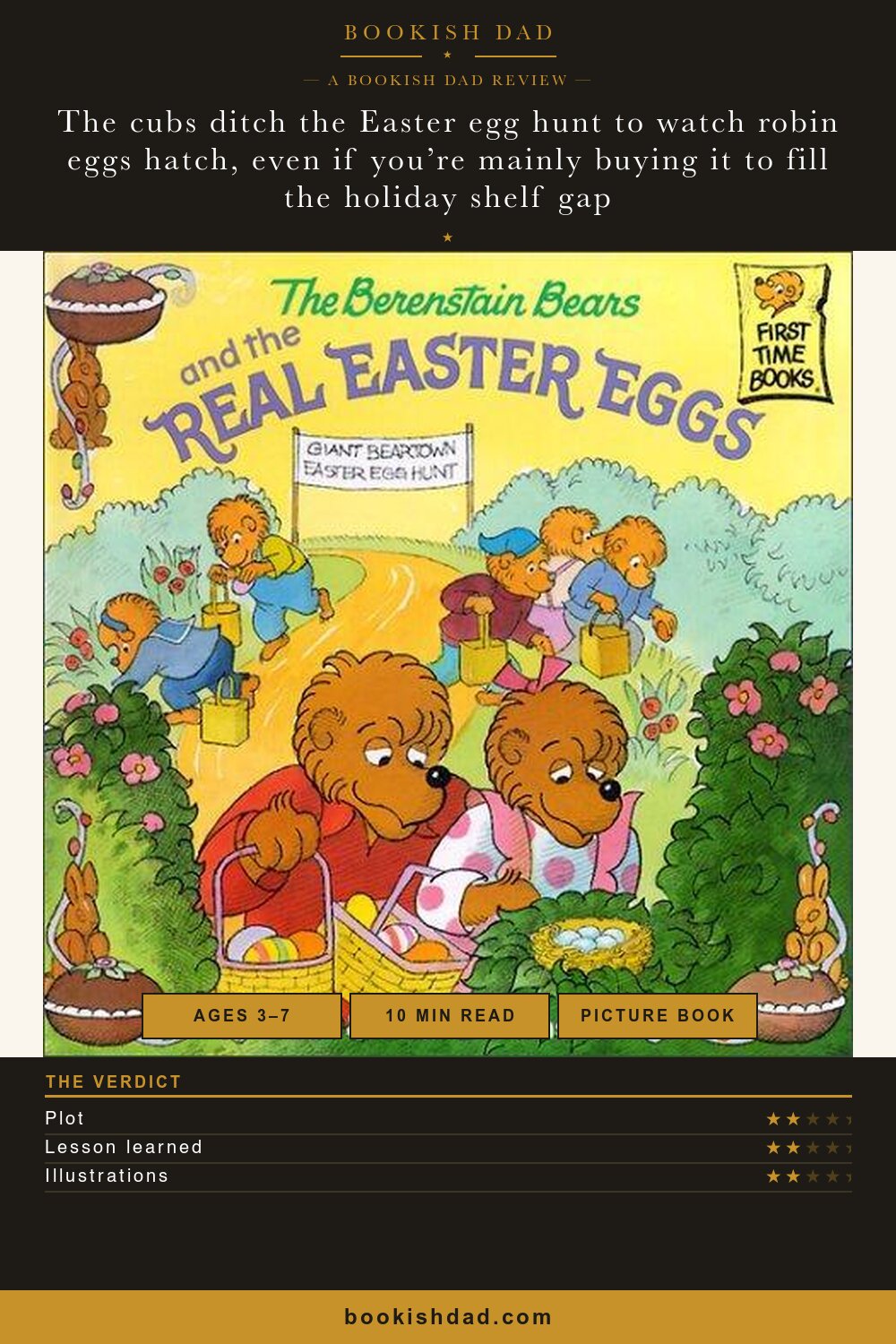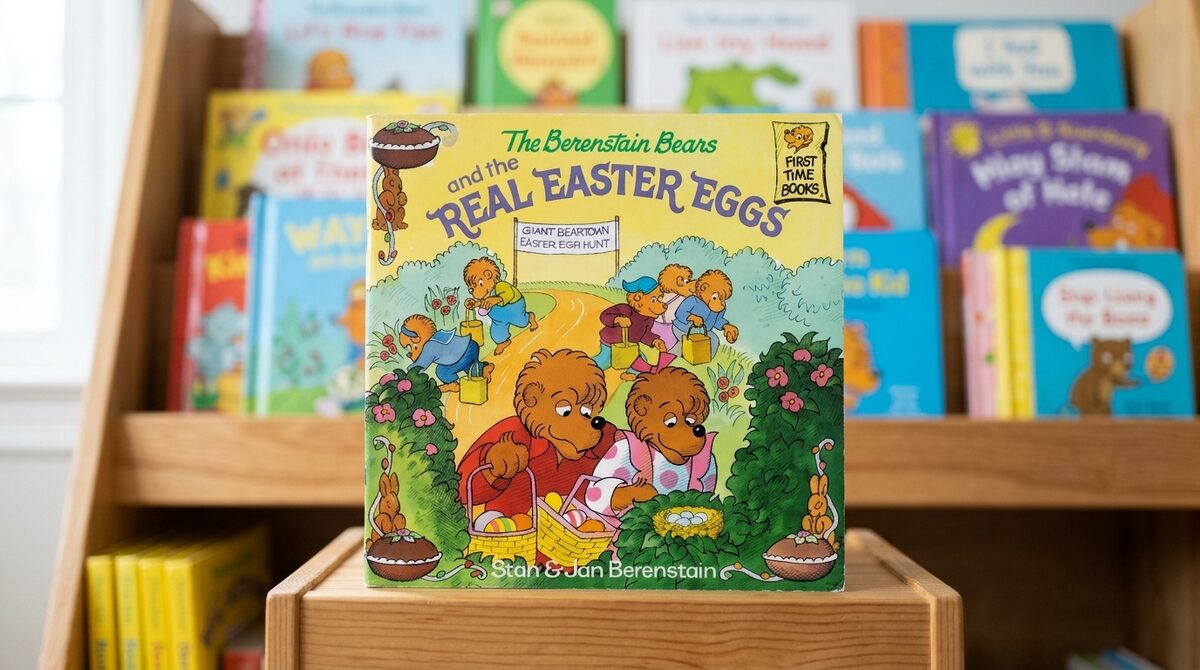

We own The Berenstain Bears and the Real Easter Eggs for exactly one reason: it has the word Easter on the front. When you build up a kids' book collection you end up shopping by holiday slot. You've got your Halloween books, your Christmas books, your Valentine's books, and at some point you notice the shelf has an Easter-shaped hole in it, and this book fills it. Will we pull it out on Easter? Probably.
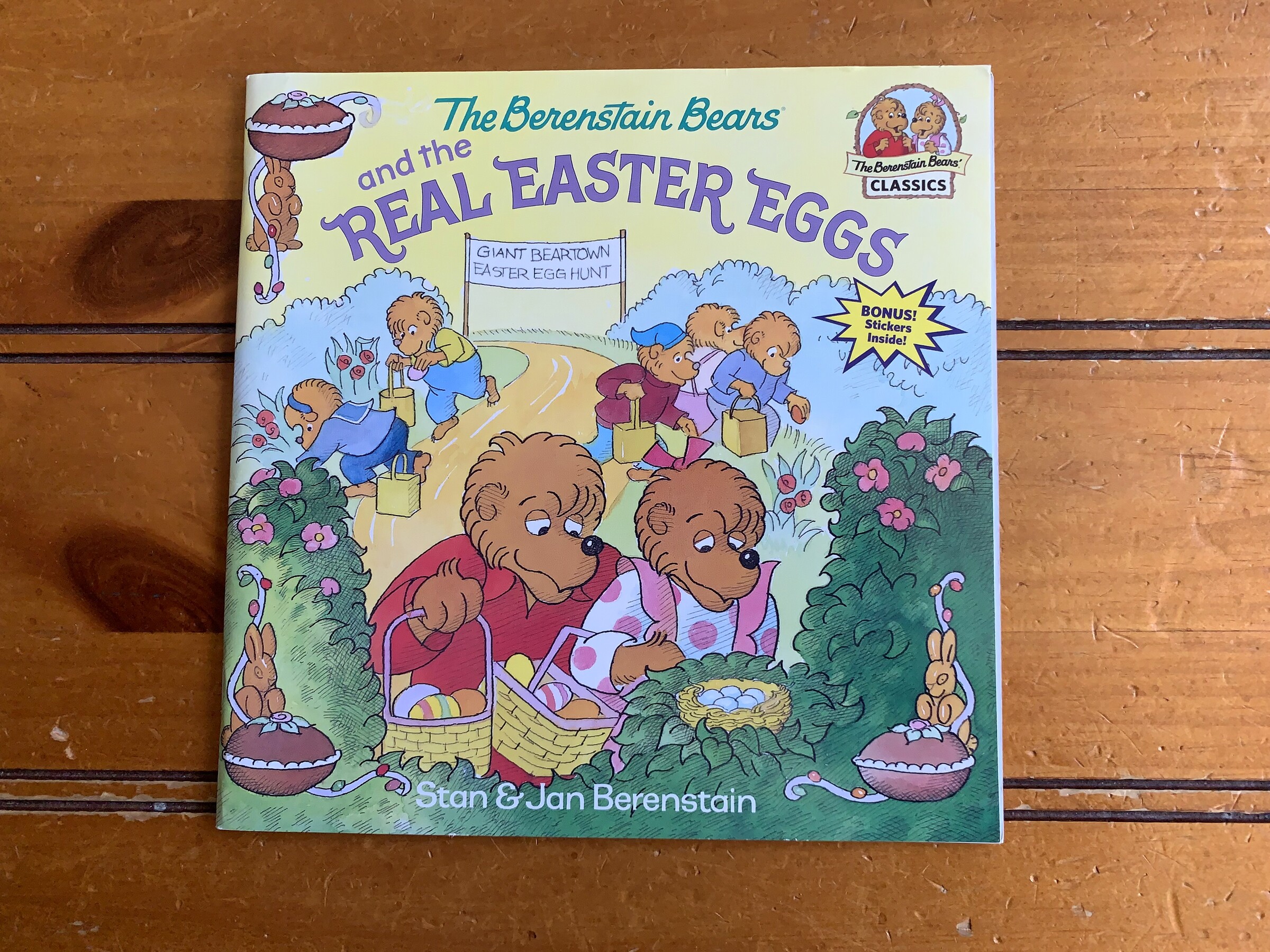
Let's start with the length, because I actually timed this read: 10 minutes and 30 seconds. That makes it one of the longer Berenstain Bears books we own, and unlike most of the others, a lot of that runtime is filler, especially up front. The book opens on Sister counting her Valentine's Day cards (23 of them) and announcing she wishes every day was a holiday so she could "get stuff every day." Mama, who'd been listening, gets preachy about how Thanksgiving is about being thankful and Christmas is about goodwill and Valentine's Day is about love and friendship. That is a long runway for a book that is supposedly about Easter.
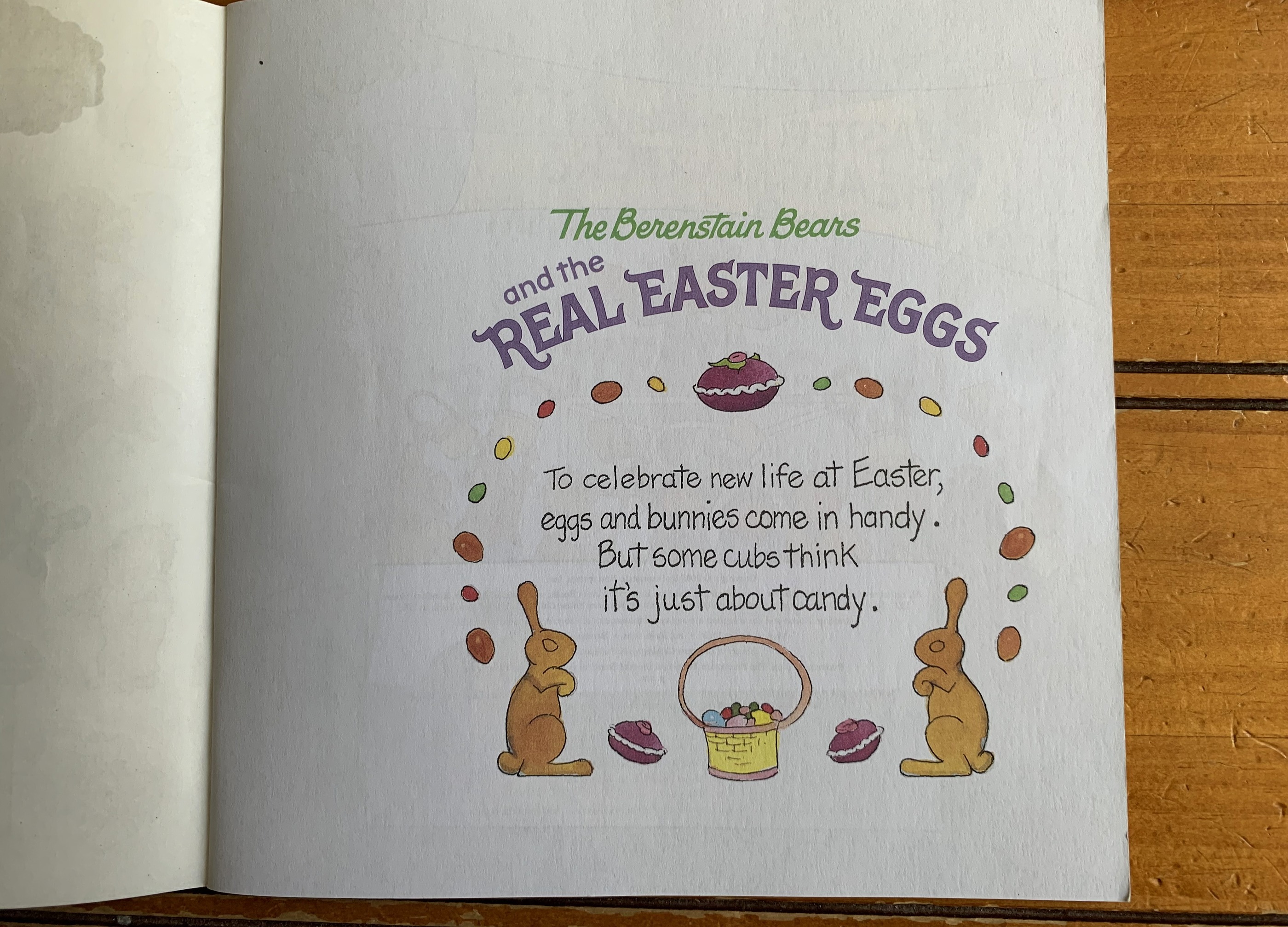
The Opening Rhyme
It's a decent rhyme even if the first part doesn't make any sense. The last part definitely hits though.
From there Sister goes to the kitchen calendar, scans February and March, finds Easter sitting in April, and falls asleep with visions of jelly beans and chocolate bunnies dancing in her head. Which would be a fine place for the story to get moving.
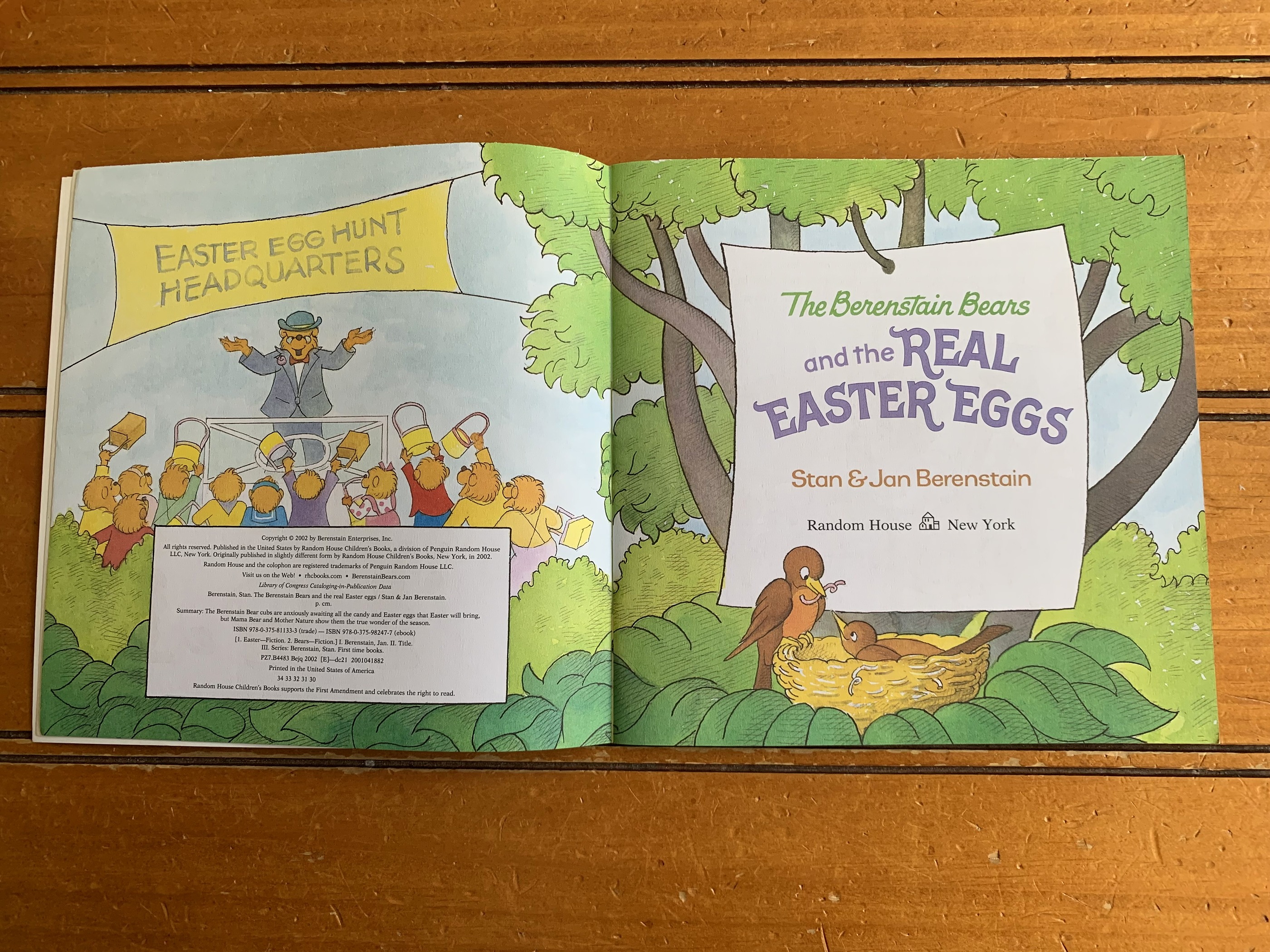
The Title Page
The bears all cheering the start of the Easter Egg Hunt while in the foreground we see some birds in a nest. This actually fits the book really well and is well done.
Three pages of winter
Instead, the book takes a detour. It's still winter, so Sister forgets all about Easter, and we spend roughly three full pages, a couple minutes of reading, on sledding and snow forts and icicles dropping off roofs and robins scouting nest locations, with subtle undertones that spring is on the way. I see what they're doing. The ending is all about new life arriving with spring, so they're laying that down early. But it just isn't to the point, and with my kids, keeping them engaged through a stretch like this is a losing battle. I caught myself wanting to skip pages. It's not bad writing exactly; it's scene-setting that doesn't need this much scene. Either cold open on spring and cut the whole Valentine's Day business, or scrap the springtime theme and go straight into Easter. They did neither, and the book meanders.
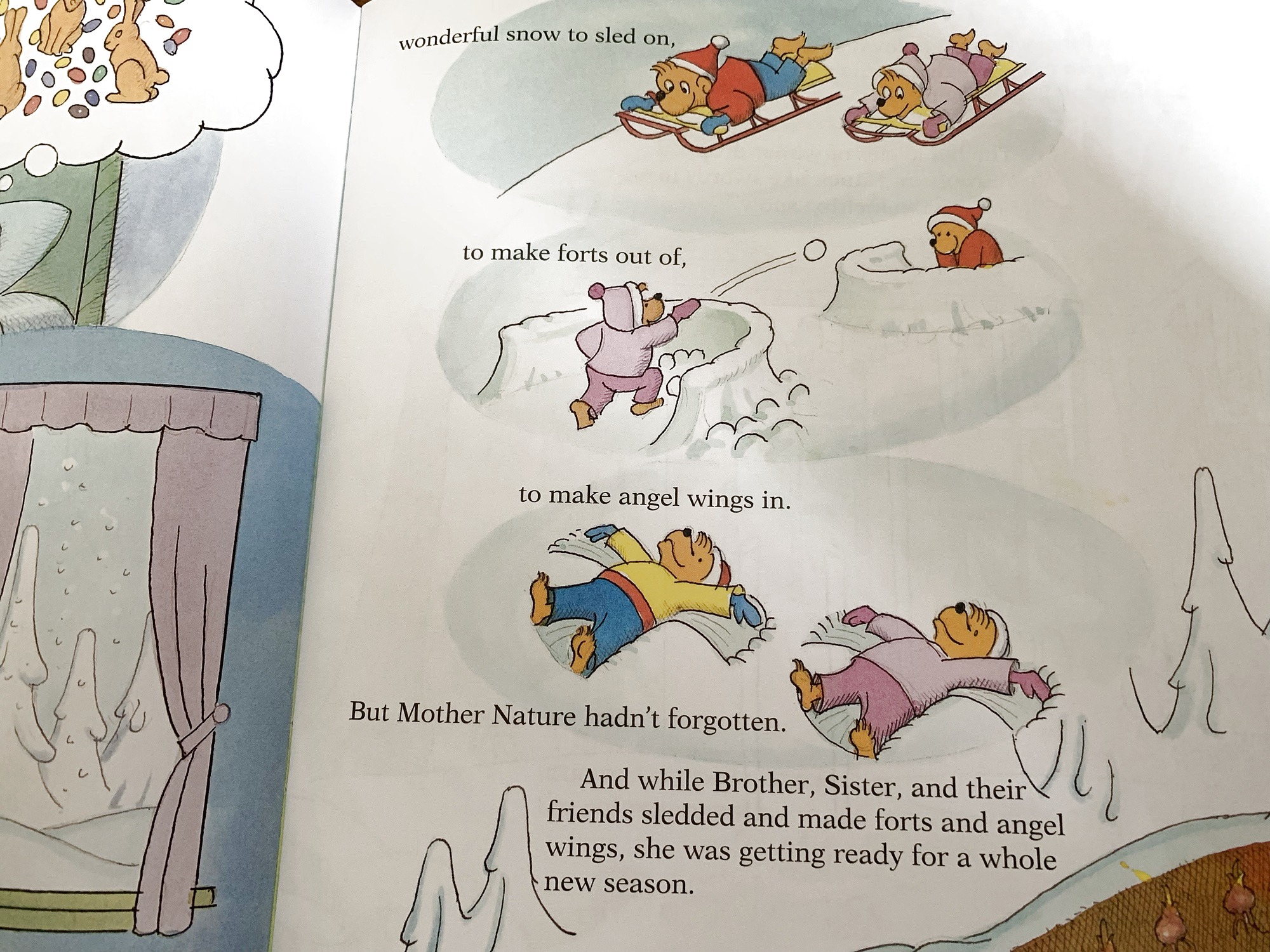
A long detour in the book where for some reason we get to see the cubs make snow angels. If my kids hadn't already lost interest by this point, they'd wonder what is going on.
The actual Easter material, once it arrives: a big billboard in town square announces the giant Beartown Easter egg hunt, prizes on display in the general store window, every cub wins a prize. The cubs are your typical representations of themselves here. Sister gets over-enthusiastic about the materialistic side of holidays; Brother is mostly a supporting character following her lead. At the hunt they sneak off to the woods away from the other cubs, find a nest with five tiny blue eggs deep in the bushes, watch the eggs hatch into baby robins, and miss most of the hunt while under the spell of the "real Easter eggs." That's the entire plot.
Papa is the highlight for me. He comes running around the house with Brother, every bit as excited as the cubs about the egg hunt, fully believing he's going to get to do it, until Brother tugs on his pant leg to break the news that it's cubs only. We're in stupid-Papa-trope territory here, but I read it a little more charitably. Does he legitimately think he's hunting eggs, or is he putting on a show to hype the kids up? I have played that exact role as the dad. "Wait, do I get to do it too?" exists purely so the kids can yell no, this is for KIDS. Papa also loves his black jelly beans, which is a very parent thing, and the cubs give him the black ones at the end. That whole thread is fine.
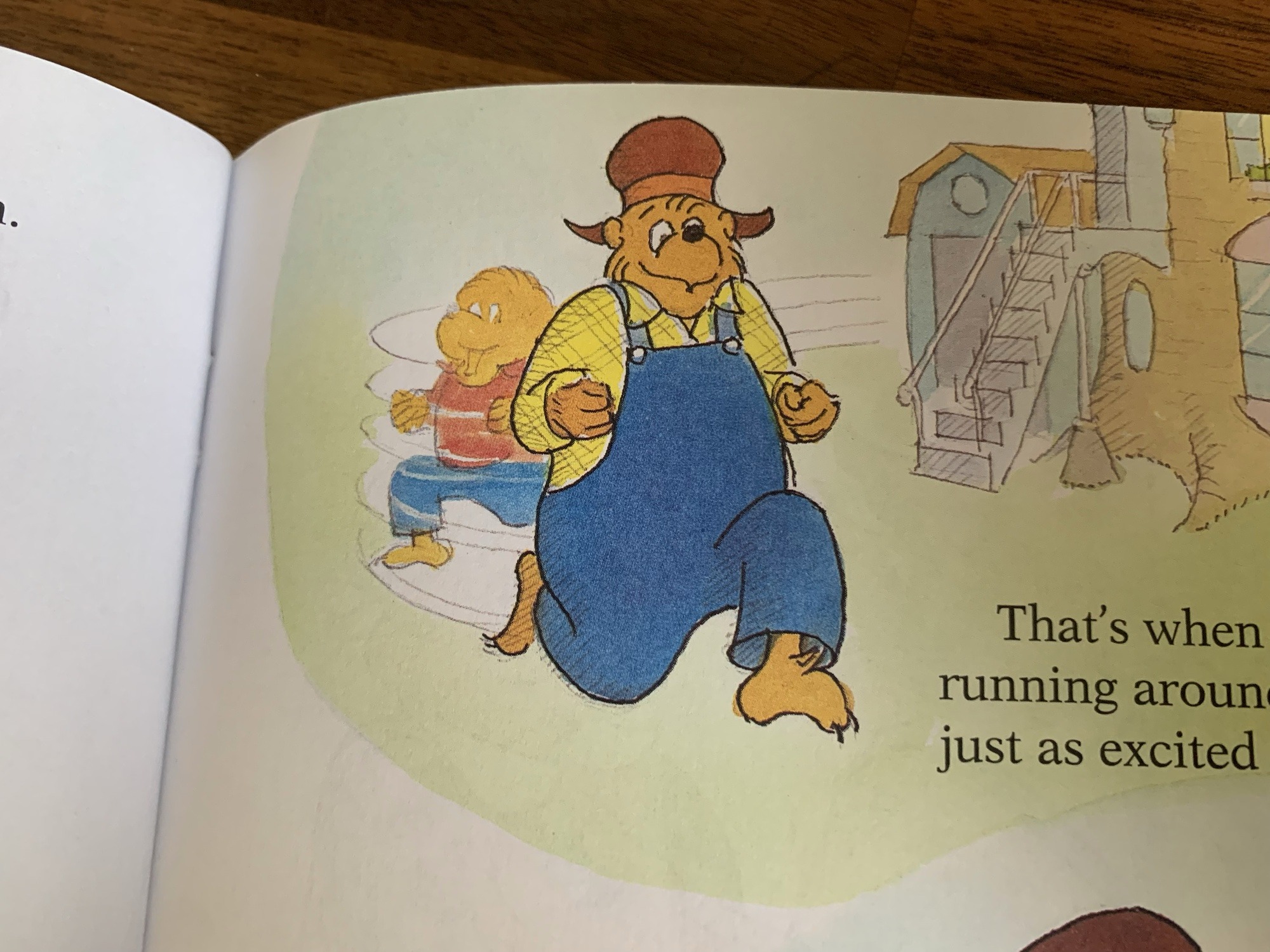
The highlight for me. Good running form from Papa here.
Mama is less fine. She's in full judgy mode all book. She outright tells Sister she's wrong about what holidays mean, and later, when Sister comes sprinting home so out of breath she can hardly talk, Mama just doesn't listen. She keeps redirecting to the crocuses she planted last fall and a scratchy looking forsythia bush. I recognize the parenting move; we've all done the ignore-and-redirect toward the topic we'd prefer to discuss. But she could easily have said "an Easter egg hunt, that sounds fun, let's get it on the schedule," and then done all the springtime, springtime, springtime stuff she wanted. Instead she comes across overbearing.
What is a kid supposed to walk away with?
The intended lesson is that holidays are about more than the stuff, and that's a worthy target. It is an extremely normal kid thing to reduce Thanksgiving to pie and Christmas to presents and Easter to candy. The problem is that the book's actual theme is spring bringing new life, and the connection to Easter is soft. Easter is a religious holiday and there's no mention of that at all, which I understand; they're threading a needle, trying not to be overtly religious or preachy. So the whole point of Easter becomes "springtime" and "new life," and it lands on the baby birds. The cubs, out of nowhere, have a whole new appreciation. There's no moment where they reckon with the idea that holidays are about something other than candy. Compared with the Berenstain books where the moral is clearer and gets a real resolution, like the Christmas one about the joy of giving versus receiving, this one leaves me asking what a kid actually takes away. An appreciation for baby robins, I guess.
Mama's approach doesn't help. She's trying to show Sister what it's all about with the crocuses and the bush, but that message is not landing on a child. It's a flower, whatever. She'd have done better teaching the lesson more directly. All that said, it's not a one out of five on the lesson. There is a real moral in there that we as parents want kids to have. We will get to Berenstain books later in the marathon that probably earn the one out of five.
Beautiful candy, unsettling eyes
The candy is illustrated beautifully, which is typical of these books. Whenever the Berenstains draw candy they make it extremely appealing, and the general store window with the sugar-trimmed chocolate eggs and the bunny as big as Brother Bear is one of the two images my kids will probably carry from this book. The other is the cubs holding their baskets at the hunt, which made both of mine immediately want to go find some eggs themselves.
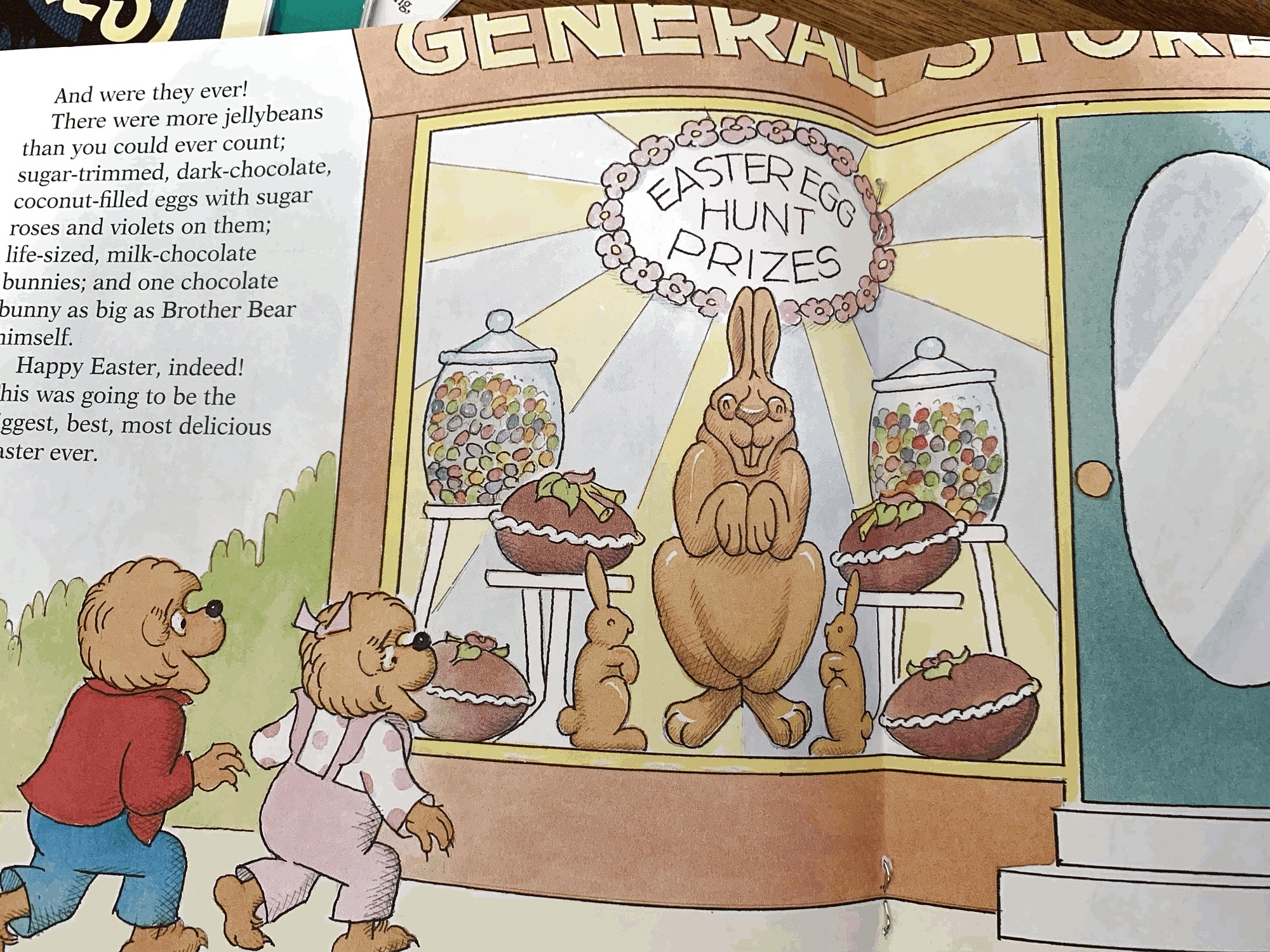
Aaaand this brought both of my kids' attention back on the book. "Do chocolate bunnies that big really exist?" asked my daughter. "I hope it's not hollow like the Easter bunnies we get," followed my son.
Now the faces. This is one of the later books in our collection, and the later books introduced some new expressions for the cubs, in particular this half-opened, heavy-lidded look that gets deployed whenever anybody is having a warm, wholesome moment. I get what they're going for: warmth, the recognition of something good. What it actually looks like is the cubs being drugged out. If a person gave you those eyes in real life you'd be a little creeped out, and this book uses them constantly, especially while the baby birds are hatching, plus a version from Mama giving the cubs her all-knowing look. Facial expressions are usually where these books shine; a good Berenstain face tells you exactly what a cub is thinking. This face is telling me plenty, and it also isn't a look you will ever see on an actual child. An adult, maybe. Not a kid. Beyond the candy and the faces there's not much else: no new characters, standard background scenery, nothing funny hiding in the spreads. That's the full inventory.
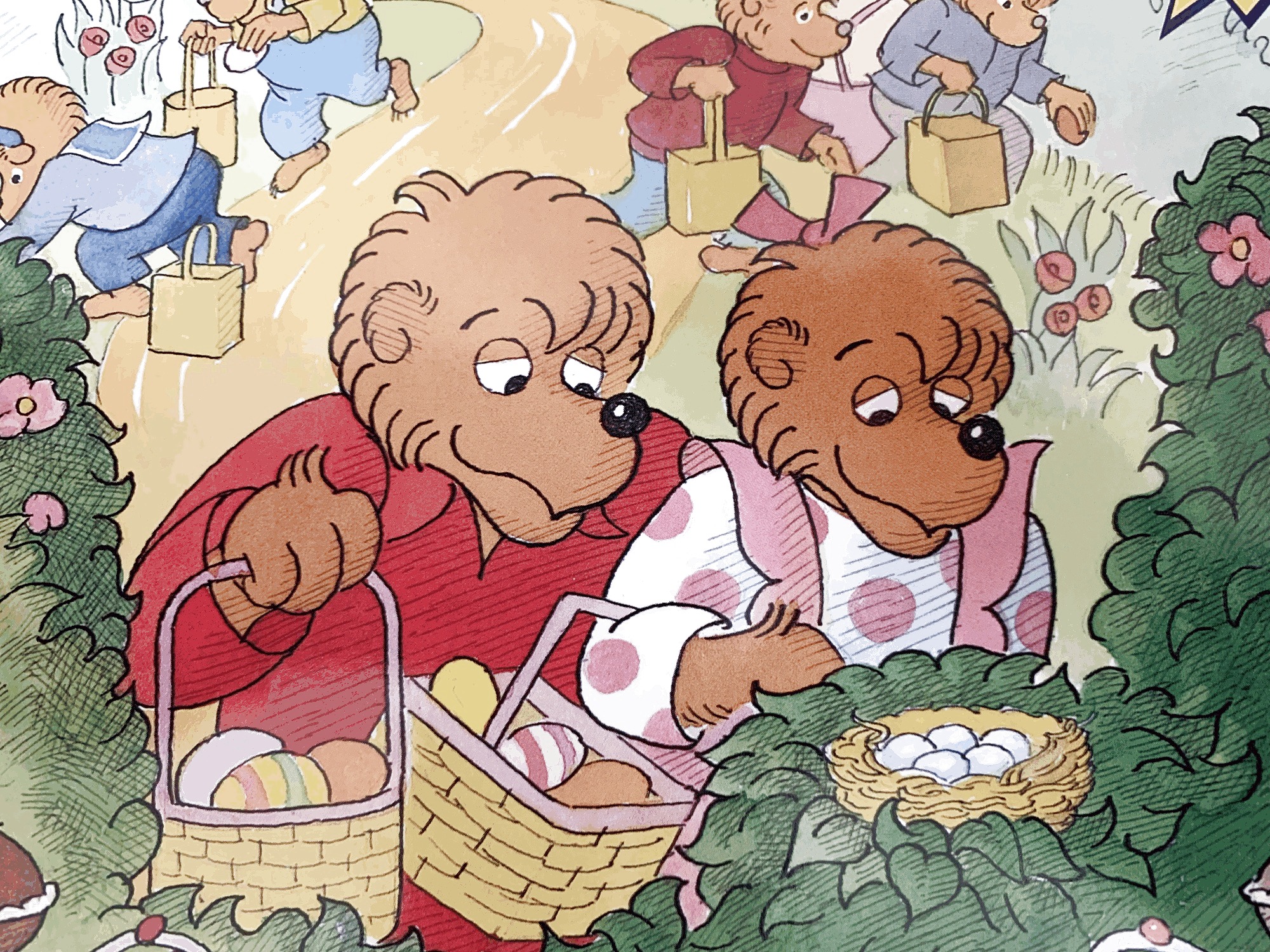
Do these eyes freak anybody else out? They started introducing them in a lot of the later books and I am not a fan.
So where does this land? Two out of five, and one of the more forgettable books in our collection. It's a bit of a milquetoast book. Cubs want to do an Easter egg hunt, cubs do the Easter egg hunt, cubs see something nice, and suddenly they've decided they have a new appreciation for the holiday. Nothing lasting. I could read it tonight and forget what it's about by tomorrow, and my kids would beat me to it. It will never be a book they explicitly ask for. But it says Easter on the cover, so it stays.
Sister Bear wants candy every day; instead she gets a nest of hatching robins in The Berenstain Bears and the Real Easter Eggs by Stan & Jan Berenstain (2002), a picture book for ages 3–7. The read-aloud runs 10 minutes and 30 seconds, much of it winter filler (sledding, snow forts, icicles) before Easter shows up. Once it does, the cubs skip the Beartown egg hunt to watch five blue eggs hatch. Verdict: 2/5, worth owning only because the shelf has an Easter-shaped hole in it.