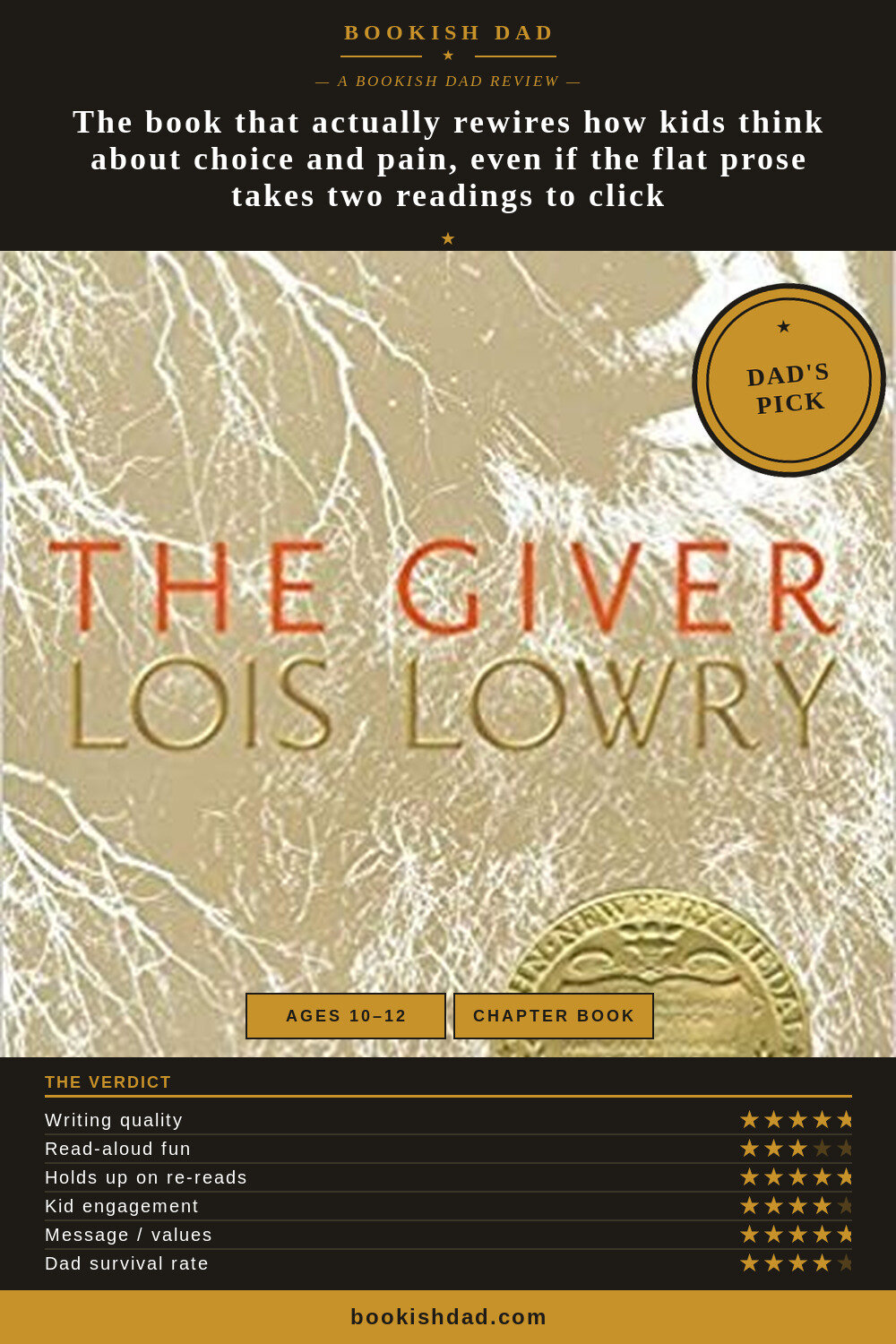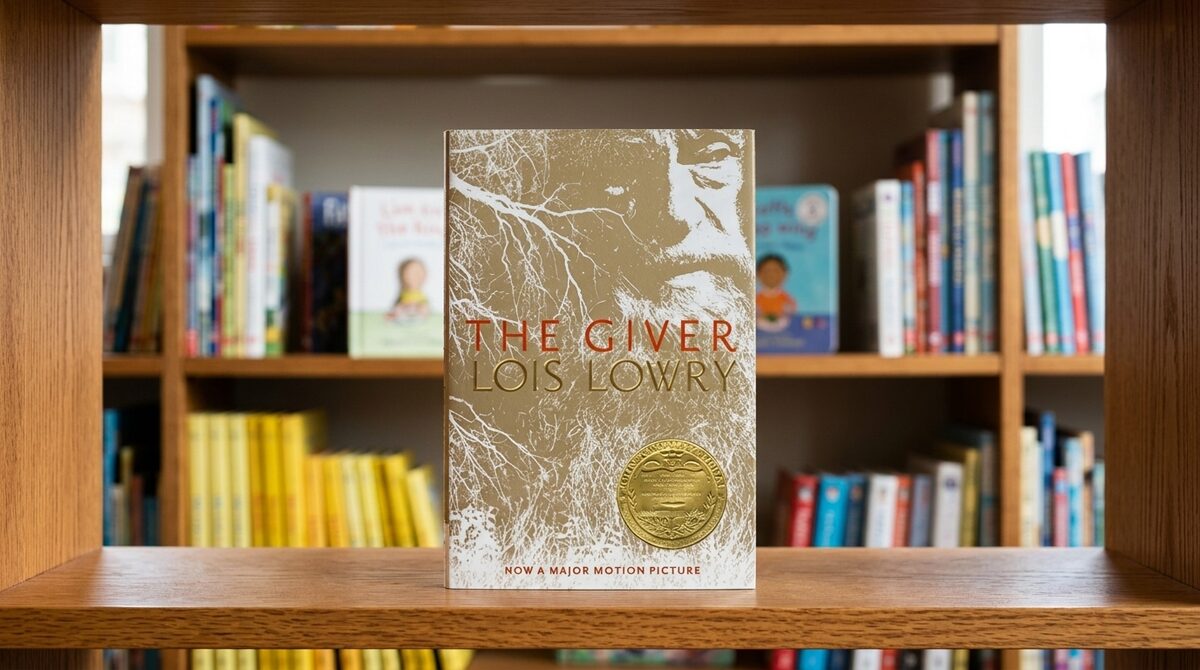

I read this in sixth grade and it rearranged something. I want to be careful with that sentence, because adults say books changed them all the time and usually they mean it gave them a vibe. This one did the actual thing. I closed it as an eleven-year-old who had previously assumed that a world without pain would obviously be a good idea, and I opened my eyes a few hours later as someone who was no longer sure about that, and who has stayed unsure ever since. That's not nostalgia talking. I went back and reread it as a 41-year-old man with a cat and a coffee habit, fully expecting it to be smaller than I remembered. It is not smaller. If anything it got bigger, because now I'm a parent, and the book is partly about what parents quietly agree to.
The setup, for the unfamiliar: Jonas is a twelve-year-old in a community that has traded away color, weather, choice, and pain in exchange for a thing they call Sameness. At the Ceremony of Twelve he's given his life's assignment, which turns out to be Receiver of Memory, trained by an old man who asks to be called the Giver. The Giver holds everything the community gave up. He starts handing it to Jonas. That's the whole engine, and it's one of the cleanest premises in the genre.
How a book this quiet hits this hard
Lowry writes flat on purpose. The early chapters are deliberately bland, all precise language and tidy routine, because that's what Sameness sounds like from the inside. It's the kind of restraint that looks like nothing until you realize she's tuning you. When the first real memory arrives, the snow and the hill and the sled, the sentence lands like cold water because every page before it was room temperature. She earns the warmth by withholding it. I've read a lot of books that try this and end up just being dull. This one is dull the way a held breath is dull, which is to say not dull at all.
The vocabulary is genuinely a thing here. The community has its own clean words for ugly acts, and the whole horror of the book is built out of the gap between what a word says and what it means. Lowry trusts a kid to feel that gap before they can articulate it. My daughter reads well above her age, but she is not the target reader for this yet. She caught the smell of it from the next room one night and went very still in the doorway. She didn't say anything. With her, that silence is a five-paragraph review.
Read-aloud, re-reads, and the four-year-old situation
As a read-aloud it's better than you'd guess for something so internal. There's not a lot of voice-acting to do, but the rhythm rewards reading slowly, and the quiet menace is easier to land out loud than on the page. A kid reading silently can skim past the flatness. Read aloud, the flatness has weight. That said, this is firmly a 10-to-12 book, and my four-year-old has no business near it. He wandered in once during a tense stretch, sensed the temperature in the room, declared he wanted the pickle poem instead, and threw himself face-down on the couch. Correct read, buddy.
On re-reads it doesn't wear out, it deepens, which is the rarest property a book can have. I've now read it three times across three decades and each pass found a new floor under the one I thought was the bottom. The second half asks questions it refuses to answer cleanly, including an ending that has launched a thousand classroom arguments, and that ambiguity is exactly why it survives a reread. There's no twist to spend. The whole thing is a question, and the question doesn't expire.
The conversations it starts
This is the rare kids' book whose message is the absence of an easy message. It asks whether a life with no suffering is worth living if it also has no music, no color, no love. It does not hand you the answer on a laminated card. For a ten-year-old standing at the edge of figuring out that the adult world runs on trade-offs nobody voted on, that's the most honest gift a book can give. It treats them as someone capable of sitting with a hard thing. Most books for this age treat the reader like a delicate item. This one treats them like a future adult, and they rise to it.
Dad survival is high, with one asterisk. The prose never grinds you down, and the ideas keep you genuinely engaged, so you're not performing the text to stay conscious. The asterisk is emotional. There's a stretch in the back half that I would not advise reading at the end of a long day unless you want to be quietly wrecked at 8:45 on a Tuesday. I cried at Charlotte's Web and The Giving Tree, and I'll just say this one operates in a colder register that gets there a different way. Pour the second coffee first.
Five stars. It's a classic and it deserves the word. Wait until your kid is genuinely ten or eleven, read it with them so you can talk about it after, and brace for the fact that they may understand it faster than you'd like.