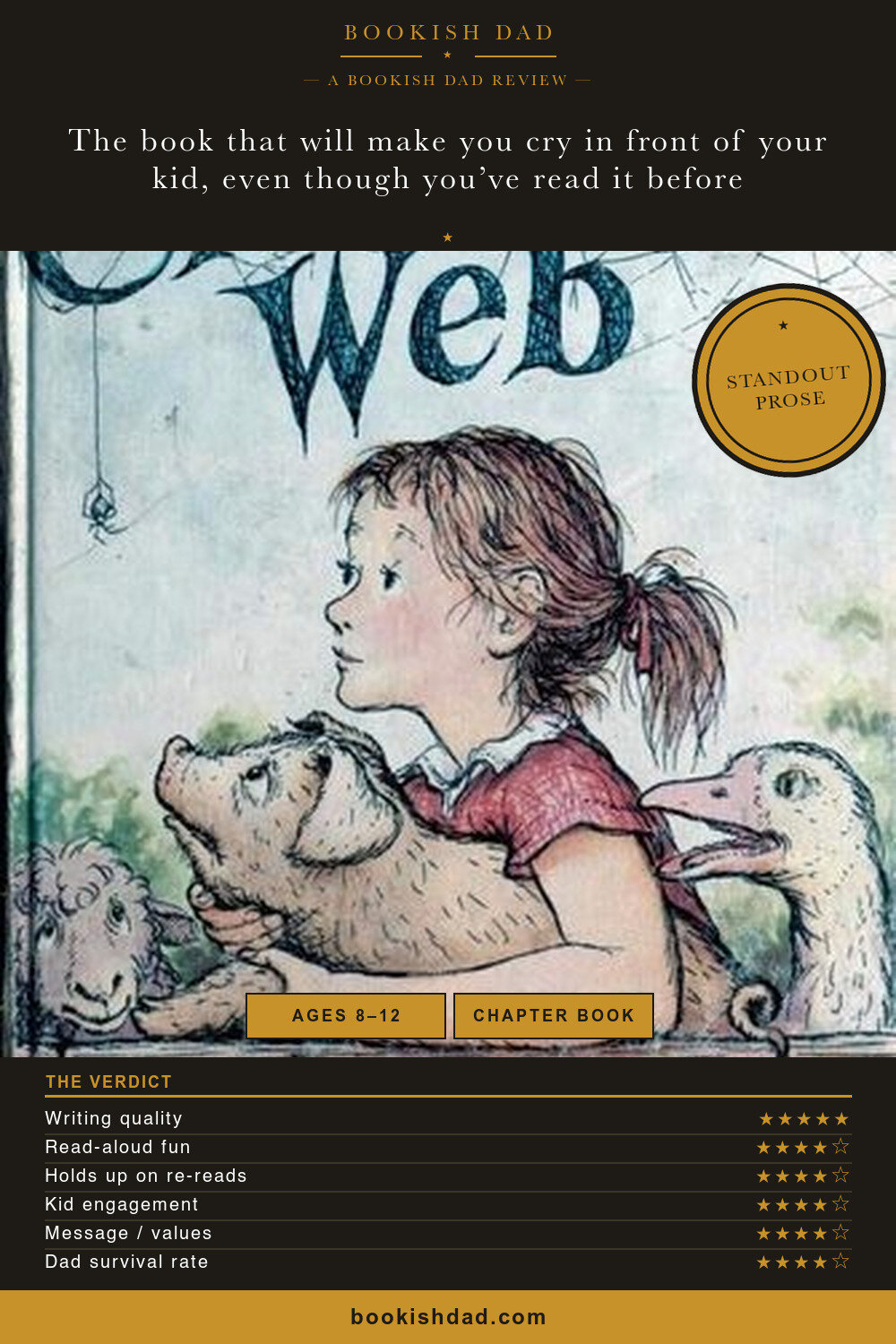

I read this book as a kid and it broke me. I read it again last month, out loud, to my 8-year-old, and it broke me again, in exactly the same place, in approximately the same way, while my daughter sat next to me with the expression of a small actuarial accountant assessing a claim. When I finally got through the last paragraph and looked over with my eyes doing the thing eyes do, she patted my arm and said, "It's raining." That's a direct quote. She used it on me once before, with The Giving Tree. She is building a brand.
So let's talk about Charlotte's Web, which is one of the books I was most afraid to revisit, because I was sure I'd over-mythologized it. I read Matilda at 7 and BFG in third grade and Charlotte's Web somewhere in there too, and the gauzy childhood-canon part of my brain has a vested interest in keeping all of those books on the shelf marked Untouchable. The fear when you re-read a beloved book to your own kid is that you'll discover it was always just okay and you were the one who was magic.
Charlotte's Web is not just okay. But I want to be careful here, because nostalgia is in the mix, and I want to flag exactly how much.
The prose is the thing
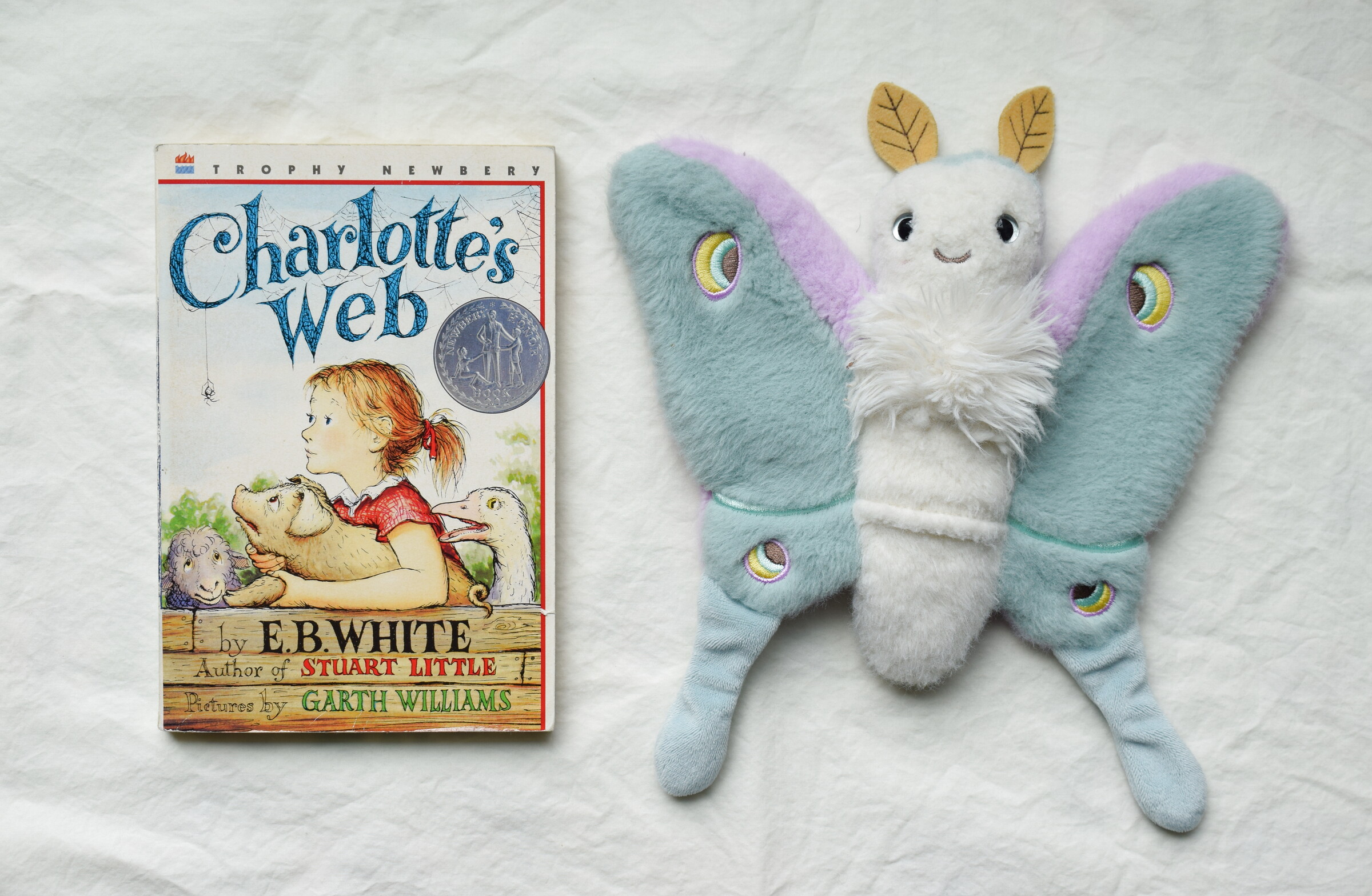
Sitting next to a book about a spider's web strikes Moth as somewhat pointed.
What surprised me on re-read, as an adult who now reads picture books professionally, sort of, is how unsentimental E.B. White's sentences are. He writes about a barn the way a person who has actually mucked out a barn writes about a barn. There's a coolness in the language, an unwillingness to soften things, that I don't think I noticed when I was nine because when you're nine you assume all books sound like this. They do not. Most books for kids in 2026 sound like a kindergarten teacher trying to keep their voice down at a wine bar. White just writes. The famous opening line, the one about Papa and the ax, is a kind of small grenade rolled into the room on page one, and the book never apologizes for it.
The craft holds. The craft holds harder than I expected. There are paragraphs about weather and seasons that I caught myself reading twice because they were doing something the rest of the language wasn't. He'll spend a full beat on the smell of a barn or the changing of a season, and it lands, because he's earned it by not being precious about anything else.
Read-aloud reality check
Now the caveat. Charlotte's Web is great prose, and great prose is not always the same thing as great read-aloud. The vocabulary outpaces my 4-year-old by a country mile, so this was a daughter-only project at bedtime. He sat in for the first night, asked when the spider was going to do something interesting, and quietly defected back to "Ickle Me Pickle Me." For my 8-year-old, the longer passages of description sometimes drifted past her. She didn't ask questions during them; she just got that look kids get when they're patiently waiting for the dialogue to come back. She locked in hard whenever the animals talked. She got quietly delighted by Templeton, which I take as an encouraging early sign about her future taste in supporting characters.
The voices, by the way, are a gift to any dad willing to commit. Wilbur is all volume and feeling. Charlotte gets the kind of calm, slightly amused voice you use when your friend is being dramatic in a restaurant. Templeton gets to be a small, suspicious troll. I had fun. My daughter tolerated me with grace.
Re-reads, message, and the death problem
Does it hold up on re-reads? In the sense of "read it again tomorrow night," I genuinely don't know yet, because we just finished and my daughter has not asked. In the bigger sense, the lifetime-of-a-reader sense, obviously yes. This is a book you reread at 9, at 14, at 41 with your own kid, and you find different things every time. That's a different kind of re-read value than a picture book, but it counts.
On message: the book is doing something braver than most kids' books attempt, which is telling children that death is real, that it's woven into farm life, and that friendship can change the shape of someone's life without changing that ultimate fact. Common Sense Media nailed it: kids respond to this book because they can tell when they're being told the truth. White doesn't sugarcoat the slaughter premise. He doesn't pretend Charlotte's lifespan works any way other than the way it works. My daughter, the stoic, registered this without comment, which for her is the equivalent of a standing ovation.
The thing I want to flag for parents: this is an 8-and-up book in my house, not because of language or content, but because the emotional weight requires a kid who can sit with sadness without being knocked flat. My 4-year-old isn't ready. He throws books at the cat when he's frustrated; I am not handing him a story about mortality. My daughter, on the other hand, was the right age for it almost to the week. She's reading independently now, post–Magic Tree House, and a part of me regrets reading this one to her instead of letting her find it alone in her bed at 7 a.m. like she does everything else. There's a version of this book that hits even harder when no one's watching you read it.
What it costs the person reading it aloud
High. Unusually high. The prose is good enough that I wasn't bored as the adult reader, which is the bar I now use for any book longer than 32 pages. I was, however, emotionally compromised by the ending, and I had to do the thing where you read three sentences ahead silently so you know what's coming and can pace your breathing. If you're a crier, prepare. If you're not a crier and you don't cry at this book, I'd gently suggest a checkup.
Why four stars and not five? Because I'm trying to be honest about the gap between the book's reputation and the actual experience of reading it aloud to a contemporary kid. Long descriptive passages will lose some children. The pacing in the middle is patient in a way modern kids aren't always trained for. My nostalgia wants to give it five; the reader-aloud in me, sitting next to a polite-but-drifting 8-year-old during paragraph three of a barn description, has to deduct a small amount. The book is a masterpiece. The read-aloud is very good. Those aren't the same thing, and I promised when I started this blog that I wouldn't pretend they were.