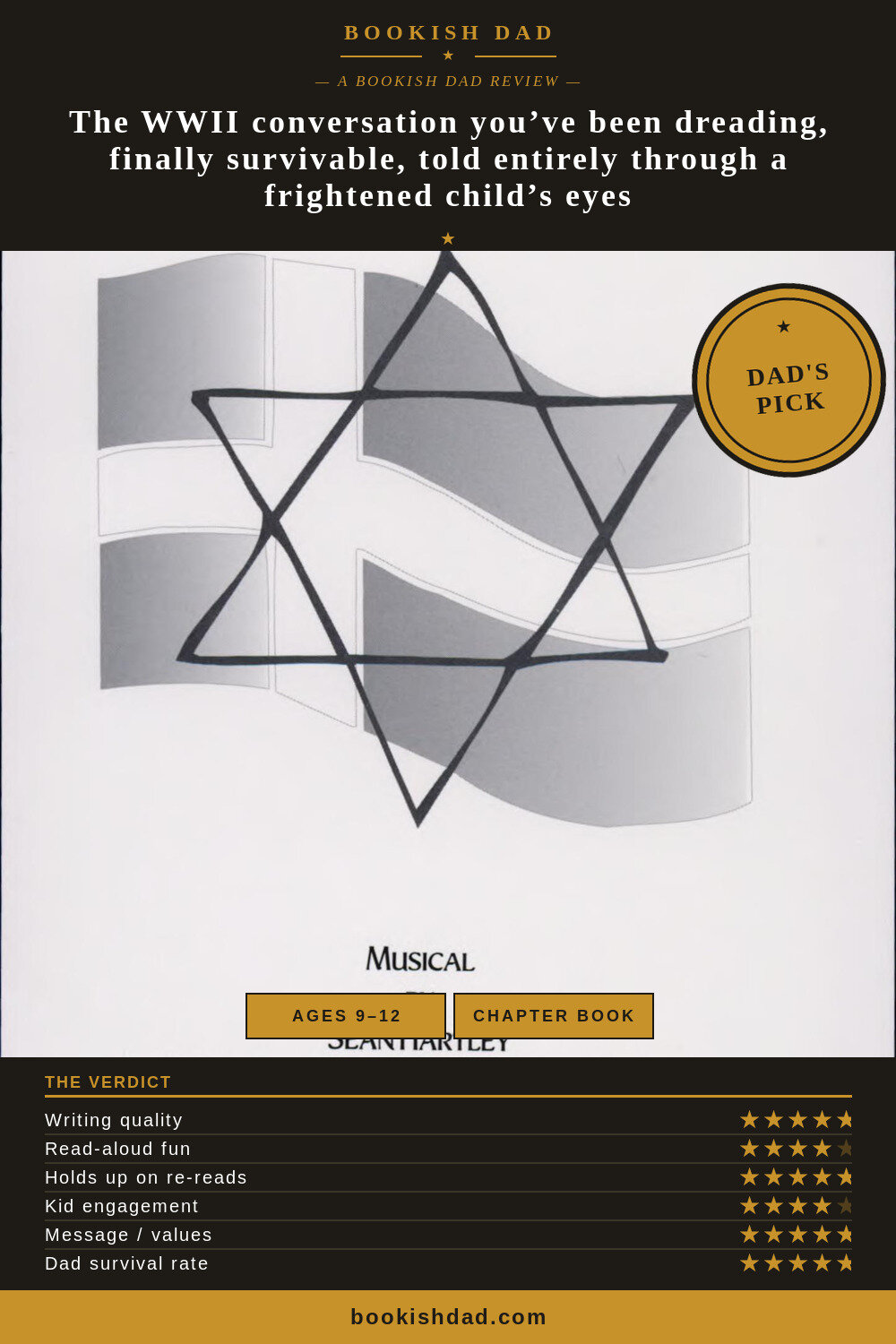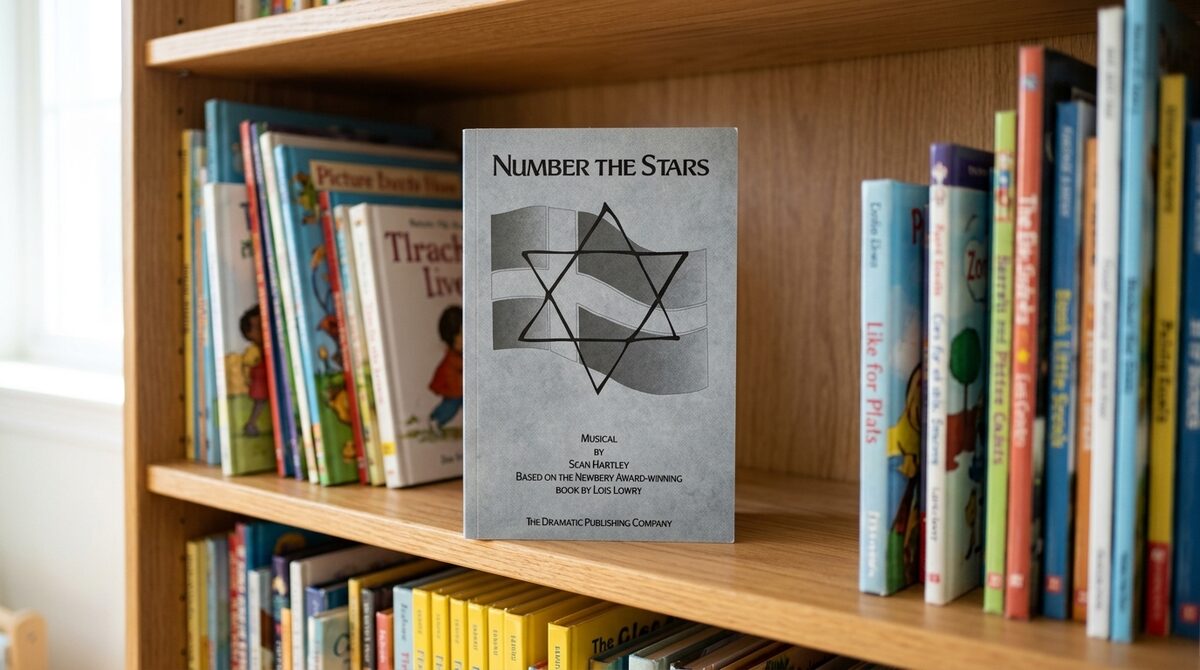

I have been dreading the WWII conversation since my daughter was about five. Not the dates and the maps. The other part. The part where a kid figures out what people are actually capable of, and you have to decide how much of that you hand them and when. I figured I had a few more years to stall. Then she finished her latest stack of chapter books, looked at me with that flat, expectant face she has, and I pulled this off the shelf instead of stalling. I'm glad I did, and I'm a little annoyed at how good it is. Lowry basically had this conversation with my kid for me, from 1989, and she handled it better than I was going to.
The setup is plain and the publisher will tell you it straight: 1943 Copenhagen, the Germans begin to "relocate" the Jews of Denmark, and Annemarie Johansen's family takes in her best friend Ellen Rosen and pretends she's one of their own. That's the plot. The reason the book works is that Lowry tells the entire thing through Annemarie, a ten-year-old, so you only ever know what a ten-year-old would know. Nobody stops to lecture you. You're as in the dark as she is, and the scary parts sneak in the way they would for an actual kid (a wrong tone of voice at the door, a soldier who asks one question too many).
Plain sentences, scary story
The sentences are short and plain on purpose. Lowry skips the big adjectives, because the situation doesn't need any help. She lays out the facts of a scene and gets out of the way. There's a moment built around Psalm 147, the line about the one who "numbers the stars one by one," and Annemarie wonders how anyone could possibly count them all. Lowry lets that sit there without explaining it. Plenty of books would have a character turn to the reader and spell out the metaphor. This one just trusts the kid to catch it, and mine did, at bedtime, without a word. I only knew because I was watching her face.
As a read-aloud it's quieter than what I usually perform. There's no giant voice here, no roar, none of the broad stuff my four-year-old demands (this one is the daughter's book, fully). What you get instead is tension. The soldier encounters get tighter as the book goes, and somewhere in there I noticed I'd been dropping my voice lower and lower without deciding to. You don't need to act it. Just don't rush it.
It holds up on re-reads in a way that surprised me, because suspense books usually deflate once you know the answer. This one doesn't, because the second time through you're watching the craft instead of the plot. You see the foreshadowing land before it pays off. You notice how much Annemarie isn't told, and how much she figures out anyway. My daughter went back into it on her own a few days after we finished, which is her version of a five-star review, since she will not say the words "I loved it" if you held her over a balcony.
On values, this is where the book earns the rating. It would have been easy to turn all the Danes into a montage of brave faces, and Lowry doesn't. Everybody in this book is scared. They help anyway, scared the whole time, and no kid reading it comes away thinking bravery means not being afraid. That's a better lesson than most war stories manage for adults. The Afterword makes clear these fictional people stand in for real ones, and I read that part to her too. It mattered that it was real.
Dad survival rate is high, which is unusual for something this heavy. The book never wore me down because it never wastes a word and never repeats itself. By the end I wasn't reading in the voice of a hollowed-out night-shift narrator. I was reading carefully, because I wanted to get it right. I can't remember the last bedtime book that got that out of me.
One honest caveat, because the seed in my head was "how do you introduce this without scarring them." There's loss in this book. Real loss, the permanent kind. It's handled with restraint and it's age-right for nine and up, but it's there, and you should know it's coming so you're not blindsided mid-paragraph. I'd read it before your kid does, not to censor anything, just so the harder pages don't catch you off guard while you're the one holding the voice.
I came to this one with no childhood nostalgia attached. I never read it as a kid, so the five stars aren't memory talking. It's just that good. If you've been putting off the WWII conversation like I was, this is the book. I watched it tell my kid the truth from eighteen inches away, and she came out the other side okay, and honestly so did I.