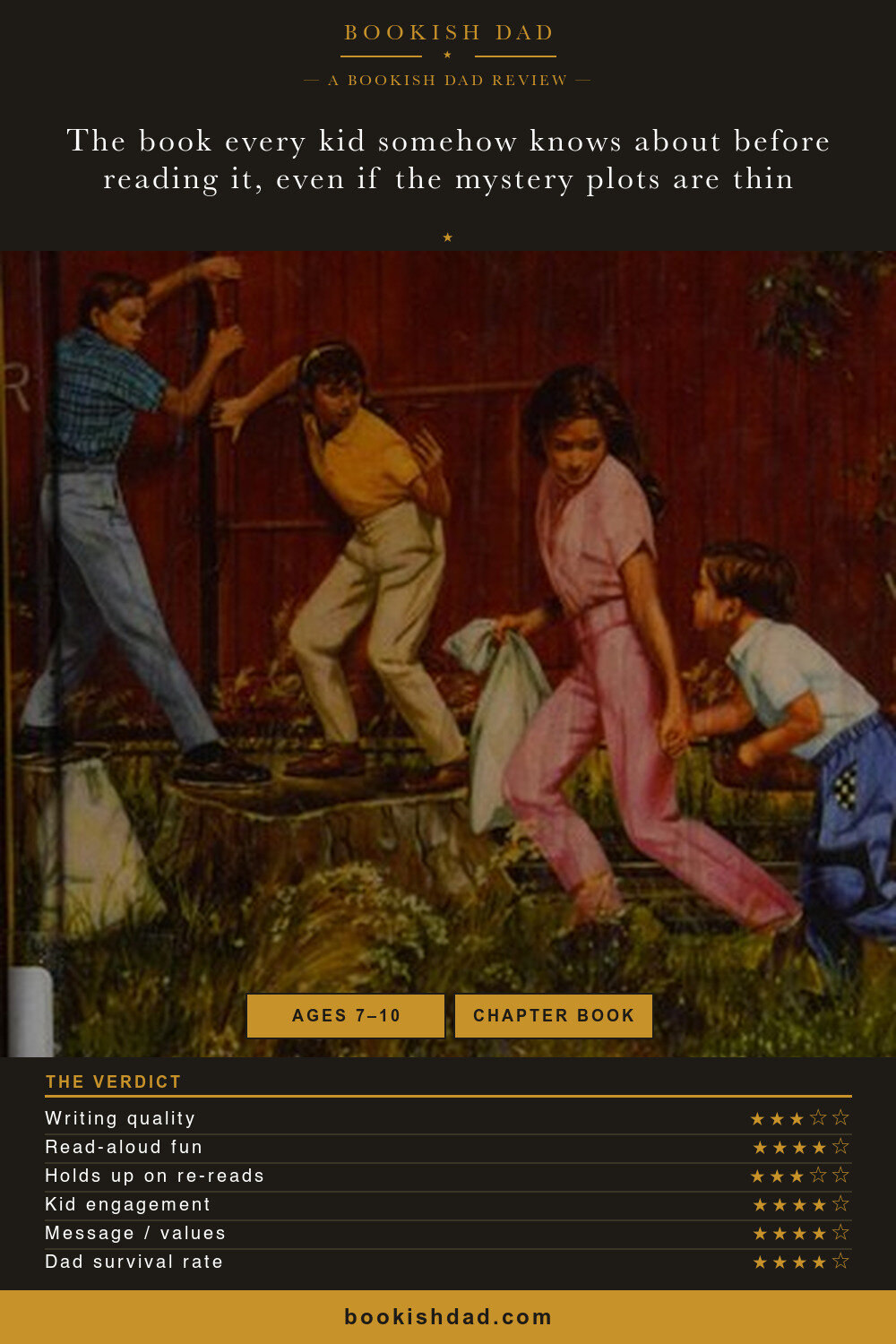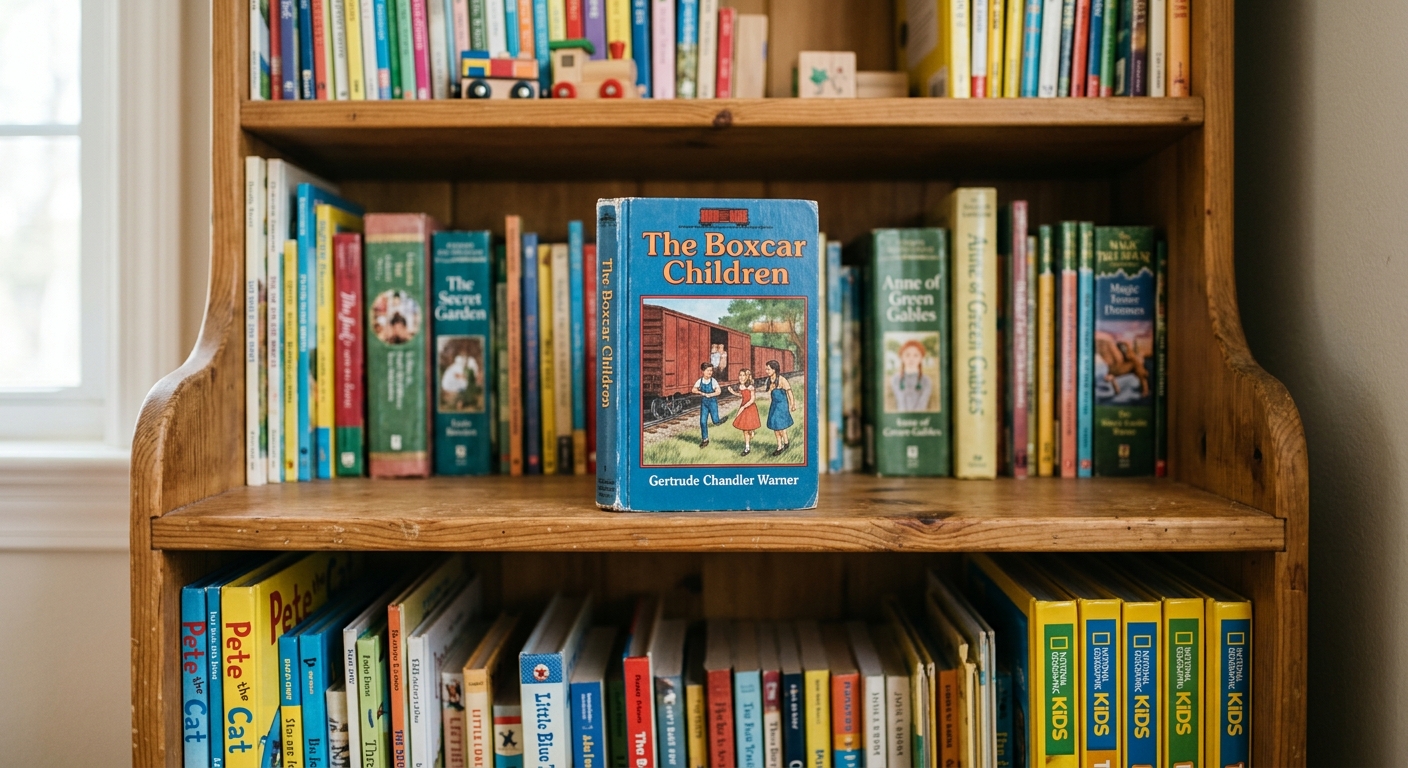

My daughter found this on a bottom shelf at the library, held it up, and said "is this the one with the kids who live in the train?" I have no idea where she absorbed that. The internet, probably. The collective unconscious of every kid who has ever wanted to run away and live in a small enclosed space with a dog. Either way, we checked it out, and I went in expecting to be bored stiff by a book older than my grandmother.
I was not bored. I was a little annoyed at how not-bored I was.
Here's the setup, because it's the whole hook and the back cover gives it away anyway: four orphaned siblings (Henry, Jessie, Violet, and Benny) are trying to stay together rather than be sent to a grandfather they've been told is cruel. They find an abandoned boxcar in the woods. They make it home. They take care of themselves. That's the engine of the book, and Gertrude Chandler Warner, who was a first-grade teacher in 1924 and clearly understood exactly what a seven-year-old wants from a story, just lets that engine run.
The prose is doing a weird, sneaky thing
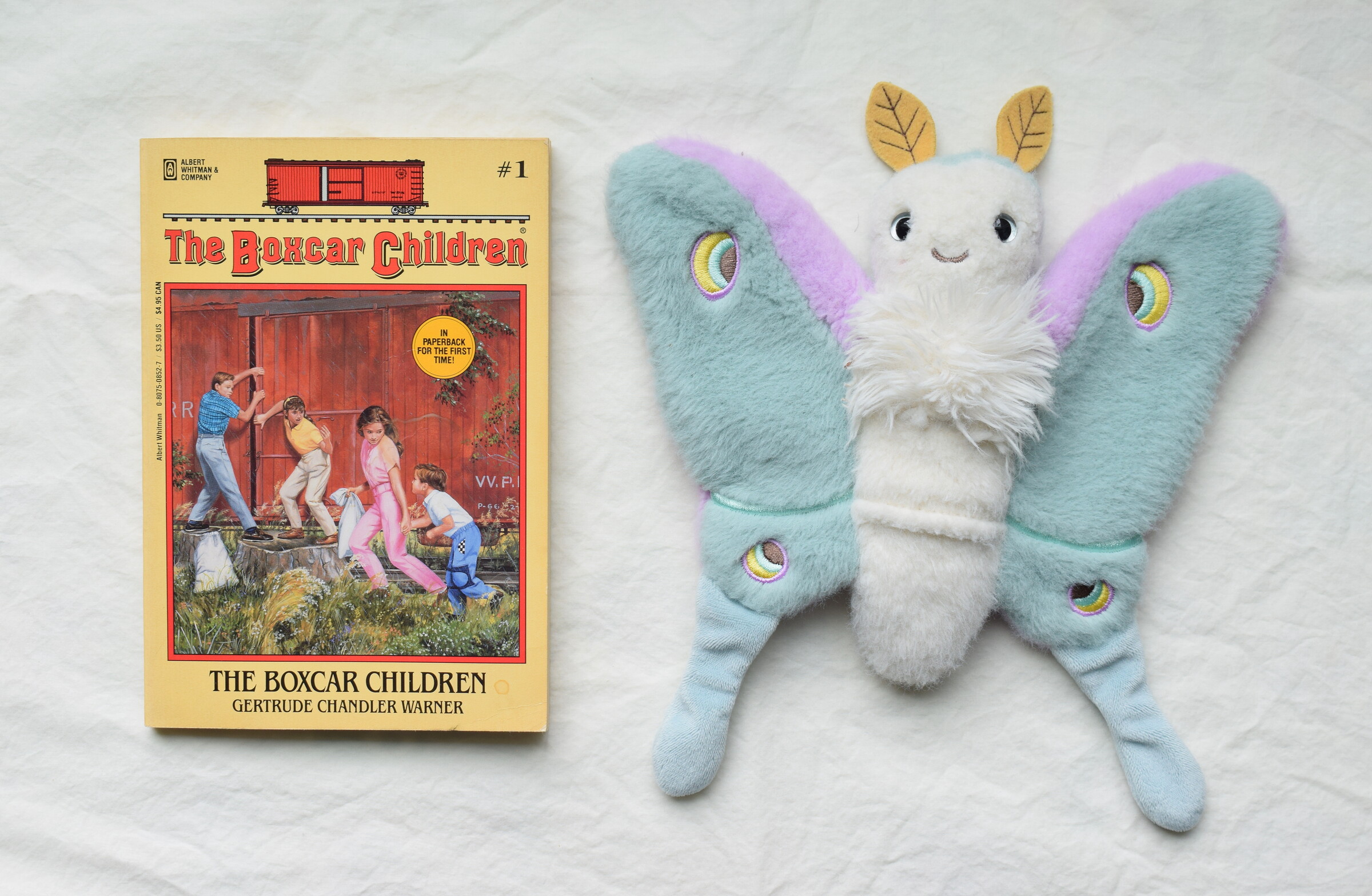
As moth housing goes, the boxcar is impractical, but Moth appreciates the children's work ethic.
On the sentence level, this book is plain. Not bad-plain. Deliberately-plain. Warner reportedly wrote it for kids who were struggling to read, and you can feel that in the rhythm: short declarative sentences, repetition, very little ornamentation. As an adult reader you keep waiting for the writing to do something fancy, and it never does, and then you realize the restraint is the point. Every sentence is a foothold. A kid who's just leveled up out of early readers can climb this book without slipping.
My daughter, who has recently graduated to chapter books and is hoarding them like a small dragon, read ahead of me twice. That's the highest compliment her reading life can offer. She rarely says much about a book while she's in it. She just disappears into it and emerges three chapters later looking mildly inconvenienced that dinner is happening.
Read-aloud: better than I expected, worse than Dahl
Reading this one out loud is a strange experience because there is almost no verbal flash. No wordplay. No songs. No Dahl-style invented vocabulary you can chew on. You can't get a big laugh out of a single sentence the way you can with, say, anything by Mo Willems. What you can do is lean into the four very distinct kid voices. Benny is six and acts six, which gave me a lot to work with for my four-year-old, who immediately demanded that Benny "sound like a little guy." I gave Benny a slightly indignant tiny-person voice. My son approved.
My four-year-old, for the record, is not the target audience for this book and drifted in and out. He paid full attention when the kids were doing things (finding stuff, building stuff, eating stuff) and lost interest when the adults talked. Which, honestly, fair.
The thing this book is actually about
I think this book is about competence. I don't think it knows it's about competence, which is part of its charm. The siblings figure out water, food, shelter, work, and a dog, in roughly that order, and the prose treats every small problem-solving moment with the same calm matter-of-factness. There's no swelling music. They just do the next thing. For a kid in 2026, marinating in a world where every adult is anxious about every decision, watching four children quietly handle their own lives is genuinely radical.
My daughter, who as I've mentioned is emotionally about as readable as a brick, closed the book at one point and said, "they're pretty good at being on their own." That was her entire review. She meant it as a compliment. I took it as one.
Holds up on re-reads? Mostly.
Here's where the four-star ceiling kicks in. The Boxcar Children is a one-trick book in the best sense. The setup is the whole appeal, and once you know the setup, subsequent reads lose a little of their pull. The mystery and tension that powers the first half deflates a bit once you know how it resolves. My guess is this is a book my daughter will read twice, maybe three times, before moving on to the eighty-seven sequels and finding her favorites there. That's fine. Not every book needs to be infinitely re-readable. Some books are meant to be a doorway.
What I'm flagging
It's a 1924 book and reads like one. There's nothing in here that scandalized me, but the gender roles in particular are very of-their-era: the older sister does most of the cooking and mothering, the older brother goes out and earns money. Warner clearly loves all four kids equally and gives them all real competencies, so it doesn't curdle, but if you're reading with a kid who notices that stuff, you'll have a good conversation about it. My daughter noticed. We had the conversation. It was short and she had strong opinions, and that, frankly, is also the book doing its job.
The read-aloud tax
Honest answer: I would read this aloud comfortably for a week. The chapters are short, the prose is friendly to a tired voice at 8:30 p.m., and there's just enough plot tension to keep me invested even on the third evening. Compared to certain books I've read twenty times in a row this year, this is a vacation. I never had to invent a voice to amuse myself. I never started fake-coughing to skip a page. By my current standards that's nearly a miracle.
So: a four-star book. Not a five because the prose itself is too utilitarian to vault into the canon I'd press into other parents' hands, and because I think this is a book most kids love hard once and remember fondly forever, rather than one they live inside for a year. But a strong, real, deserved four. My daughter is now eyeing the rest of the series like a buffet, and that's the actual test, isn't it.