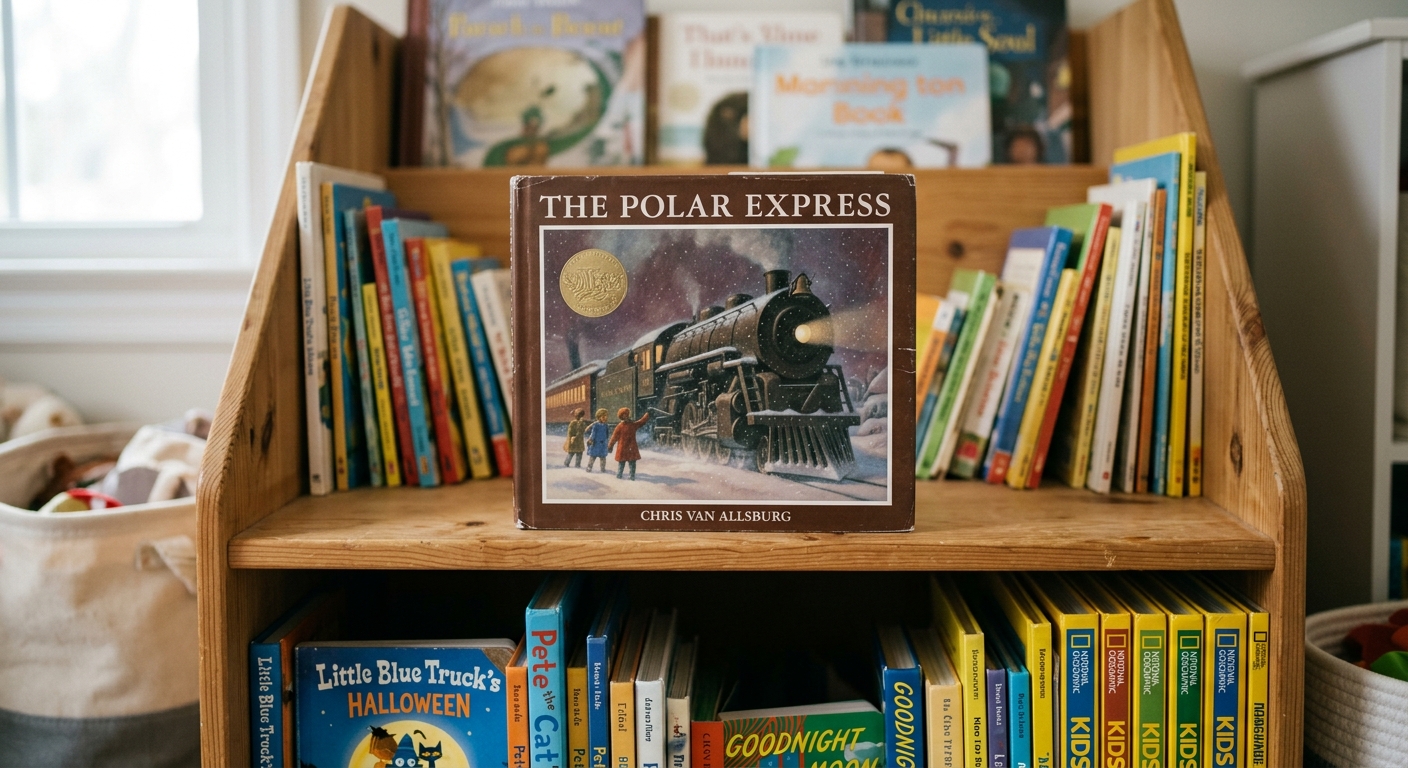

I want to be clear that I am not a Christmas Eve crier. I am a man who makes coffee in the morning and reads to his kids at night and does the BFG voice with a level of commitment that should embarrass me but doesn't. I am not, generally, a sap. And yet every December, this thirty-something-year-old picture book takes me apart in the span of about twelve minutes, and my daughter watches with the same neutral expression she had at the end of Charlotte's Web, and my four-year-old asks if the train is real, and my wife pretends not to notice that I'm wiping my face on my sleeve like a Victorian widow.
So yes. Five stars. We're not going to pretend this is a suspenseful review.
The book is doing something most Christmas books don't even attempt
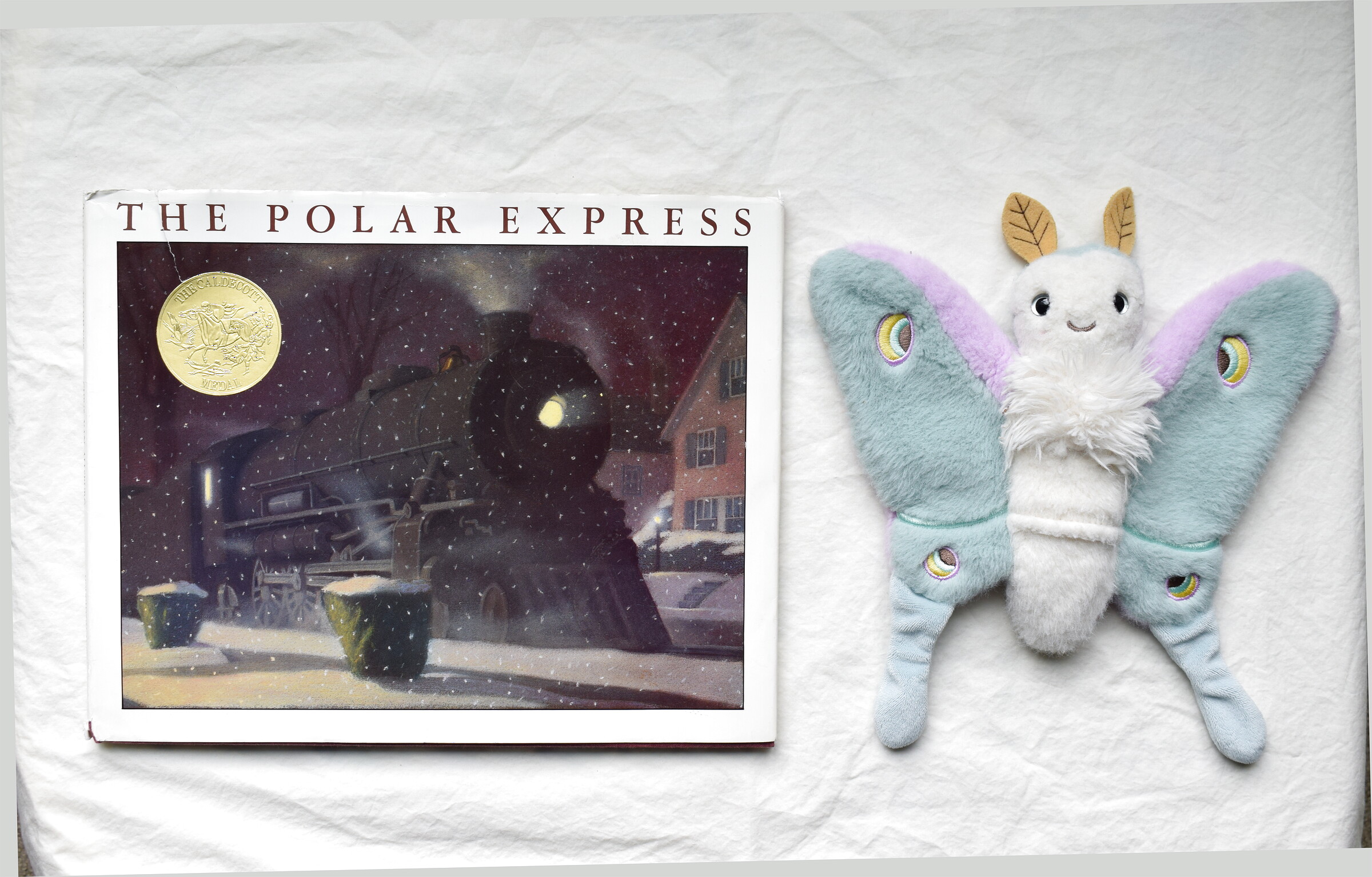
Moth respects the Caldecott gold medal but remains skeptical that a train to the North Pole requires this much pageantry.
Most Santa books are cute. Cute is fine. Cute is a low ceiling. The Polar Express isn't cute. It's a quiet, serious, slightly mysterious story about a kid who hears a train outside his house on Christmas Eve and decides to get on it. Van Allsburg writes it like he's describing something that actually happened to him and he's still working it out. There's no winking. There's no comic-relief sidekick. There's no plucky song. It's just a boy, a train, and a question the book is way too dignified to ask out loud, which is: what happens to the part of you that believes?
The prose is the thing I keep coming back to. It's calm. It's restrained. Van Allsburg trusts the reader, including the very small reader on your lap, to handle quiet. He uses short sentences when short sentences will do. He doesn't pile on adjectives. There's a stillness to the writing that mirrors the stillness of a house on Christmas Eve after the kids are supposed to be asleep, and the result is a book that feels less like being told a story and more like being trusted with one. I don't say this lightly, but it's the best-written Christmas picture book I've ever read aloud, and I have read several Christmas picture books that should be charged with crimes.
The illustrations should be in a museum, and largely are
Van Allsburg won the Caldecott for this. Of course he did. The pictures are pastels, mostly in deep blues and warm interior golds, and they have a heaviness to them that I associate with oil paintings I saw on field trips as a kid. There are perspectives in this book that picture book illustrators just don't try: angles that put you under the train, behind the boy, looking down from somewhere a normal artist wouldn't bother climbing to. My daughter, who notices everything, stops me on certain pages and stares for what is probably an unreasonable amount of time. She doesn't say anything. She just looks. That's the whole review of the art, honestly.
Read-aloud, kid reactions, and the bedtime survival math
For read-aloud, this one rewards a parent who's willing to slow down. If you try to power through it like a Dr. Seuss bedtime sprint, you're going to lose. The rhythm of the sentences wants you to pause. My four-year-old, who is normally a small earthquake in pajamas, goes still during this book in a way that almost concerns me. He's not bored. He's locked in. He asks questions afterward (about trains, mostly, because of course it's about trains). My daughter, ever the literary critic, did the kind of slow nod at the ending that means she got it and is choosing not to discuss it with me, which is roughly her response to anything that threatens to become emotional.
On re-reads: this is a book that gets better, not worse, the more times you read it. Most picture books peak around read three and start dying around read seven. This one keeps deepening. I notice different things in the writing on the tenth read than I did on the second. The art rewards it. The ending lands harder, not softer, every time. It's a December-only book in our house, which probably helps, but I think it would survive year-round rotation too. It's just built sturdier than most of its peers.
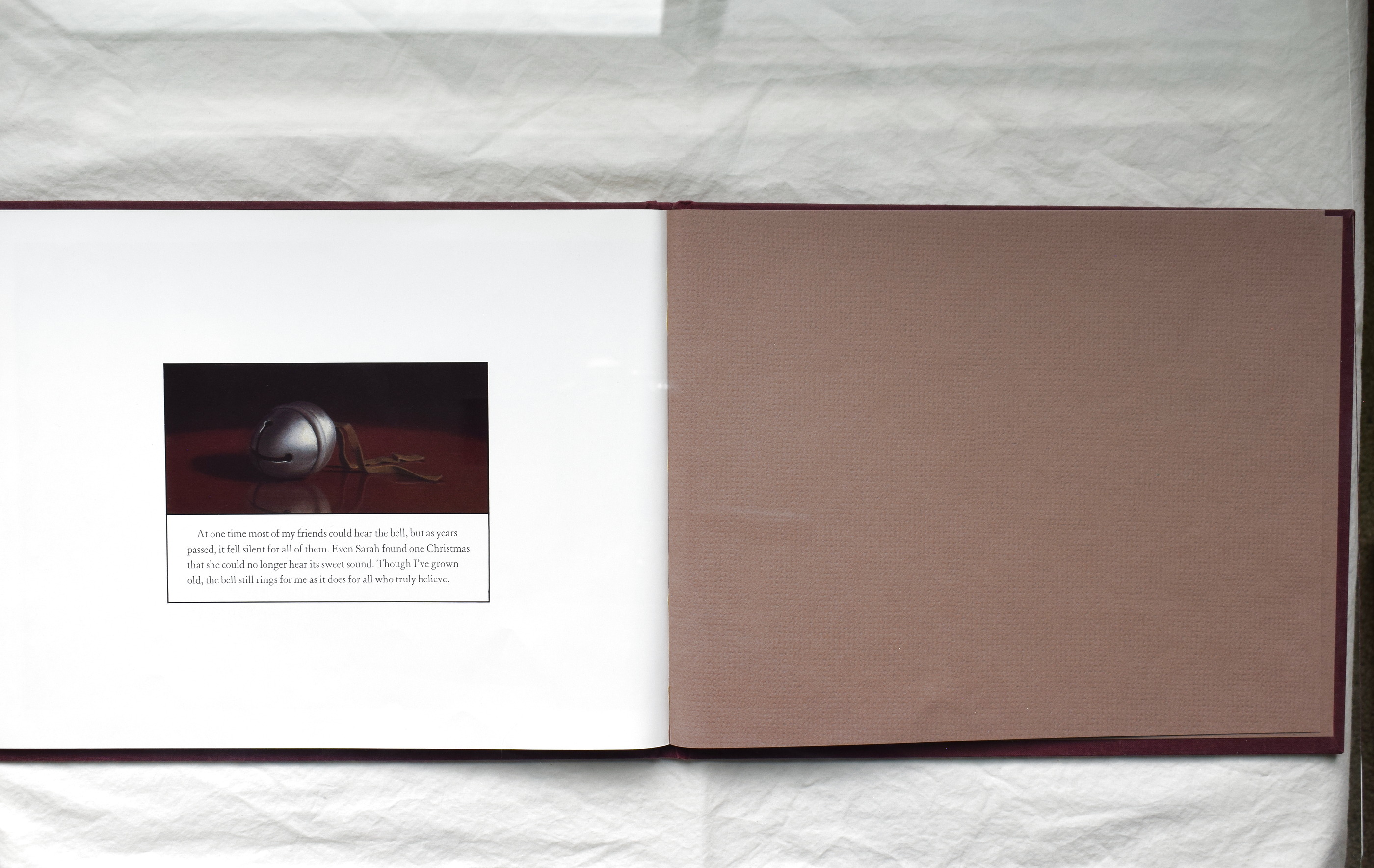
I keep coming back to this spread because Van Allsburg gives you almost nothing (just a small, dark illustration and all that empty space) and somehow it still holds the whole book's tension. The composition trusts you to feel the weight without spelling it out, which is rare in picture books.
On message, and on what the book is actually about
The book is about belief. Not specifically about Santa, although Santa is the vehicle. It's about the thing you have when you're a kid that you don't have later, and the way most people lose it without noticing, and the small percentage of people who don't. As a message for kids, it's gentle and beautiful. As a message for the adult reading it aloud, it's a stealth gut-punch, because by the time you reach the last page you're not reading about a boy and a bell, you're reading about yourself at 41 wondering when you stopped hearing certain sounds. I am being vague here not as a writerly choice but because I genuinely don't want to ruin the ending for the three people who haven't read it.
Dad survival rate is, frankly, the highest on my shelf. I would read this every night in December and not get tired of it. The only reason I don't is that I want my kids to keep feeling its weight, and books lose their weight if you wear them out. So we save it. We bring it down once a year, usually the second week of December, and we read it slowly, and then we read it again a few nights later, and then on Christmas Eve we read it one more time and I act like I'm fine.
I am not fine. It's a perfect book.