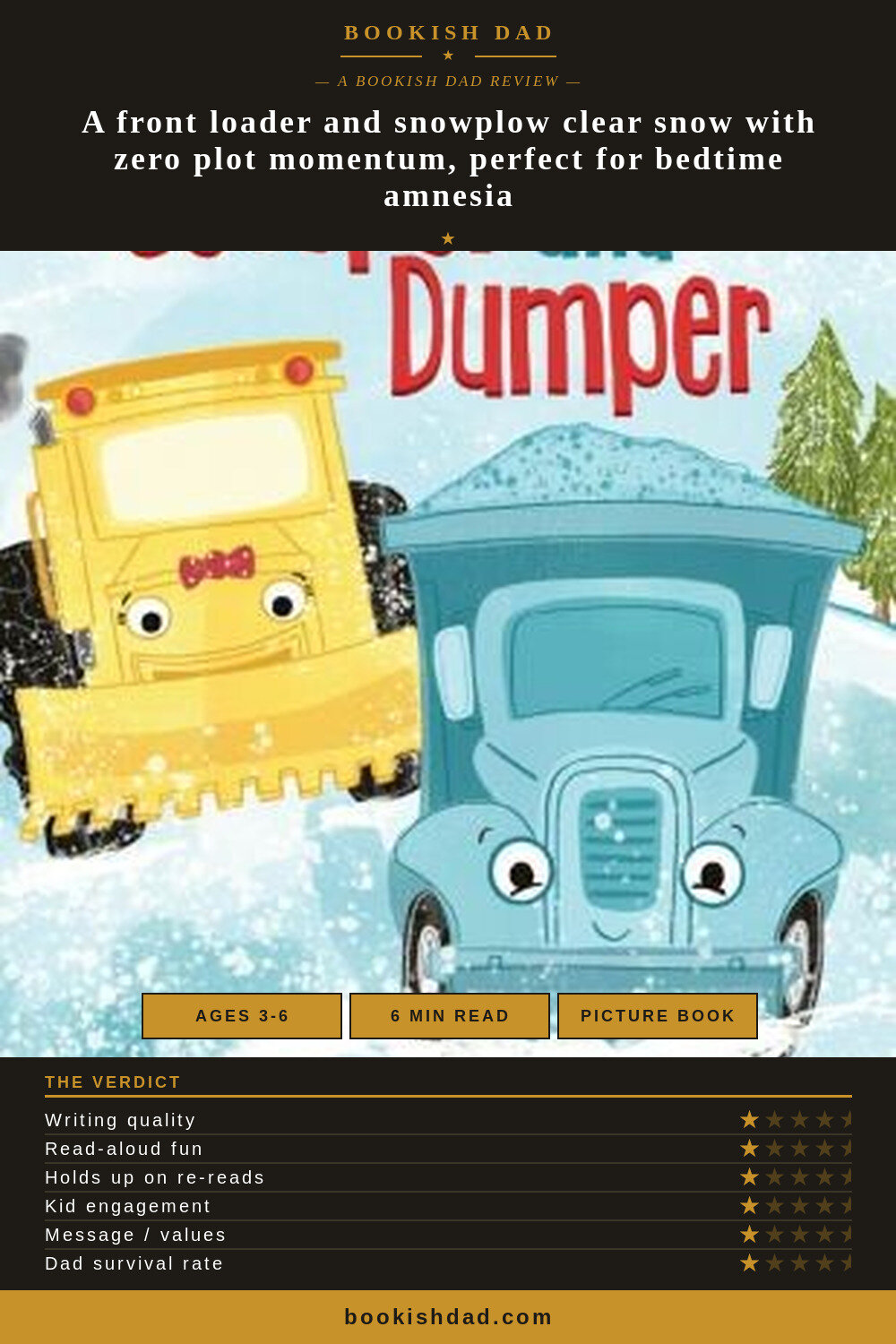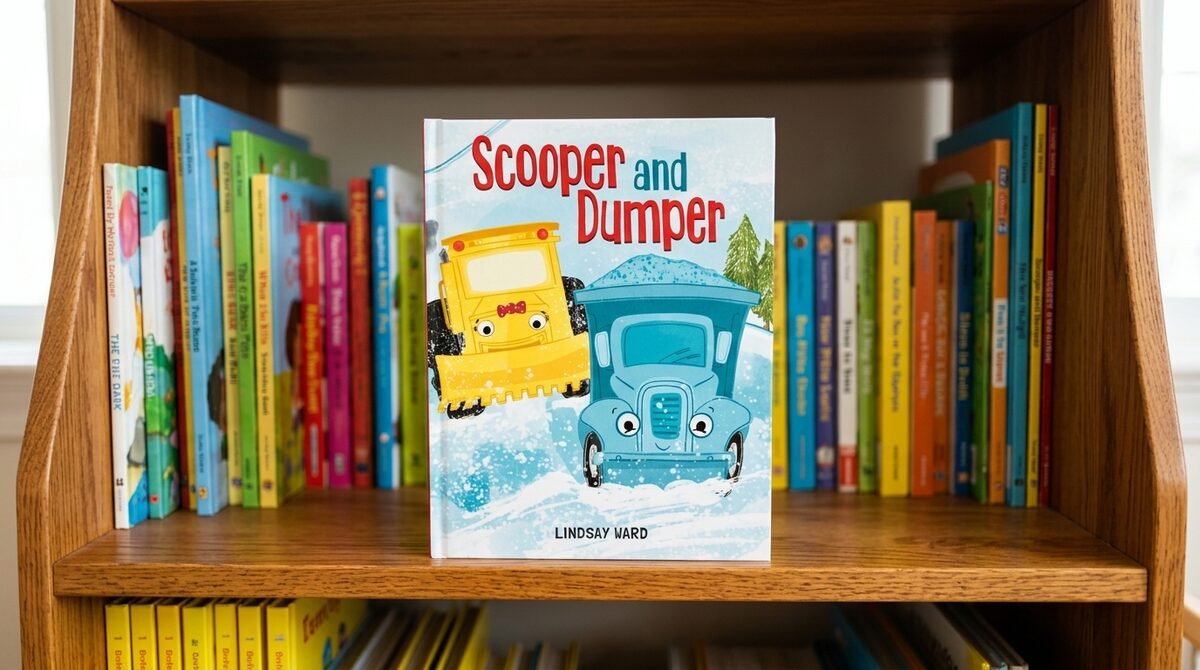

I want to give you an honest summary of this book, and I can't. I finished it for what I'm fairly sure was the 22nd time about five minutes before sitting down to write this, and the plot has already evaporated out of my skull like steam off a coffee mug. Two friend trucks. They help their town. A snowstorm shows up and the city needs them. The smaller one gets to be brave in its own way. That's the publisher's framing and honestly it's more than my own brain retained. I had the book open in my lap for six minutes and the story passed through me like I was a screen door.
The strange part is that I don't think this is a failure, exactly. It might be the design.
A book engineered to be forgotten, possibly on purpose
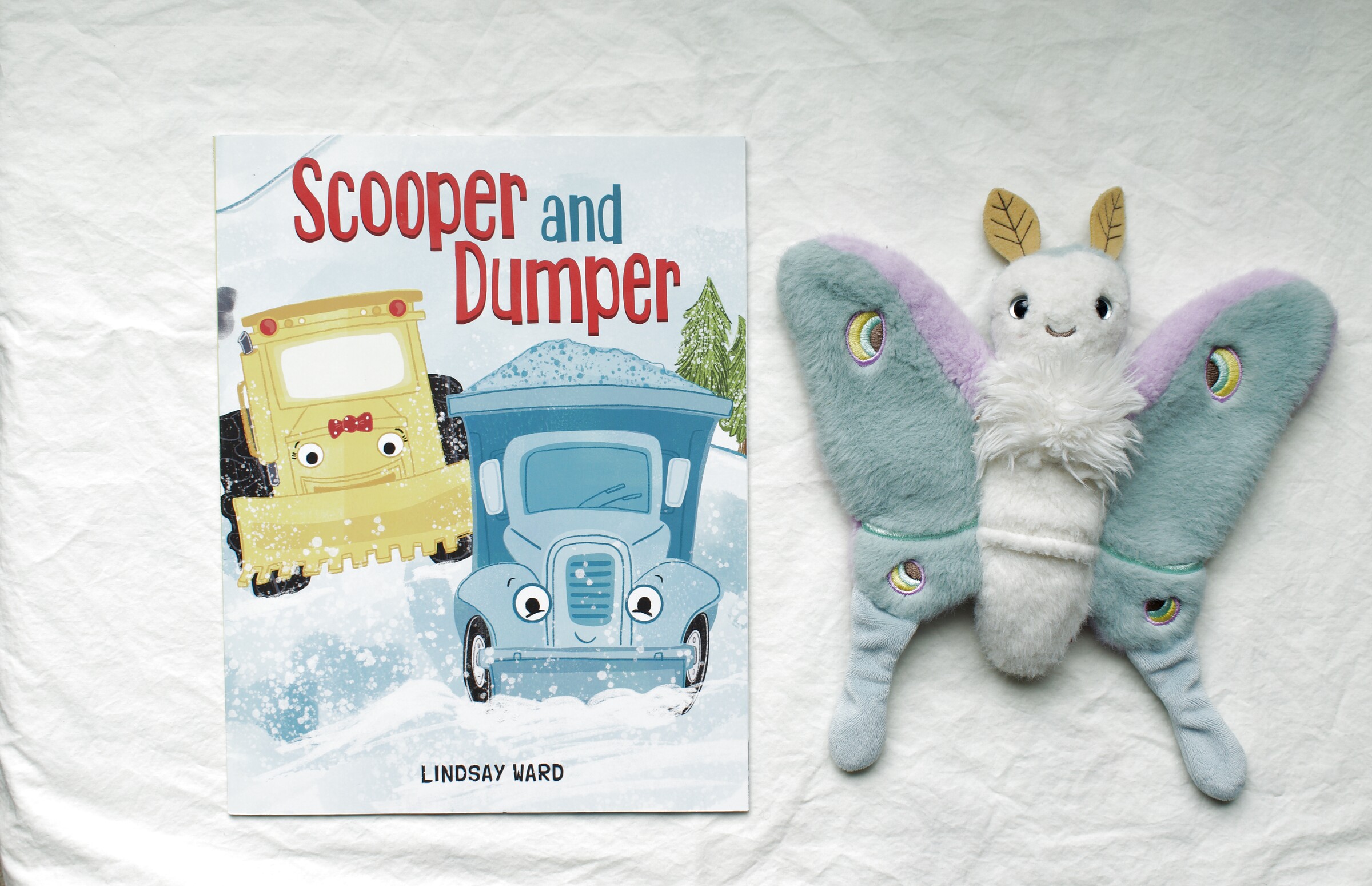
Moth wonders if this is a gentle winter tale or a cautionary story about refuse collection. Either way, she's here for it.
Lindsay Ward's vehicle stories have a real audience, and I understand why. Scooper is a front loader, Dumper is a snowplow, they work together no matter what, and the whole thing rolls along on the gentle theme of individual strengths and teamwork. It is competent. It is pleasant. The writing is clean and it never trips over itself. But clean and never-tripping is a low bar, and this book clears it by lying down and rolling under it. There's no sentence in here that grabbed me by the collar. Nothing surprised me with a word choice. The rhythm is steady to the point of being a metronome, and a metronome is a fine thing to fall asleep to, which I suspect is the unspoken use case here.
I keep going back and forth. Is this the most milquetoast picture book ever printed, or is it the single most strategically valuable book you can own for the slot immediately before lights-out? I genuinely cannot decide, and I've now read it 22 times to try.
The kids: a profound and total absence of reaction
Here is the data point that broke my brain. In 22 reads, neither of my kids has ever commented on, questioned, laughed at, or reacted to a single thing in this book. Not once. My four-year-old, who throws himself bodily into anything with a vehicle or a loud noise, who will demand the exact same poem every night for three months straight, has never once asked for this one by name and never once protested when it ended. He just sort of glazes over with mild contentment. My eight-year-old, who catches things in books I miss entirely, has nothing to say. No dry one-liner. No quiet observation. She just listens to it the way you'd listen to a fan running in another room.
For my son specifically, that's almost eerie. The boy has feelings about everything, usually three or four of them simultaneously and at volume. The fact that a book about two trucks plowing through a snowstorm generates zero charge from him tells you something. The drama is described but it never lands in the body. There's no read-aloud payoff line, no sound to perform, no moment where I can drop into a voice and watch him light up. I tried giving Dumper a gravelly diesel rumble on read number nine just to manufacture some interest. My son blinked at me. We moved on.
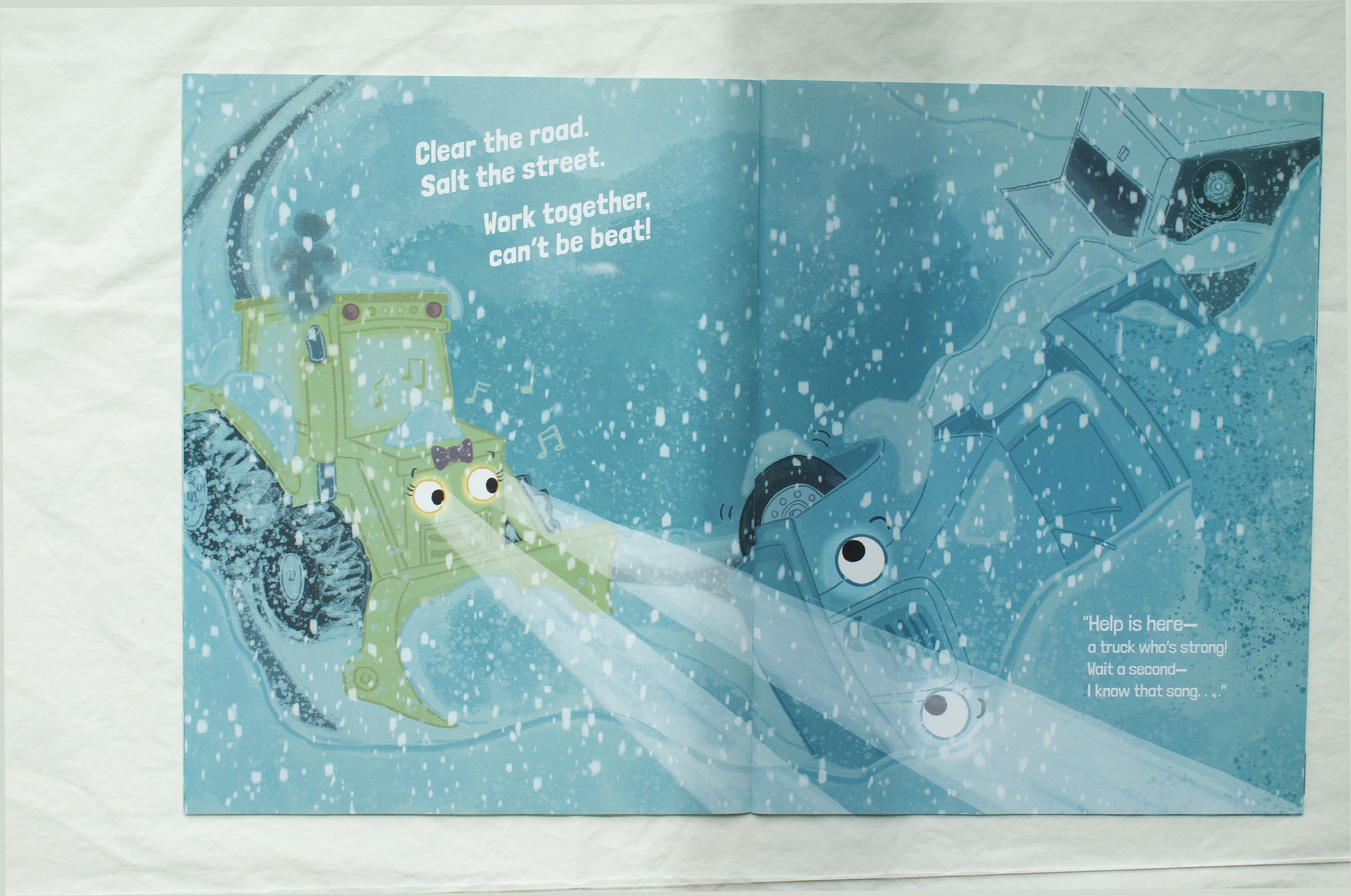
Sometimes a book earns its spot on the shelf with a jingle that wedges itself into your brain, and this one does exactly that. The rhyme isn't clever or original, but my son hums it while he builds with blocks, so apparently it works.
Does it survive 22 reads? Yes, because it never engaged me enough to wear out
Here's the paradox. A book that bores you on read one usually becomes unbearable by read fifteen. This one didn't, and I think it's because it started at such a low simmer that there was nowhere further down to fall. It's not annoying. There's no grating rhyme that drills into your temporal lobe, no precious narration that makes you wince. It just exists, quietly, every night, and then it's over and the lights go off and everyone's calm. My survival rate on this is honestly high, not because the book is good but because it asks almost nothing of me. I read it in the flat, even tone of a man reading the back of a cereal box, and that turns out to be exactly the energy the moment requires.
On message, it hits the standard friendship-and-teamwork beats, and it hits them inoffensively. Be brave in your own way, help each other, the small one matters too. These are fine things to teach a three-year-old and I have no complaints about the values. I just can't pretend they arrive with any force. The lesson is delivered the way the rest of the book is delivered: politely, evenly, and forgotten by morning.
So who's this for? It's for the family that wants the last five minutes before sleep to be a deceleration ramp, not a rollercoaster. If your kid loves trucks and you need something gentle to bring the night in for a landing, this does the job with quiet professionalism. If you want a bedtime book your kid will fall in love with and demand for months, look elsewhere. This is the book equivalent of a warm glass of milk. Useful. Bland. Gone by sunrise.