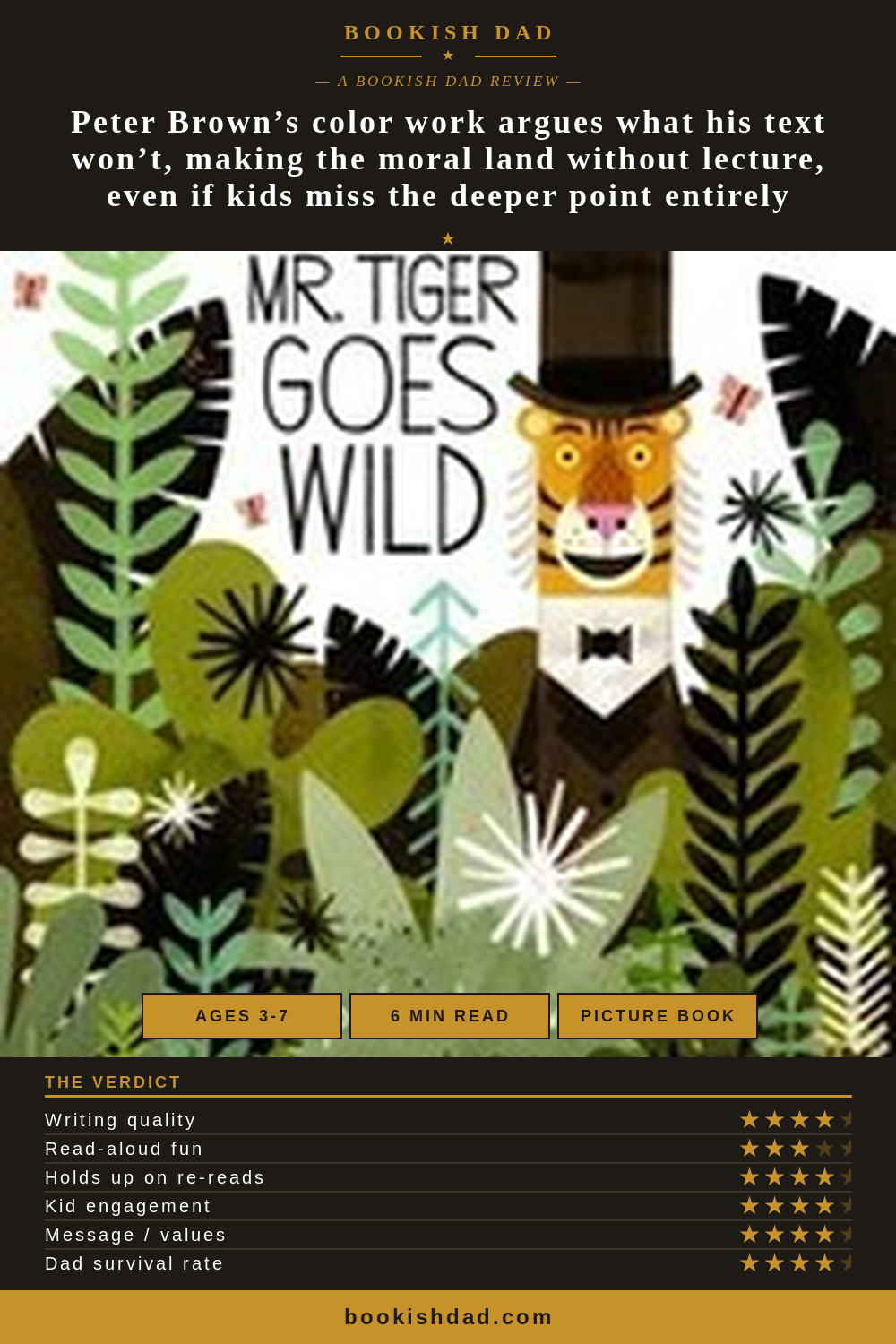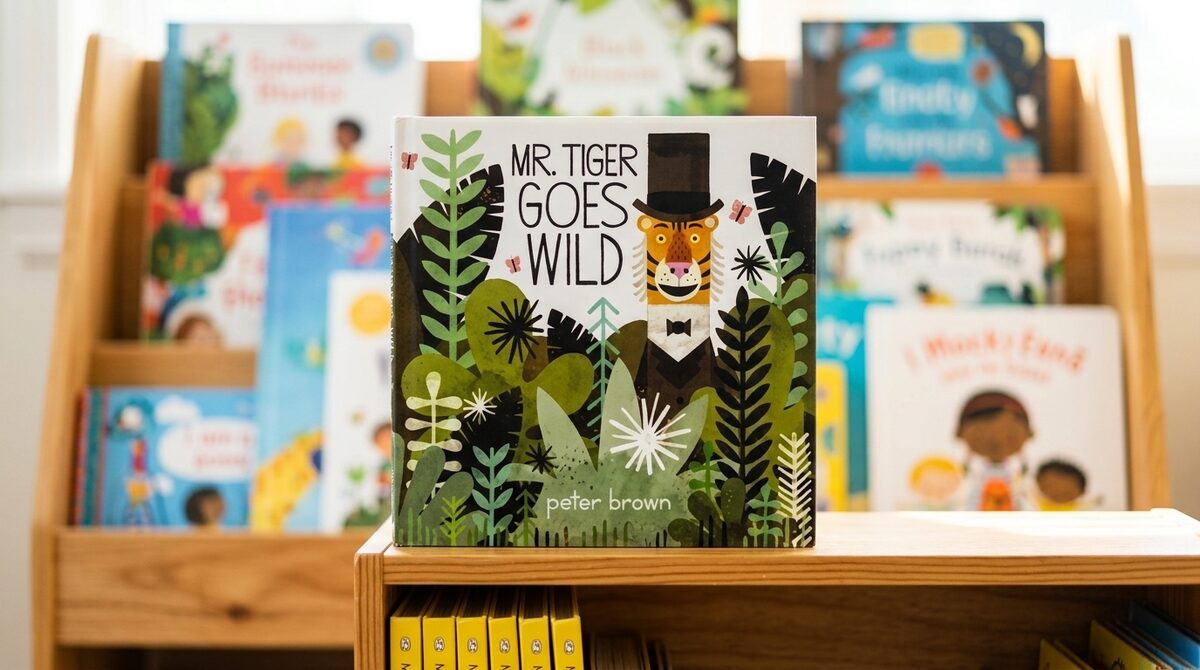

I should probably care about the plot more here. I review books, that's allegedly the job, and there's a perfectly good story in Mr. Tiger Goes Wild about conformity and figuring out who you are. I'll get to it. But I need you to understand that every time I open this book, all I can actually think about is that ORANGE. That is the entire review happening in my head. ORANGE. It might be the single most orange thing we own, and we own traffic cones.
Okay, serious paragraph. The text here is short and plain, and that's on purpose. Brown knows the pictures are the show, so he doesn't fight them for attention. Sometimes the words in a book just matter less than the pictures, and this is one of those books, and the writer clearly knows it, which is weirdly rare. I respect that more than I expected to, given that caring about the words is supposedly my whole thing.
The premise is the kind of thing that could curdle into a lecture. Mr. Tiger is bored with being proper, with city life and the manners it demands, so he decides to go wild and finds out something about who he actually is. You can see the moral coming from the cover. Be yourself, follow your nature, the grass isn't always greener, there's a time and a place for everything. None of that is wrong, and Brown handles it with a lighter touch than the synopsis suggests. He doesn't beat you over the head with it. He just lets you look at the pictures until you get it.
What the orange is actually for
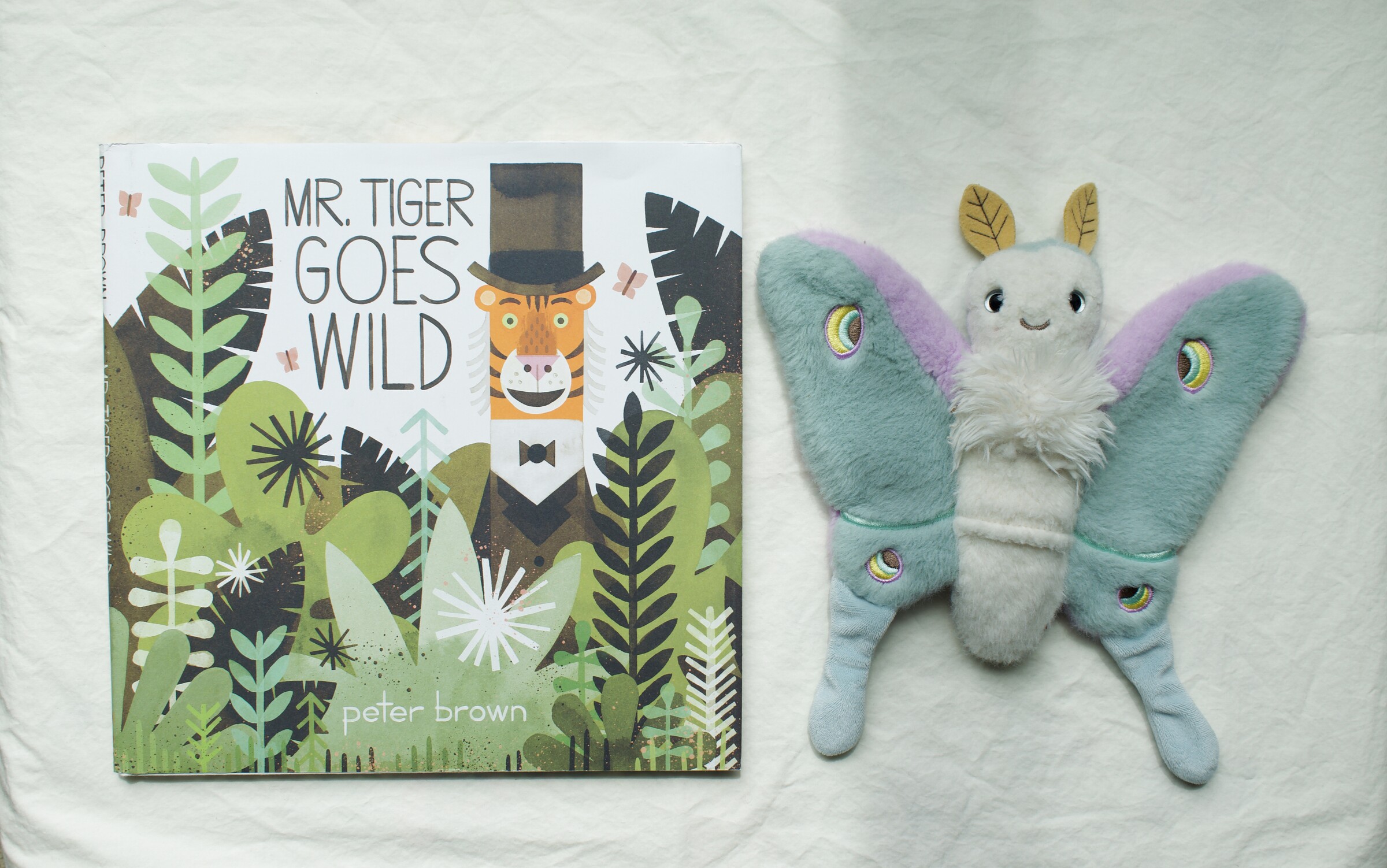
Moth has doubts about encouraging any creature to go wild, dressed or otherwise.
Because the contrast is the whole game. The city is buttoned-down and sepia, all stiff lines and grown-ups telling children to stop acting like wild animals. And then there's Mr. Tiger, one screaming streak of orange in the middle of all that beige. Nobody has to explain that he doesn't fit. You can see it from across the room (I have tested this, from across the room). And when the book finally opens up into full color near the end, something in your chest actually unclenches a little. I don't know how Brown does that with zero words of explanation, but he does it on every single read.
Read aloud, it's a quieter performance than my house usually goes for. There aren't many sound effects baked in, and there's no rhyme to ride. I'll be honest, I half-expected my four-year-old to drift, because his attention is a fragile and easily startled creature. He did not drift. He went quiet in the way he only goes quiet when something on the page has genuinely hooked him, and then at a certain point he simply got up and did his own roar, unprompted, because the book had given him permission. That is exactly the reaction Common Sense Media warned me about, and they were right. Prepare to be roared at.
My eight-year-old clocked the whole conformity thing before I could even gesture at it. She doesn't make a production of these observations. She just states them flatly, like she's reading a weather report, and then goes back to her own book. The grass-isn't-greener turn landed for her in a way I think it genuinely won't for the younger one, who is purely there for the spectacle of a tiger getting to be a tiger.
On re-reads, the words wear out a little before the pictures do, which is the right way around for this kind of book. The text is so spare that by the tenth pass you're basically narrating a slideshow, but the slideshow is so good you don't mind. I never once felt the urge to fake an injury to get out of reading it again, which is more than I can say for certain other beloved titles in this house. The survival rate is high because Brown didn't overwrite it. There's just not much here to get sick of.
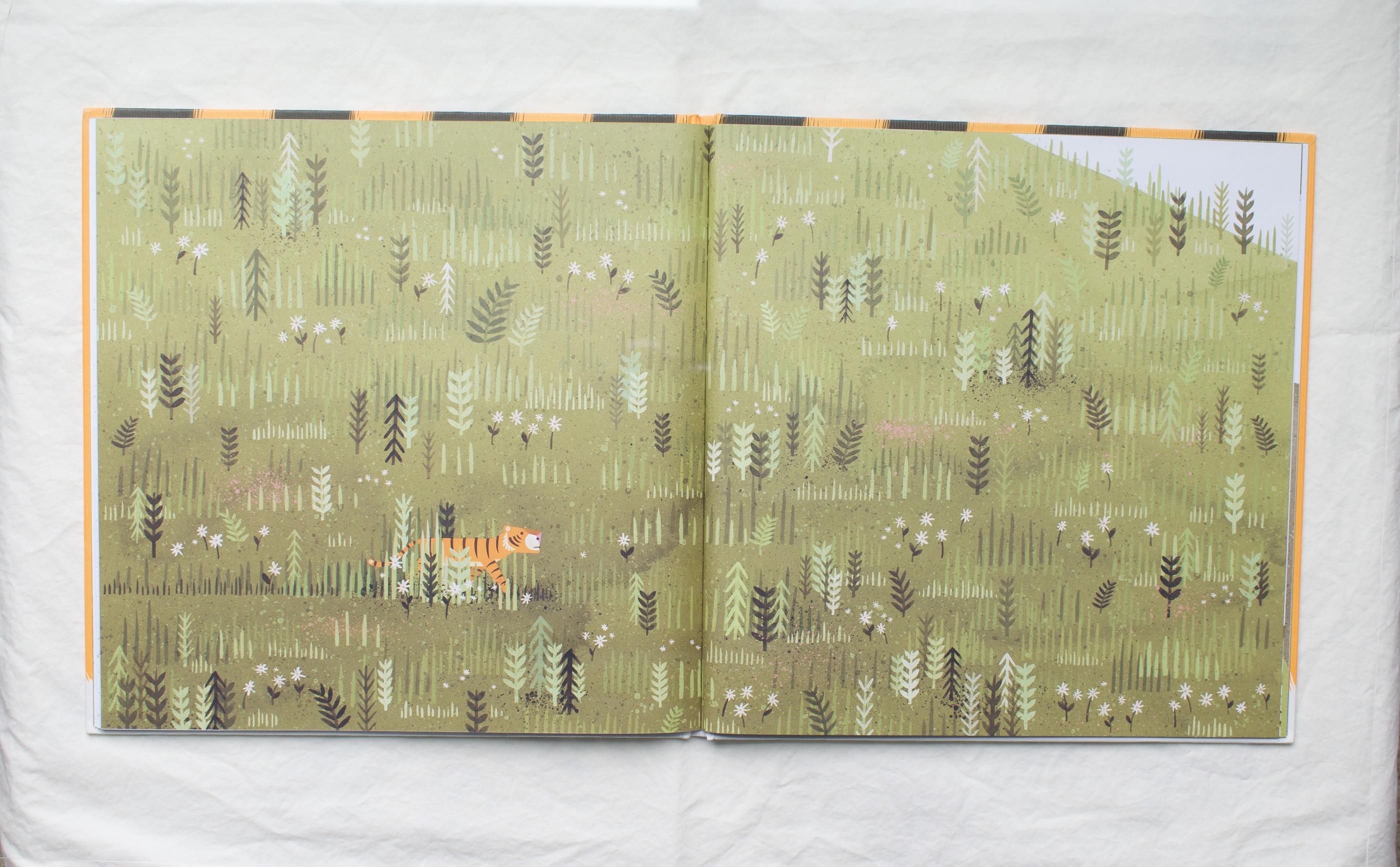
I picked this lonely spread because the whole book trips over its own message. Mr. Tiger goes wild, gets sad anyway, then everyone else conveniently follows suit when he returns (which isn't how actual rejection works).
If I'm docking it anything, it's that the message is the most predictable part of the book. You knew where this was going before you opened it. Doesn't matter. You're not here for the message. You're here because somebody made a tiger THAT orange and had the nerve to surround him with beige, and six minutes later your kid is roaring at you. Worth it.