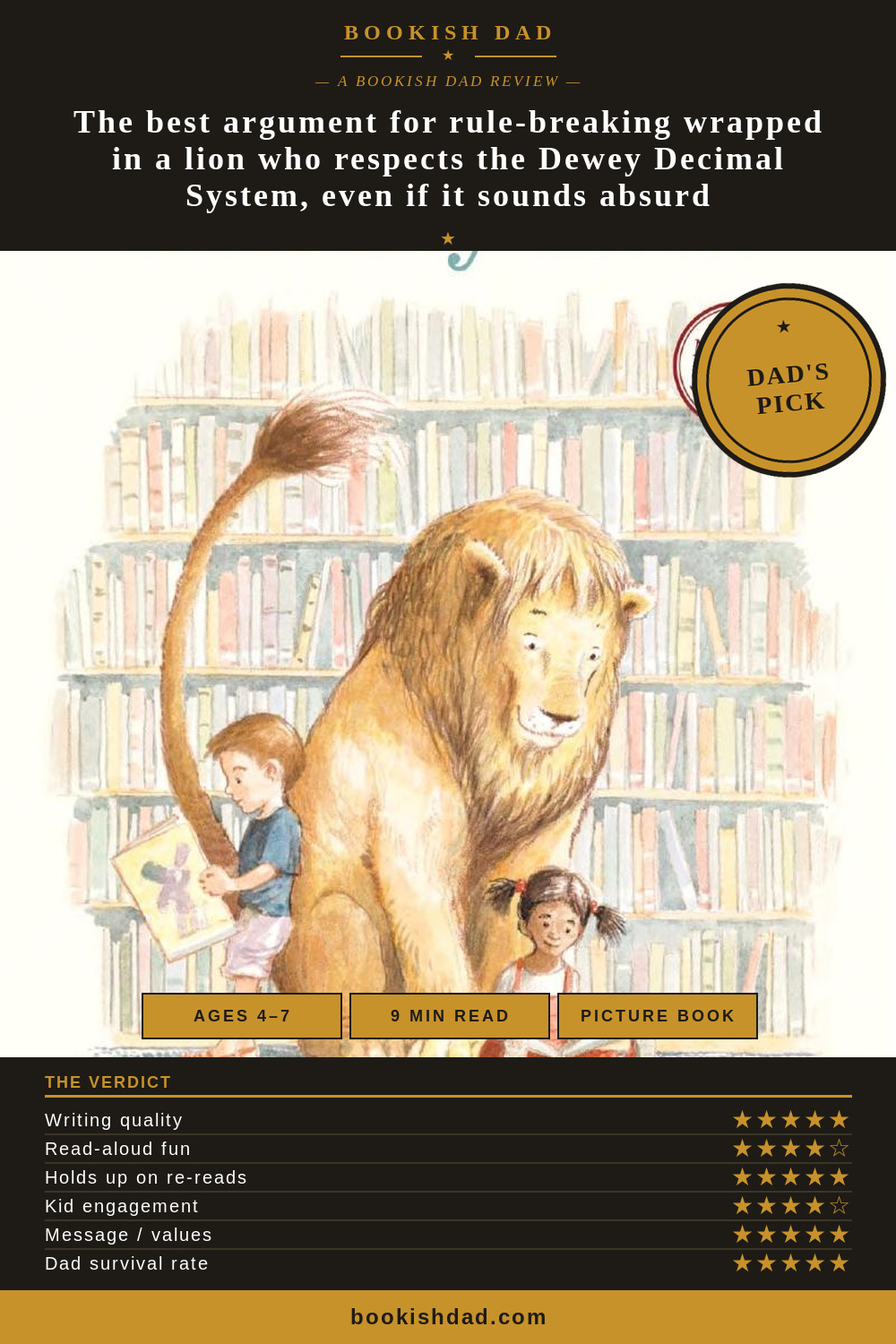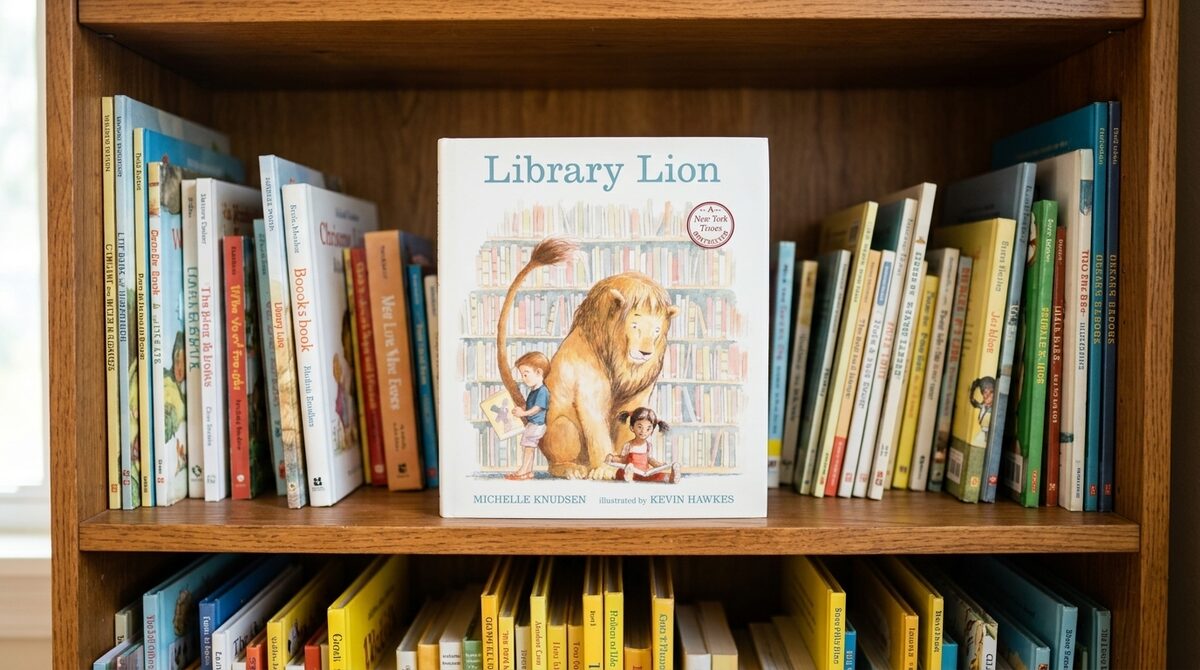

The first time I read this one I thought it was a cute book about a lion in a library, which is how I think about most books on the first read, like a man squinting at the surface of a pond. There's a head librarian, Miss Merriweather, who has rules. No running. Be quiet. And then a lion walks in, which apparently is not a rule anyone thought to write down. That's the whole machine on read one. A lion comes to the library and turns out to be unexpectedly good at library behavior, and I nodded along like a guy who's seen a children's book before.
It took me a few more nights to clock that I'd missed the entire thing.
Read these books a hundred times and you notice something: the dumb questions you ask yourself early on are actually the door in. Why is nobody more panicked about a full-grown lion wandering the stacks? Where did he even come from? Children's books famously do not answer questions like this, and Knudsen doesn't either, because answering them would wreck it. The lion isn't a logistics problem. The lion is a feeling that walked through the door, and the book is daring you to be the kind of grown-up who demands a permission slip.
What got me, eventually, is that this is a friendship book wearing a lion costume. It's about the unlikely places connection shows up, and the way the rules we cling to can quietly become the thing in the way. The big quiet machinery of it is that the lion has to choose between obeying the rules and helping his friend when something goes wrong, and I'm not going to walk you through how that lands because part of the gift of this book is feeling it arrive on its own. I'll just say the reunion between the lion and Miss Merriweather is the moment I have to do the thing where I keep my voice perfectly level and stare extremely hard at the page.
The art is exactly my kind of art
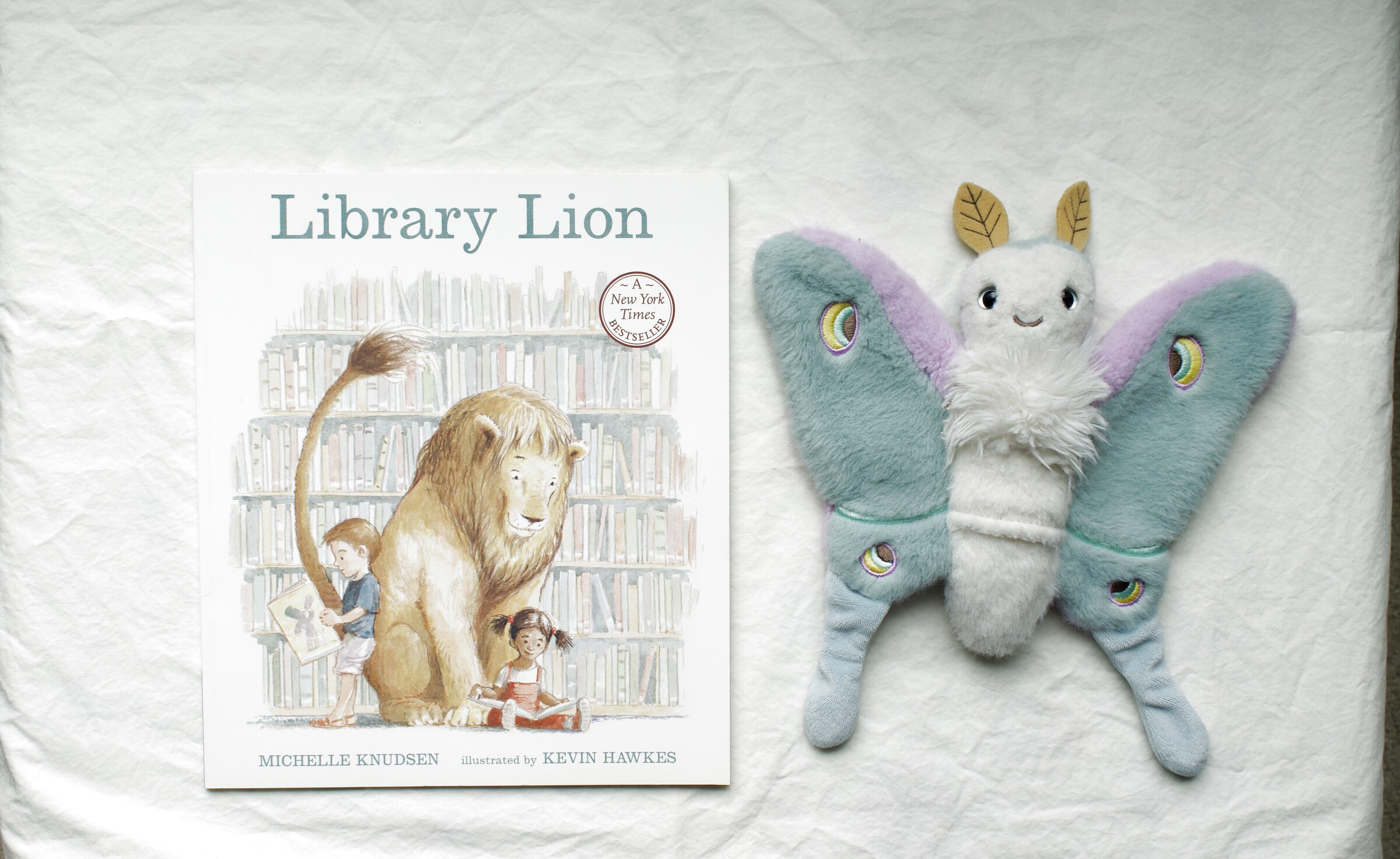
Moth is underwhelmed by a lion who merely follows library rules. She prefers her predators with fewer scruples.
Kevin Hawkes does the style I love most, the kind where you can actually read the emotion on a face. Nobody is a flat cartoon here. You see the worry, the warmth, the small softening that happens around the edges of people, and it's pitched at precisely the register the story is working in. Detailed without being busy. Warm without being syrupy. There's a sensitivity to it that does half the storytelling, which is the whole point of a picture book and a thing a shocking number of them fail to do.
On the writing: Knudsen has restraint, which is the rarest thing in this aisle. The prose is plain and a little formal in a way that mirrors a library, and she trusts the silences. She does not over-explain the moral, she does not pile on adjectives, she lets a simple sentence do a large amount of work and then steps back. As a read-aloud it's gentle rather than rowdy. You're not doing a big roaring performance most of the way through, which is its own kind of pleasure. There's a softness to the cadence that actually slows my son's heart rate down at bedtime, and after a day with a four-year-old, slowing his heart rate is a personal victory.
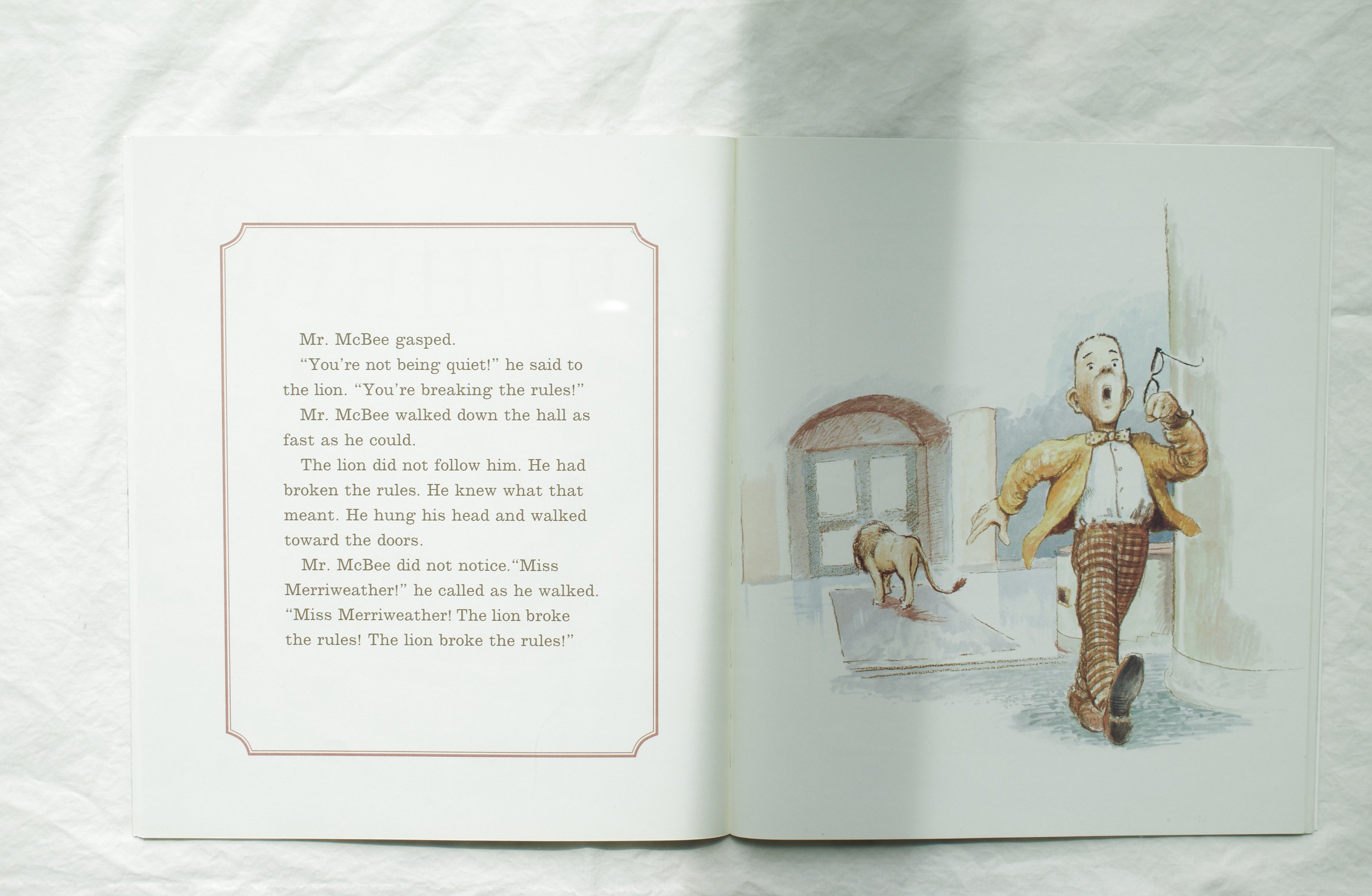
One of the quieter morals here is that you shouldn't always follow the rules (which feels like a lot to lay on a four-year-old). It does put Mr. McBee in a strange spot: is he the villain just for following them? I'm probably overthinking a picture book, but the man should really consider that snitches get stitches.
The honest part about my kids
Are they pulling this one off the shelf every single night? No. And I'd be lying to you if I said otherwise. My son is still loyal to the book that makes sounds, the way a man is loyal to a sports team that keeps losing, and a quiet book about a lion is never going to out-shout a book with a button. My daughter, eight and constitutionally unwilling to show you she's moved, doesn't request it by name either. But here's what I notice. When this one does get read, both of them settle into it in a way they didn't expect to. My son stops fidgeting. My daughter, who catches the symbolism in things before I do and then says nothing, gets a particular look on the last few pages, the look of someone deciding not to say anything. They get more out of it than they signed up for. So do I.
On message: it's teaching something real, which is that kindness sometimes breaks the rules, and that the rules exist to serve people and not the other way around. That's a sturdier lesson than most picture books attempt, and it never once lectures you about it. As for the dad survival rate, this is the rare book I don't dread on the fifteenth read. I'm not narrating it in the voice of a dying clergyman to stay awake. If anything I'm bracing myself, because the reunion does not get less effective with repetition. It gets worse. Or better. Depends how you feel about your own composure.
I cried at The Giving Tree. I cried at Charlotte's Web. I am clearly not a reliable witness on this stuff. But Library Lion earns it honestly, and that's the whole difference.