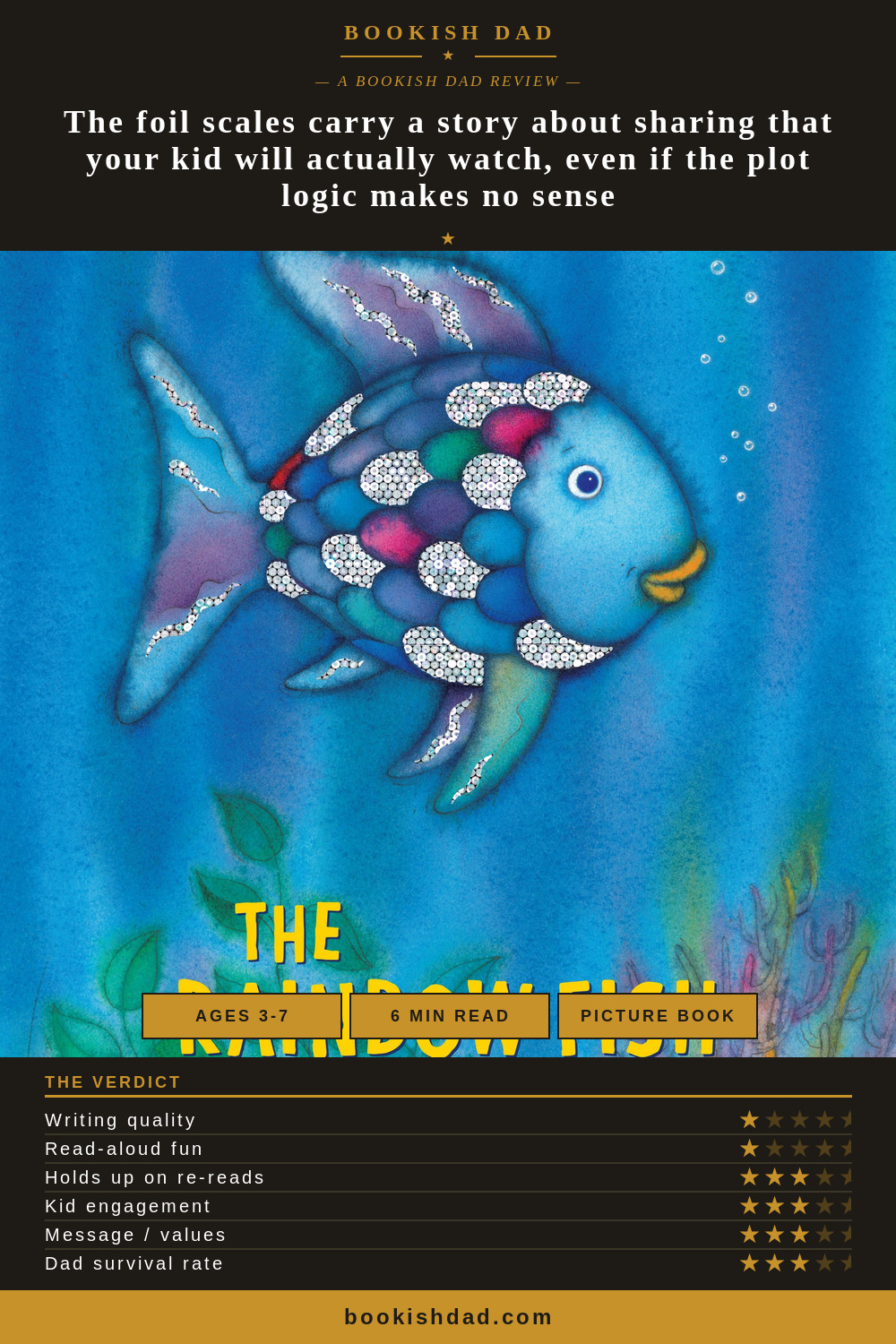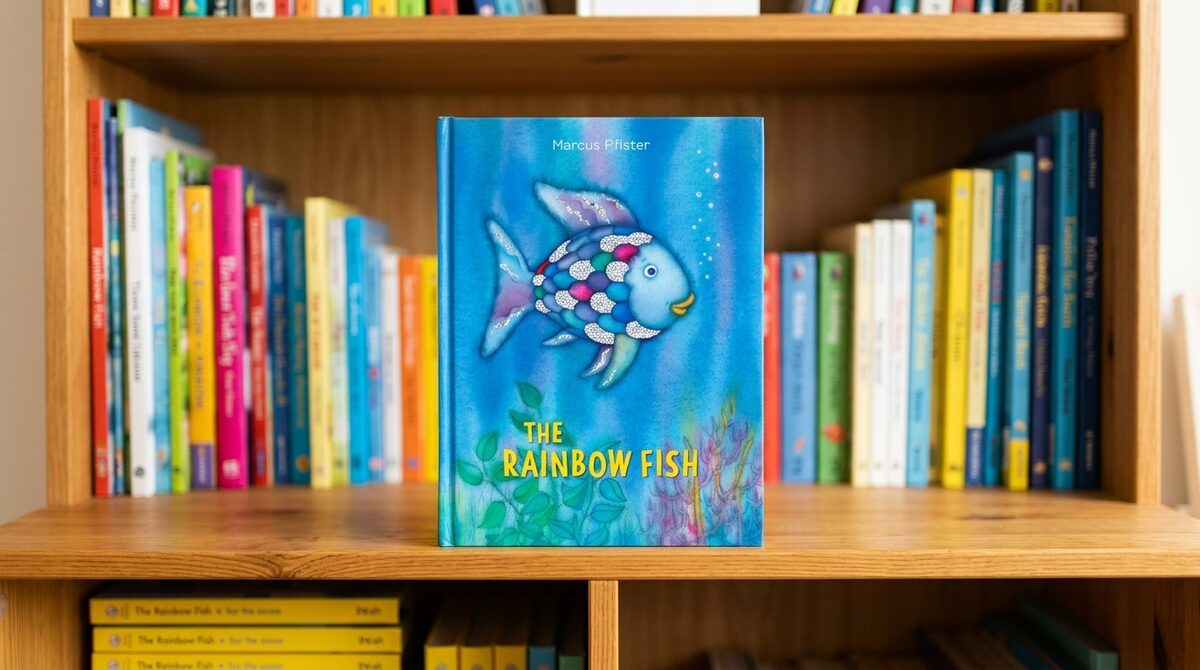

The internet has decided that The Rainbow Fish is a referendum on socialism, and I want to go on record saying that I do not care, not even slightly, and that I think both sides of that argument have far too much time. You can find essays insisting this book teaches collectivism and other essays insisting it teaches you to surrender your individuality to the mob. I read it to a four-year-old who roars at sea creatures. The geopolitics are not landing in our house.
What is landing, and what nobody on the internet seems to want to talk about, is the much simpler fact at the center of this book: the Rainbow Fish is kind of a jerk. He glides past everyone, proud and silent, letting his scales shimmer. When the little blue fish politely asks for one scale, the Rainbow Fish cries "Who do you think you are? Get away from me!" And then, a few pages later, this same fish has the audacity to be genuinely wounded that nobody wants to play with him. Buddy. You did that. The starfish couldn't even be bothered to spell it out, so off he swims to a wise octopus in a cave at the far edge of the reef to be told what any reasonable bystander could've told him for free: be nice to people and they'll be nice to you.
I keep getting hung up on the octopus, honestly. The Rainbow Fish traveled halfway across the ocean for advice he could've gotten from a passing crab. But fine. It's a fable. Fables need their cave-dwelling oracle.
The writing is plain to the point of invisibility
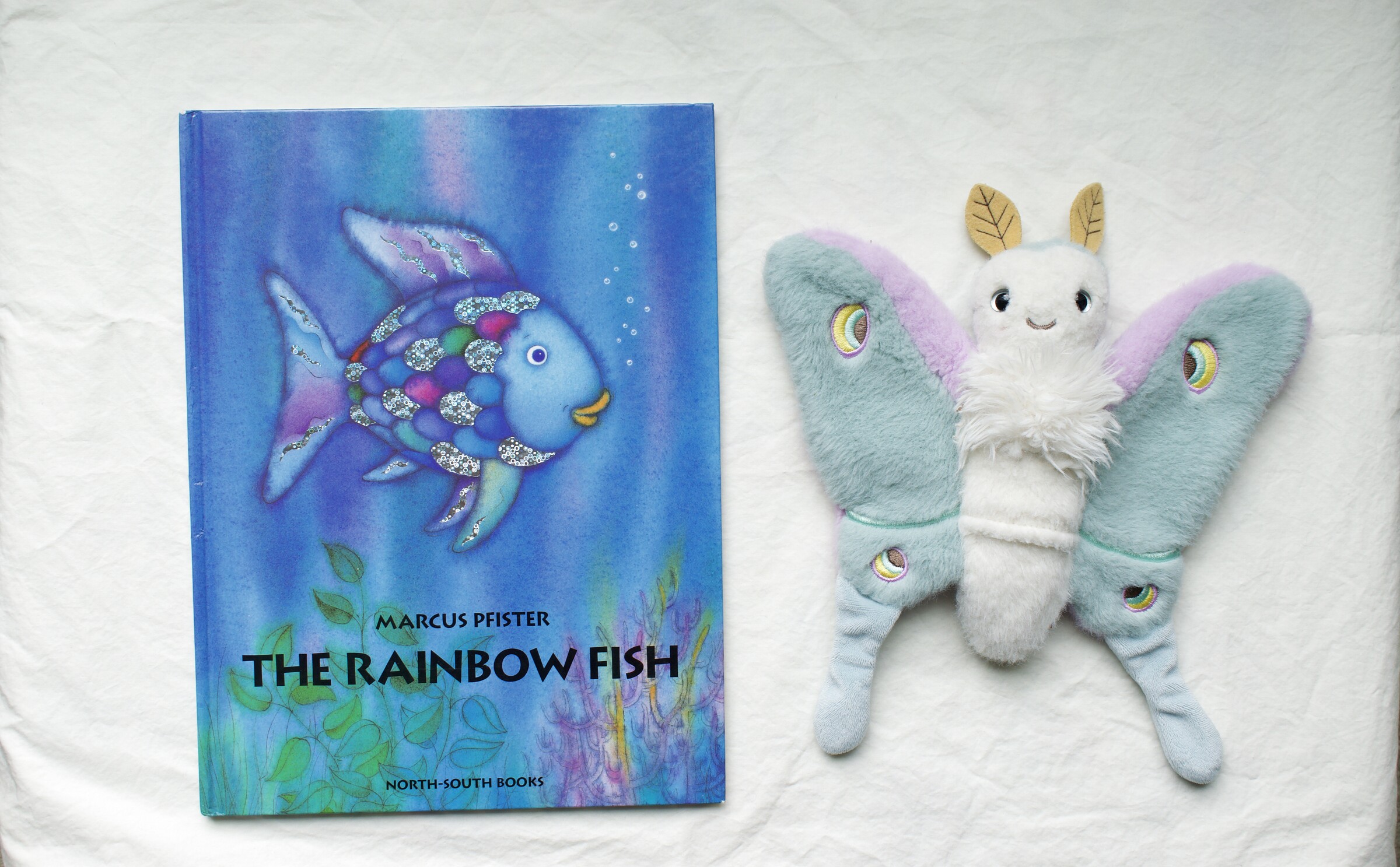
Moth is experiencing an identity crisis next to a fish with better wings.
This is a translated book, and you can feel it. The sentences are clean and serviceable and not much else. "Happy as a splash" is the one phrase that has any spring in it, and it shows up once at the very end like the translator finally relaxed. The rest reads like competent instruction-manual prose dressed up in seaweed. There's no rhythm to lean into, no buried joke for the grown-up, no line that makes you go "oh, that's nice." It tells the story and gets out of the way, which is a choice, just not an exciting one.
The actual reason this book exists, of course, is the foil. Those scales catch the light and genuinely sparkle, and my son figured that out fast. He tilts the page back and forth to make them flash, which is more engagement than the text earns on its own. The foil is the entire selling point here, and everybody involved knows it.
Read-aloud and the survival question
Out loud, it's flat. There's one big performance beat, the "Get away from me!" line, and I lean into it because that's all the book gives me to work with. The octopus gets a deep voice. Beyond that there's no real cadence to ride, no sound effects, no payoff line that lands every time. Compare it to almost anything by Mo Willems and you feel the difference immediately. This is a book you read, not a book you perform.
Which means it survives re-reads through sheer brevity. It's short enough that you don't resent the eighth pass, and the foil keeps a small kid occupied even when the words wash over him. But it doesn't reveal anything new on read fifteen. The whole thing is right there on the surface. My son requested it for a stretch, mostly for the shiny scales, then quietly moved on, which is about the right shelf life for it.
My daughter, at eight, sees straight through the moral. She pointed out, with no particular drama, that the Rainbow Fish only stops being mean once a stranger tells him to, and that he doesn't actually seem sorry, he just wants friends back. She's not wrong. That's a sharper read than most of the think-pieces manage.
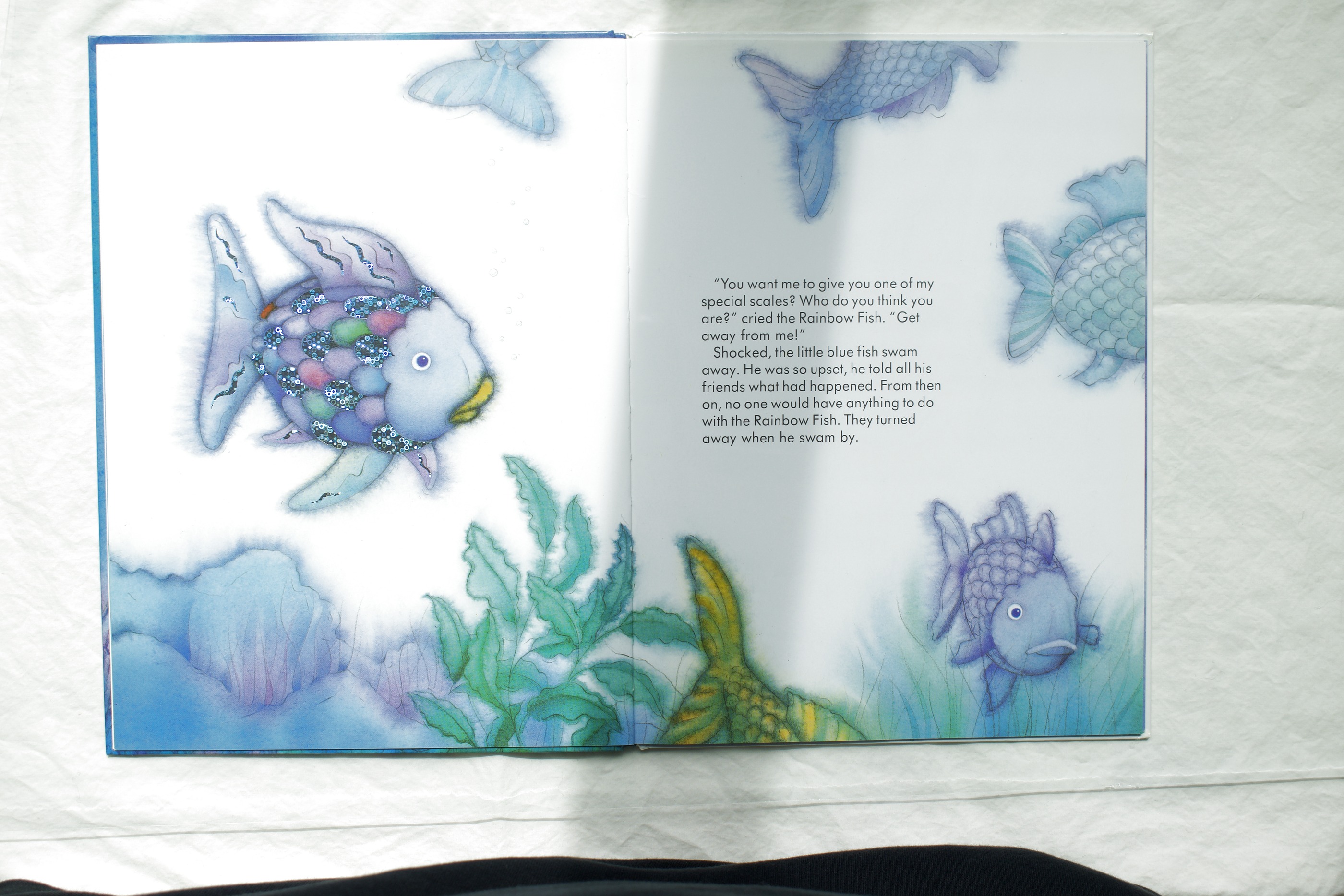
I know it's cool to dunk on the sharing lesson here, but maybe the problem is just that he's being kind of a jerk. If he'd said something like "these scales are part of me, but you're cool too, want to hang out?" we'd have a different book entirely.
So what is it teaching, exactly
Set aside the economics. Stripped down, the message is: arrogance isolates you, and generosity wins people back. That's fine. That's a real thing worth a kid hearing. My one quibble is that the book frames giving away pieces of yourself as the cure, when the actual problem was that the Rainbow Fish was rude. He could've just stopped being rude. The scale-sharing is a slightly muddled metaphor, and that muddle is exactly why grown-ups have spent thirty years arguing about it. For a four-year-old it nets out fine: be kind, be generous, don't think you're better than everyone. I'll take it.
On the survival front, this is a low-effort read for a tired parent, which counts for something at the end of a long day. It's short, it's calm, the kid likes the sparkle, and you're done in six minutes without having to do an accent for a dozen different characters. I've read genuinely punishing books to these kids. This is not one of them. It just isn't one I'll ever press into another parent's hands and say you have to read this.
Three stars feels exactly right. It's a perfectly fine book with a famous gimmick and a slightly confused heart, and the Rainbow Fish remains, to me, the least sympathetic protagonist in the picture-book aisle who still gets a happy ending.