
There is a particular feeling a parent gets when the grandparents offer to take the kid overnight, and it is roughly the feeling of a man who has just been told his prison sentence has been commuted. You hand over the child. You hand over the bag of stuff. You drive away. And somewhere around mile two you feel a small cold dread because you know, in your bones, that someone is going to call you in three hours to ask whether the four-year-old can be trusted with a spoon. These are the same people who raised you. They have simply chosen to forget everything.
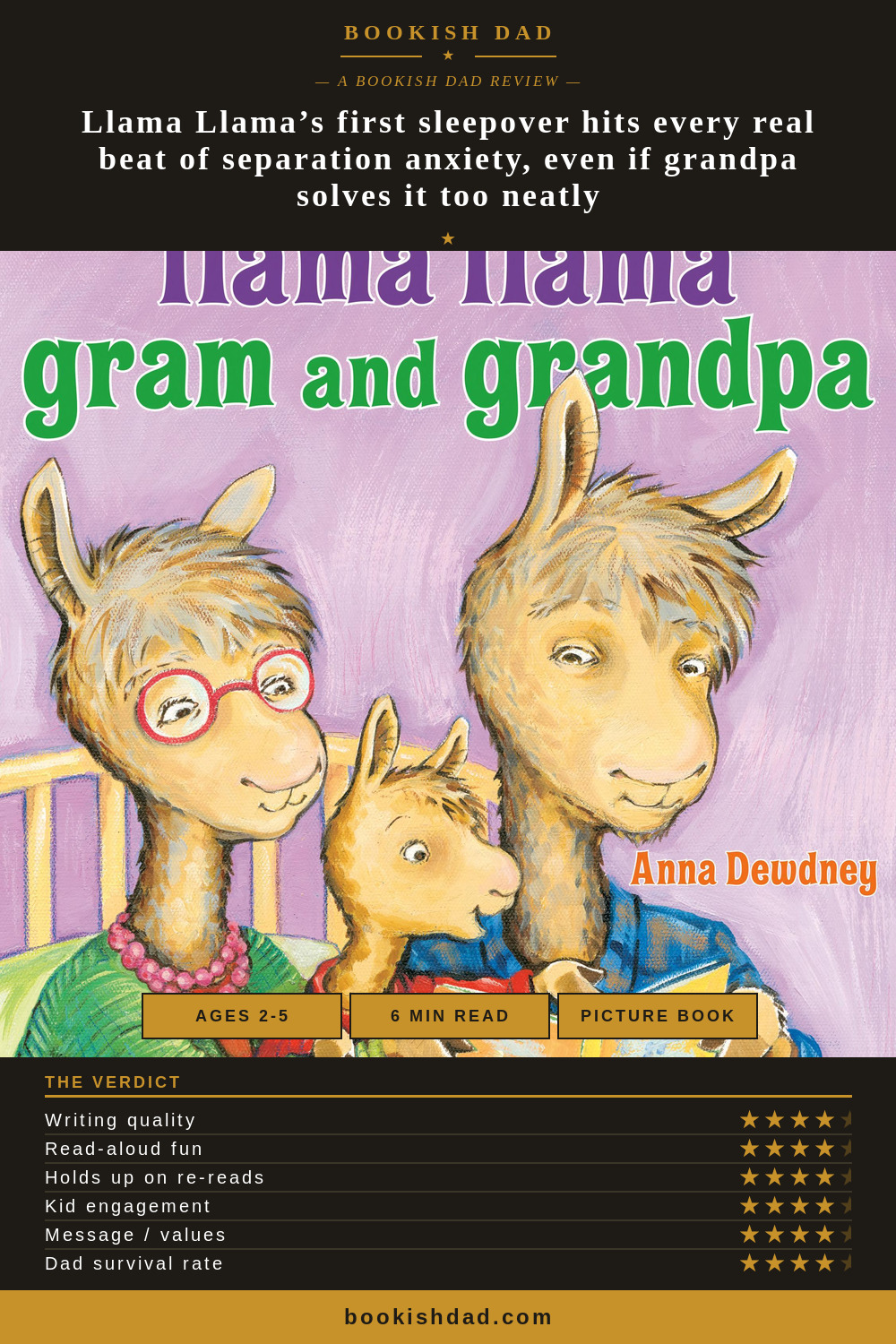
That is the emotional territory this book is parked in, and the reason it works is that Dewdney always picks the exact childhood problem worth picking. The setup is simple: it's the first night away from home and away from Mama, the little llama packs up everything he needs, there's a stretch of genuinely good time with Gram and Grandpa, and then at bedtime he realizes he's left something important behind. Grandpa has a solution. That's the shape of it, and it's the right shape, because it mirrors the actual arc of a first sleepover, which is excitement, distraction, and then a specific 8:15 p.m. catastrophe.
What I keep coming back to is what's not in the book, which is Mama Llama. She does the handoff and she's gone. I have decided, with no evidence and full confidence, that she spotted the forgotten item in the rearview mirror on the way home and chose silence. Respect. The whole genre of Llama Llama books is, if you read between the rhymes, a long study of a parent who needs a break, and this is the entry where she finally takes it.
The couplets are better-built than they look
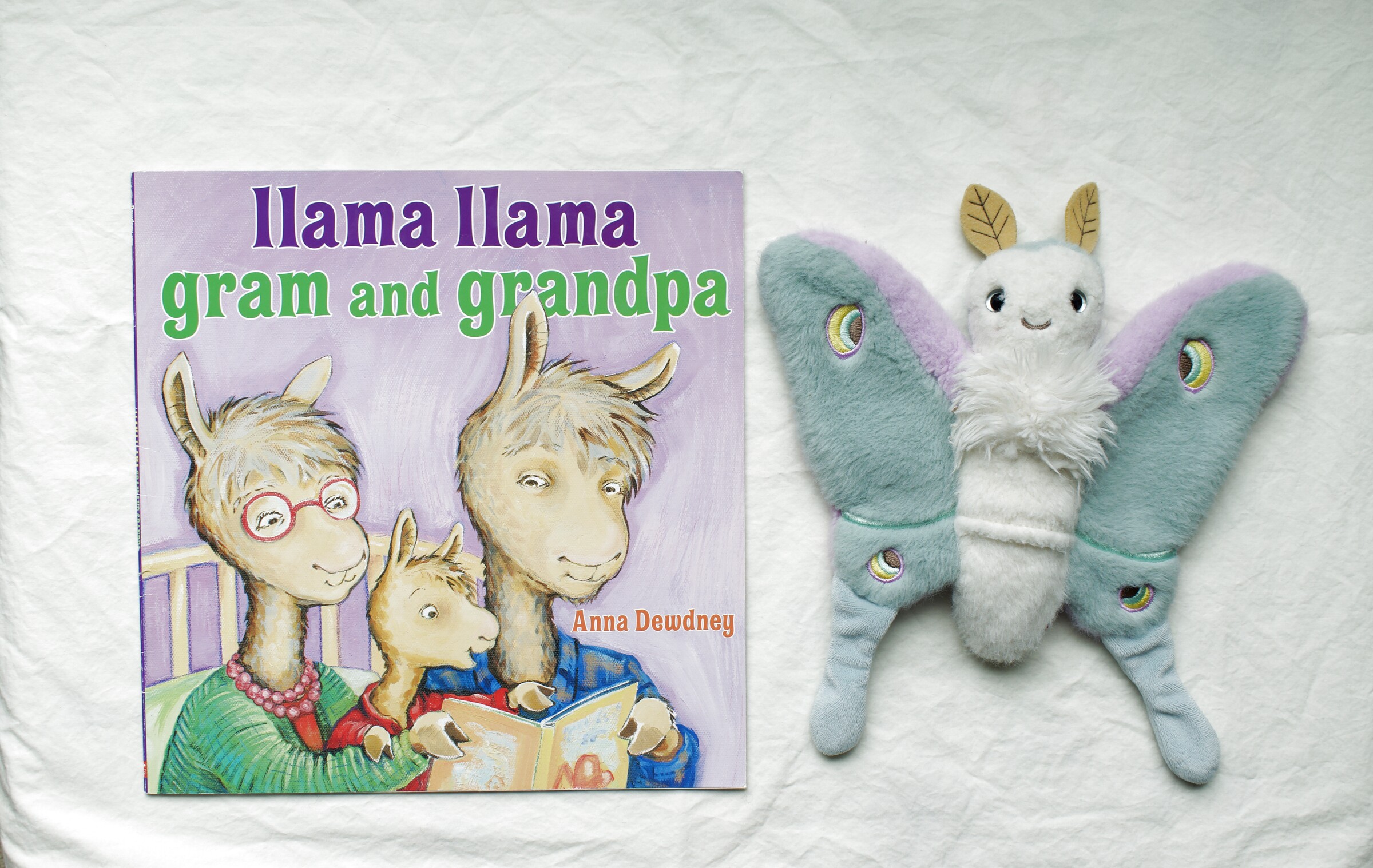
A llama family that's clearly seen better days, and Moth keeping a respectful distance from all of it.
Dewdney's writing has a craft to it that I think gets undersold because it rhymes and rhymes are easy to dismiss. They are not easy to write well. The lines here are tight, the meter mostly holds, and she has a way of landing a small emotional beat without sliding into goo. The vocabulary stays simple, the rhythm pulls you forward, and there's restraint in it. She doesn't over-explain the feeling. She trusts the picture and the cadence to carry it. That's a harder trick than a lot of celebrated grown-up authors can manage.
As a read-aloud it's built for performance. The bouncy meter gives you a built-in rhythm to ride, and there's room to do a Grandpa voice, which I do, and which I will not apologize for. My four-year-old leaned in hard at the bedtime stretch, because he understands the stakes of bedtime better than he understands almost anything. My eight-year-old has aged out of the target zone, but she sat in for a couple of reads and offered the assessment that the little llama "should have made a list," which is both completely correct and the most her thing she could have said.
On re-reads it holds better than most in this format, mostly because the rhythm doesn't wear out the way clunky rhyme does. The thing that saves it on the fifteenth pass is the same thing that makes it work on the first: it's short, it's clean, and the emotional payoff is earned rather than slathered on. It doesn't tire me out, which is the bar.
The message is the gentle, useful kind. It's about working through homesickness and the small fear of being away from your person, and about the loving grownups who help you out of it. There's nothing forced about the lesson. A kid who's nervous about a first night away gets to watch someone go through it and come out fine, which is exactly the right thing to teach and a much better delivery system than a lecture.
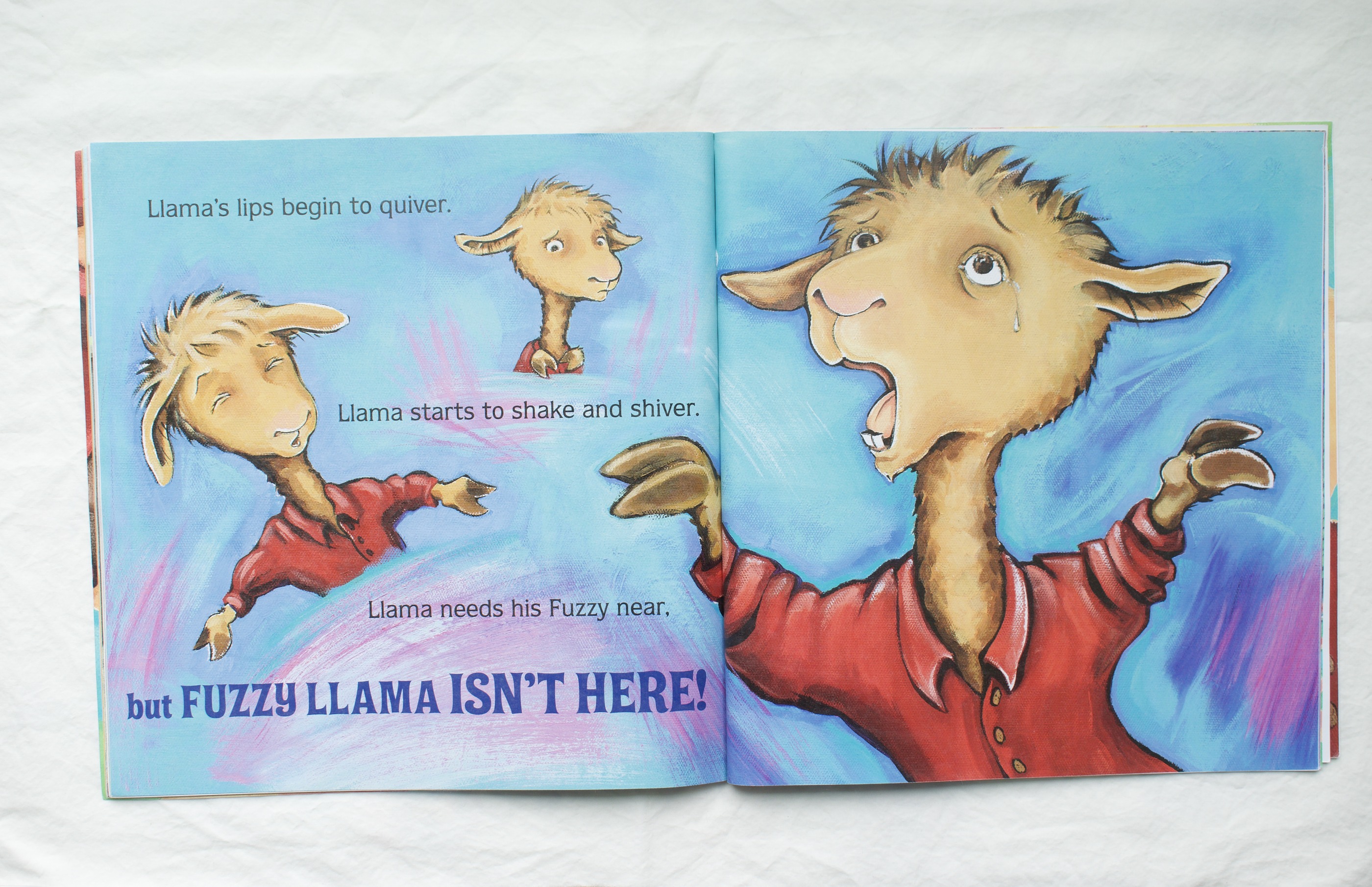
I think I just really like when Llama is freaking out. The full-body panic over a missing stuffed animal is so accurate it hurts. My son once delayed bedtime for 40 minutes looking for a toy moth, so I felt this page in my bones.
Dad survival rate is solid. It's brief enough that even a back-to-back run doesn't break me, and the Grandpa voice gives me something to do. I never found myself narrating in the tone of a man reading his own eulogy, which is the failure state for a lot of bedtime books. This one I can do four times in a row and still be a person at the end.