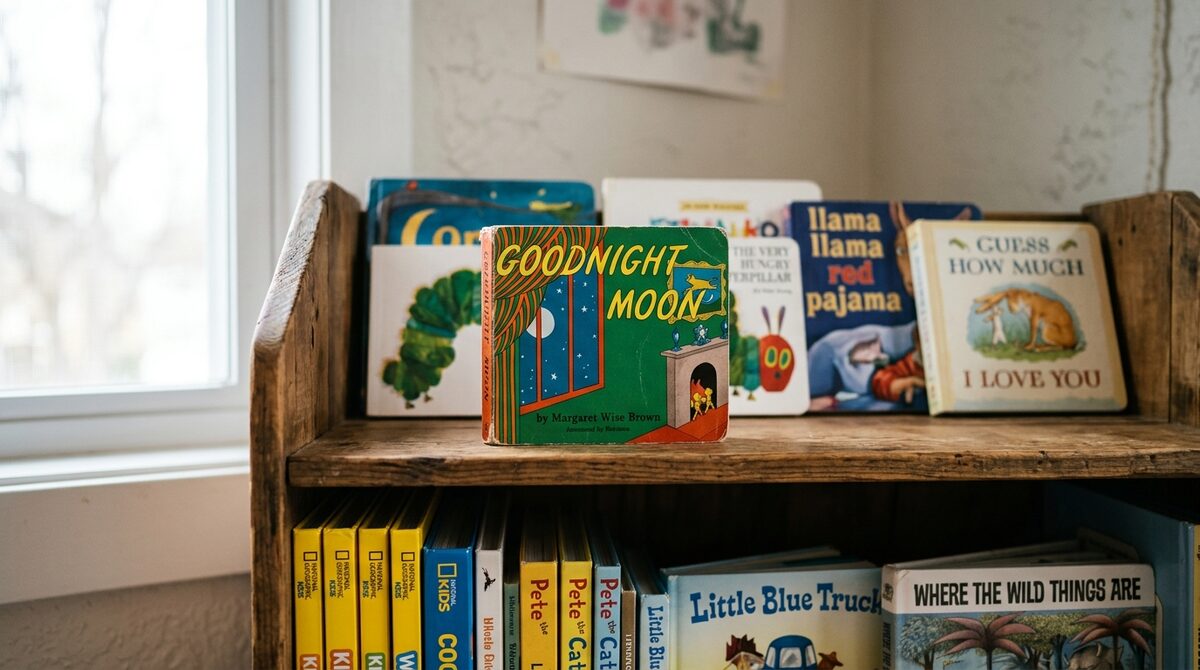

I have read this book somewhere in the neighborhood of four hundred times, and I can still feel my heart rate drop on the second page. That is not a figure of speech. There is something in the cadence of this thing that works on me the way warm milk is supposed to work and never actually does. I started reading it to my daughter when she was about eight months old, and I am now reading it to my son (four, technically aged out of it), who still occasionally requests it on the nights he wants to be small again. Both of my kids fell asleep to it. I have nearly fallen asleep reading it. My wife has fallen asleep listening to me read it. The book is a low-grade tranquilizer and I mean that as the highest compliment I am capable of giving.
Margaret Wise Brown figured out something most picture book authors never do, which is that you can just say less. The text is a rhyming poem that walks through a room and says goodnight to the things in it. Chairs. A comb. The air, which is a strange and wonderful thing to say goodnight to and which I think about more than is reasonable. There is a balloon. There are kittens. There is a quiet old lady whispering hush, and that hush has been doing more for the parents of this country than any sleep consultant on the internet. The whole arc moves from a fully lit room toward darkness, the colors dimming page by page as the night sky gets brighter through the window. The book is basically doing bedtime to your kid while you read it.
The 130-word magic trick
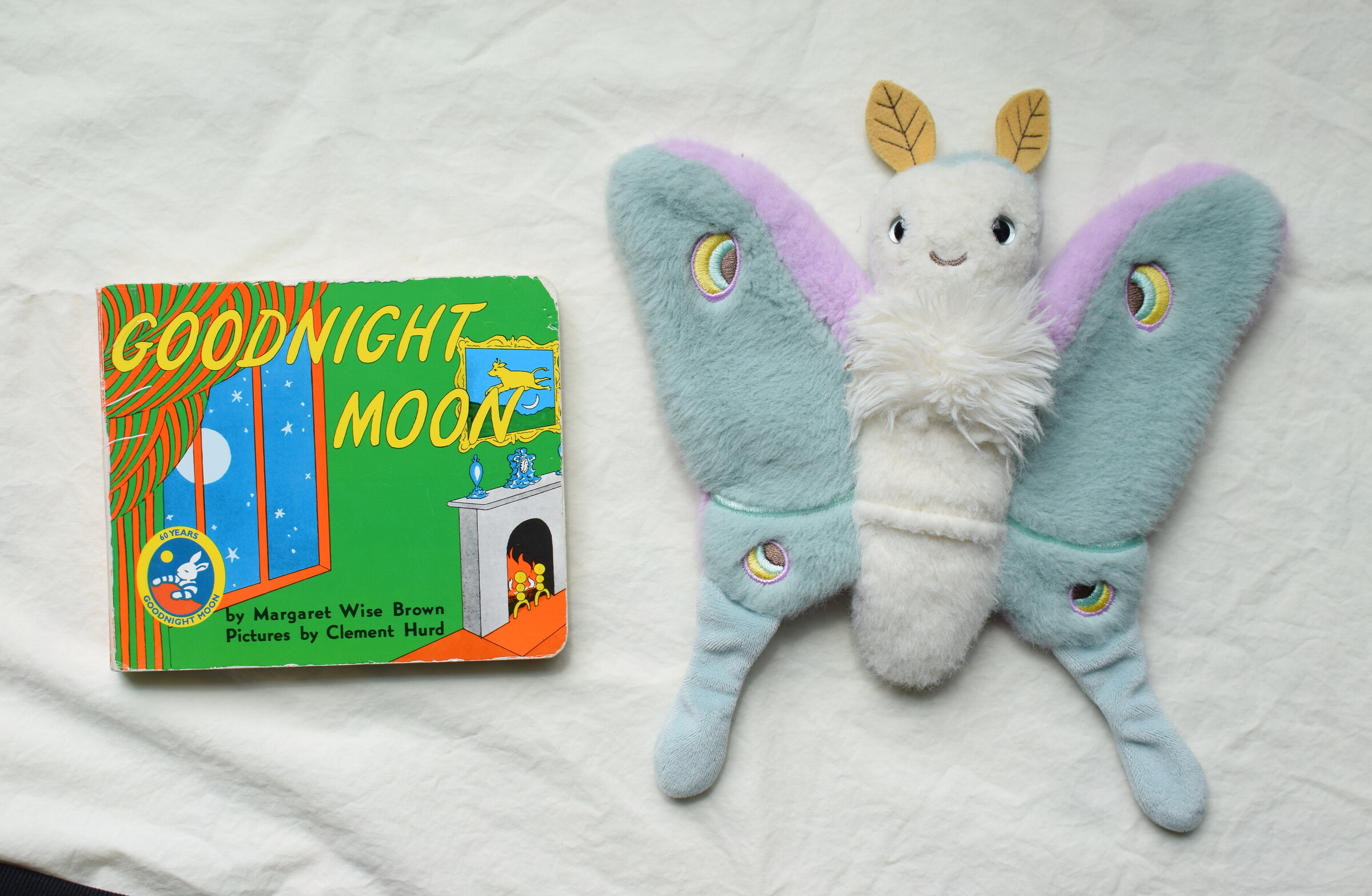
Moth appreciates the classics, though she finds the rabbit's nighttime routine rather leisurely compared to her own schedule.
People underestimate this book because it's short and the vocabulary is simple, and they confuse simple with easy. It is not easy. There are only about 130 words here, and you can't pull one out without the whole thing wobbling. There's a rhythm to it that you don't appreciate until you've read forty books that try the same thing and clatter all over the place like a drawer of silverware falling out of a cabinet. Brown writes in a slow, rocking cadence you can feel in your jaw. The rhymes are gentle, never forced, never reaching for a clever payoff. It refuses to be cute, which is rare and which I respect enormously.
As a read-aloud it is almost foolproof, with one caveat: you have to slow down. I do voices for everything, my kids will tell you, but this is the one book where the move is to do no voices at all. You just go quiet and low and let the pauses sit there. The two-page black-and-white spreads give your voice somewhere to rest, and the color spreads pull it back up. There's a reason it's the first book a million parents reach for and the book they don't resent on the tenth night running.
On re-reads it does not die, and I cannot overstate how unusual that is. Most board books are dead to me by reading number three. This one I have read hundreds of times across two kids and a decade, and it holds, partly because Hurd packed the great green room with details you can keep finding. The mouse hiding somewhere in every spread. The paintings on the wall that are scenes from another Brown and Hurd book. My daughter, who notices everything and says it like a courtroom verdict, pointed out the dimming colors to me before I'd ever consciously clocked them. She was maybe five. She said the room was "turning off." I have never described it better than that since.
Kid engagement at this age is mostly about settling, not laughing, and that's the bar this clears. My son, who at four is a creature of pure impulse and noise, goes still for this in a way he goes still for almost nothing. There's no big message to interrogate, and that's correct. There's no lesson. The feeling is the whole point: your room is your room, everything is where it was, and it's safe to fall asleep now. Honestly, some nights that message is for me.
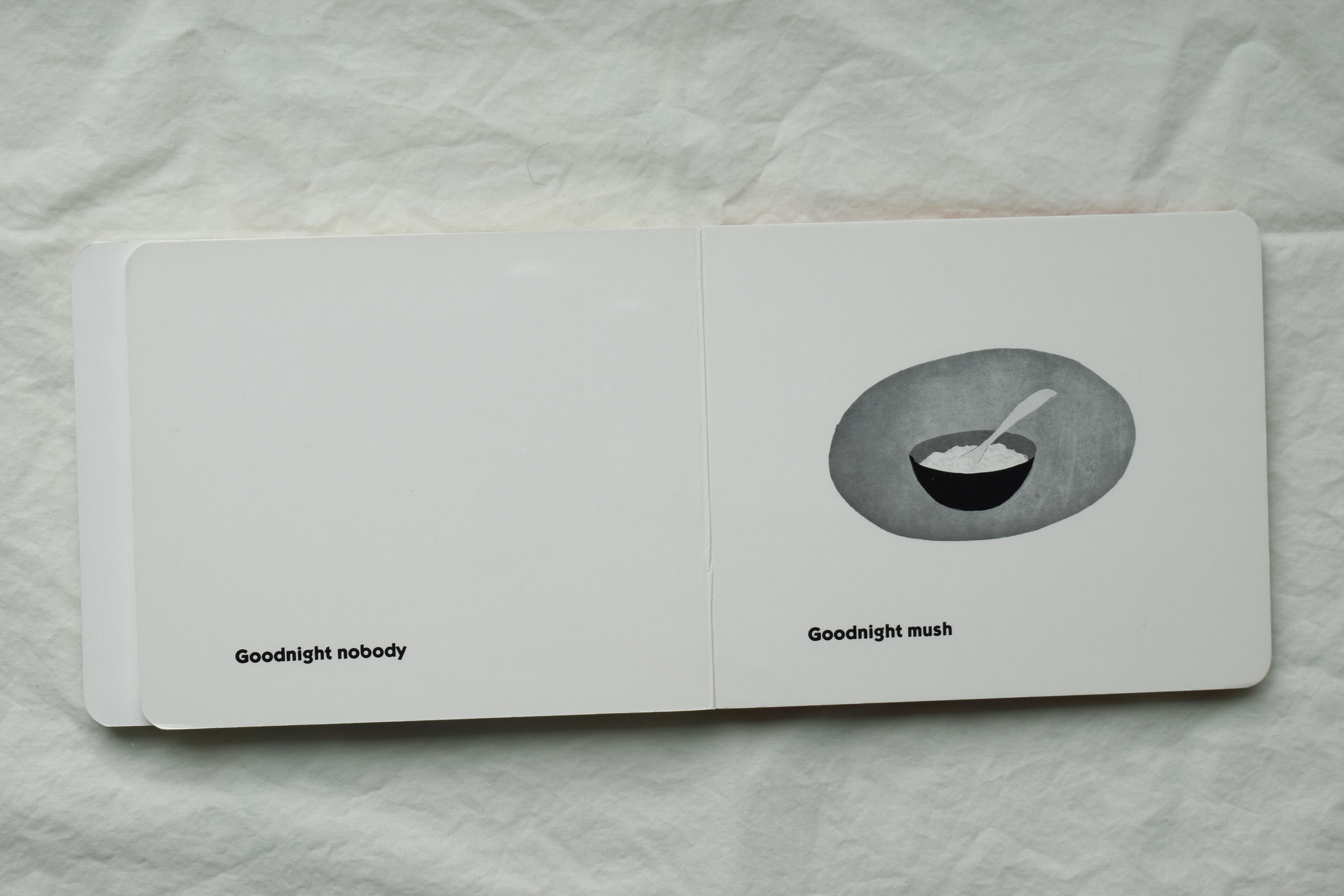
The minimalist spread with the stark white page on the left is so confident it borders on rude. My son stares at it every time like he's waiting for something to appear, and I love that the book just refuses to give him anything. Sometimes less is the whole joke.
Dad survival rate is off the charts, which sounds impossible for a book I've read this many times, and I keep trying to figure out why I'm not sick of it. I think it's because the book is on my side. Most books are working the kid up. This one is working with me. It is the rare bedtime book that treats the parent as a collaborator instead of an obstacle, and after a long day, that feels like being handed a chair.