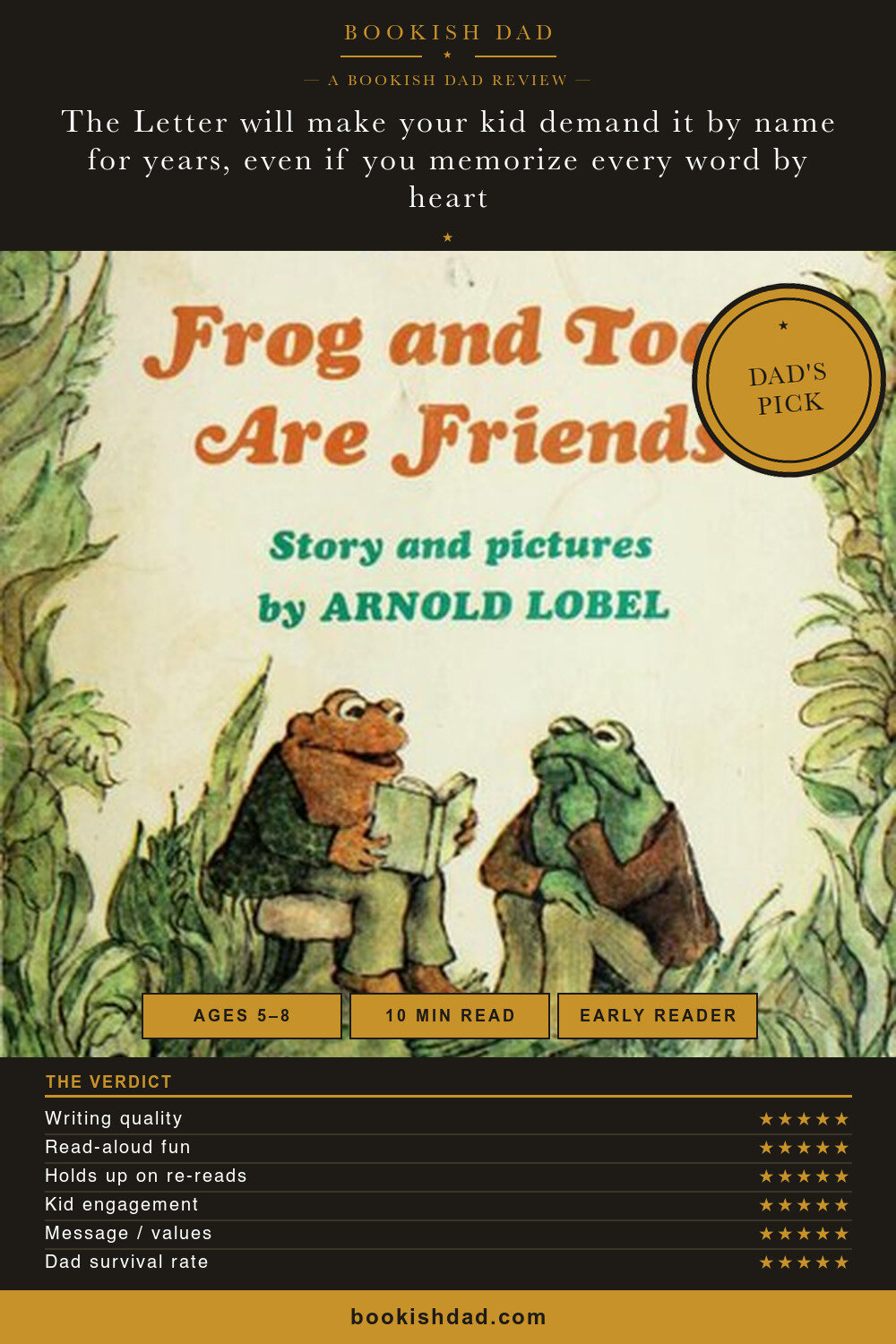

My daughter requests "The Letter" by name. She has done this since she was six, sitting cross-legged on the rug saying "the letter one, the letter one" in the exact tone other kids use for ice cream. I don't know what Arnold Lobel did in 1970 that still works on a kid more than fifty years later. Whatever it was, I'd like the publishing industry to look into doing it again.
What gets me about Frog and Toad is how it looks like nothing. You pick it up, you flip through it, and your brain registers: muted greens and browns, two amphibians, short sentences, lots of white space. You think, okay, fine, this will get us through the bedtime queue. Then you read it out loud and realize somebody built this thing sentence by sentence, on purpose, and never once talked down to anybody. Nothing is wasted. Lobel writes like a man who respects the reader, even if the reader is five and just learned what a "letter" is.
The prose is the whole point
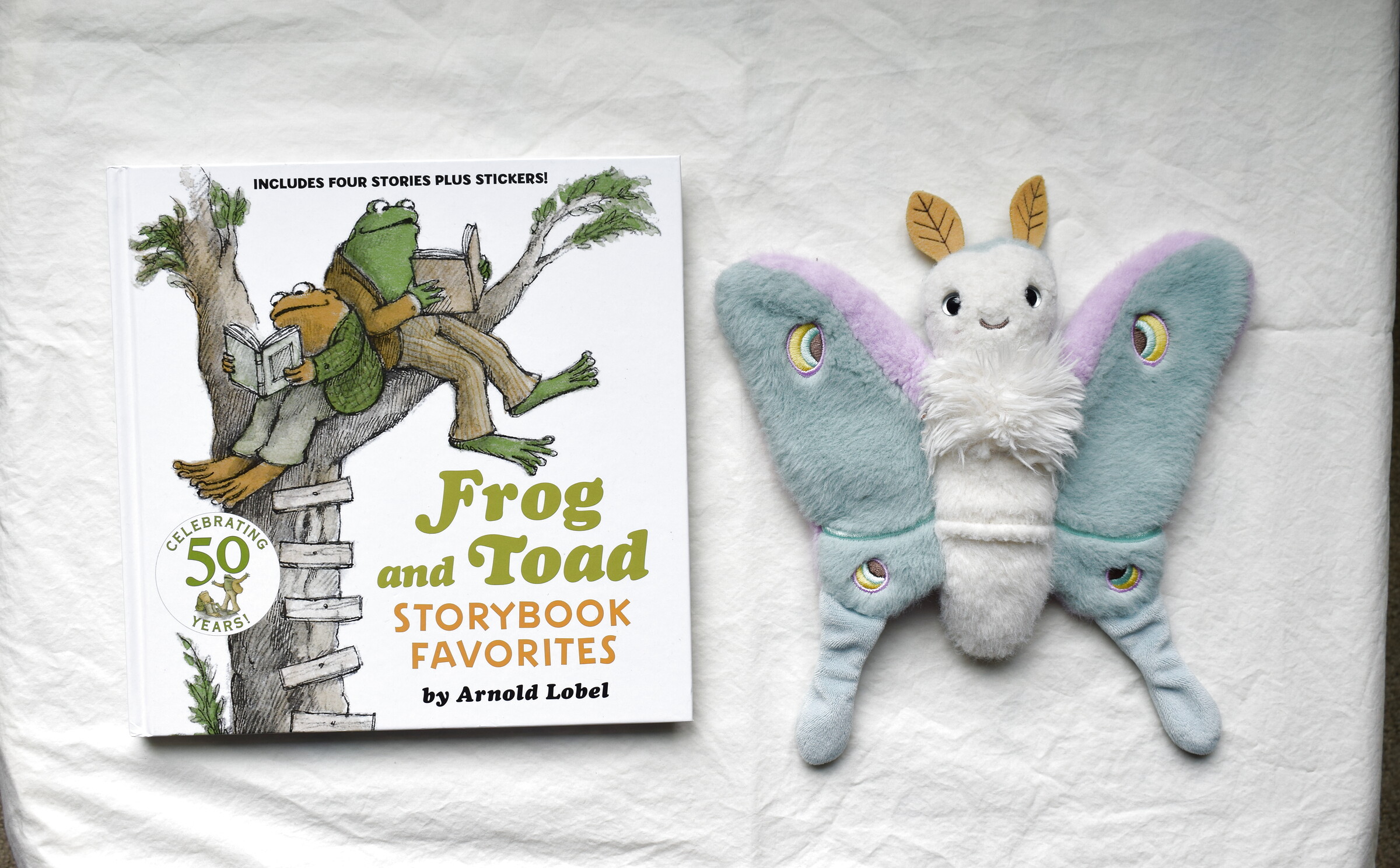
The amphibian friendship is touching, though Moth questions whether a plush arthropod fits the genre.
The sentences in this book are short, but they're timed, like Lobel knew exactly where a read-aloud parent would want to stop for a beat. So stop. Let Toad sigh. When Frog says something sincere, just say it plain (it would read like a Hallmark card in any other book, and somehow here it doesn't). Five tiny stories about buttons and mail and swimming, and they cover more emotional ground than most chapter books manage in two hundred pages.
I do voices. Of course I do voices. Frog gets a slightly higher, gentler register from me, a bit warmer; Toad gets a put-upon, slightly nasal grumble. My son, who is four and operates at one speed (full), actually slows down for this book. He doesn't ask me to do the giant voice. He doesn't throw it at the cat. He sits there and watches Toad's face on the page and waits to see what Frog is going to say. The level of focus is suspicious. I keep expecting him to ruin it. He doesn't.
Re-reads: the part where most books die
I have read this book a humiliating number of times. I have not gotten tired of it. That is the test. The Very Hungry Caterpillar I have read into a coma; I'm pretty sure I've been narrating it in my sleep for years. Frog and Toad does not do that to me. There's something about how the stories are sized. By the time you'd be sick of one, you're already on to the next, and by the time you've finished all five, your kid is ready to start over because each one feels like a complete small meal. The book respects your time, which in children's publishing is rare enough that I'd like the editor's name. I want to send a card.
The illustrations are the same colors as a damp autumn morning in the Pacific Northwest, which probably explains part of why I'm such a sucker for them, but it's more than that. The faces. Lobel can draw a frog raising one eyebrow, and you know exactly what's happening emotionally. Nothing in the art shouts or flashes at you. The pictures just sit there and let you look at them, and my daughter, the one who notices things, has pointed out details in those illustrations that I had read past a dozen times.
What it's actually teaching
Friendship books for kids usually have one of two problems. Either they're so saccharine you want to apologize to your kid for reading it, or they're so afraid of being saccharine that they end up being about nothing. Frog and Toad sidesteps both. The book is not preachy. It does not have a moral on the last page. It just shows you, over and over, two characters being patient with each other and slightly absurd and genuinely fond. My daughter, who does not emote freely, once said the word "nice" about Frog. That's the most ringing endorsement I've heard her give anything.
Is there anything to complain about? I've tried. I really have. The pacing of one of the stories drags a hair on read fifteen if you're tired. That's the worst thing I can come up with. I have to invent flaws.
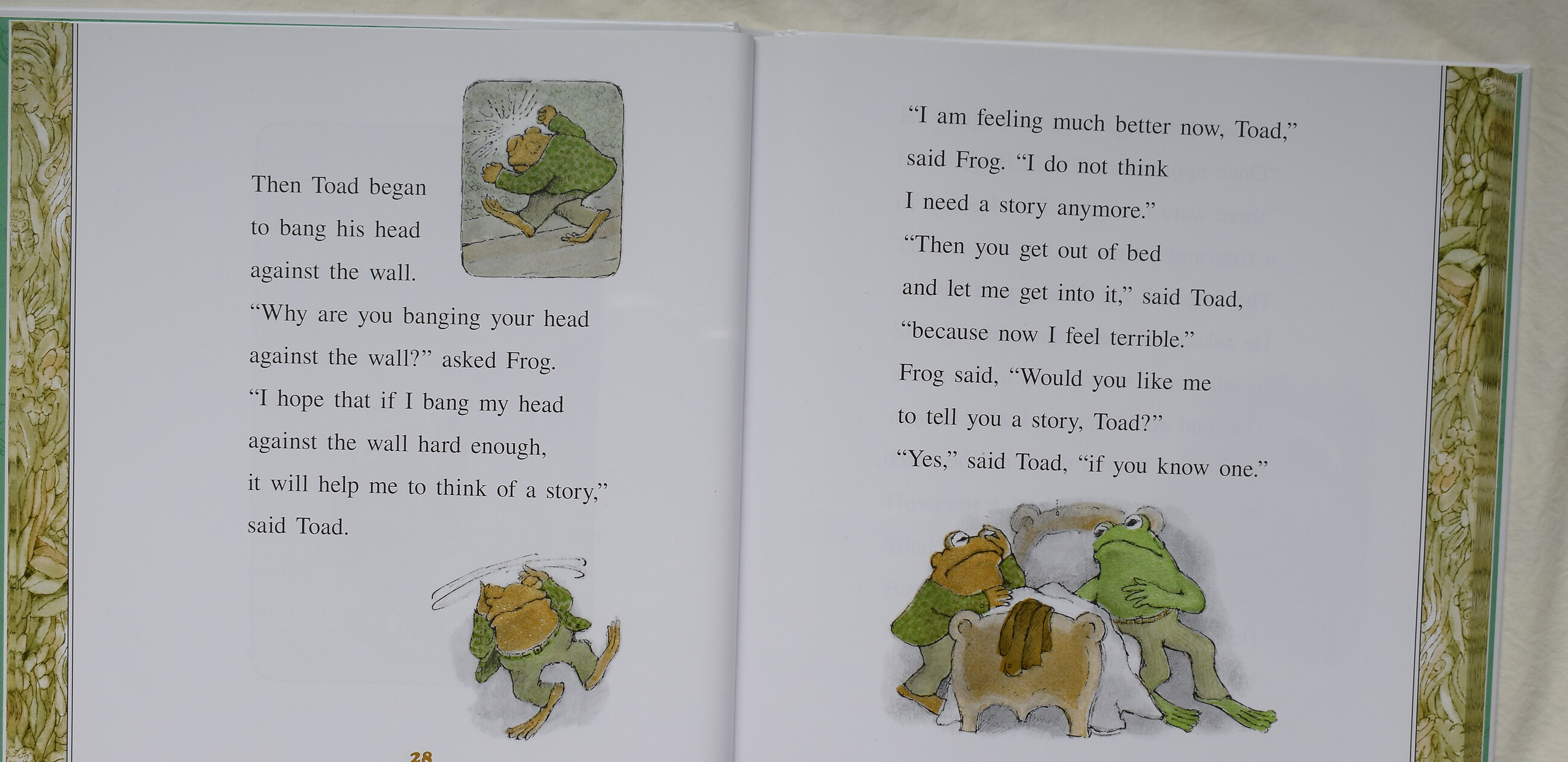
This spread captures the whole rhythm of Frog and Toad: one of them spiraling, the other steady and patient. The muted watercolors and that gentle back-and-forth dialogue remind me why these two still work on my kids when so many other "classics" don't land.
The book I never resent at 8pm
I will read this until my voice gives out and I will be happy to. That is not a sentence I write often on this blog. Usually I am calculating my survival window, doing the math on how many more rounds I can do before I crack and start reading the whole thing as one long dial tone just to entertain myself. With Frog and Toad I don't do that math. I just read it. Then I close it. Then someone asks for it again the next night, and we do it again.
This is the greatest friendship in children's literature, and that is not up for debate. It's a Dad's Pick. I don't hand those out lightly. If you don't own this book and you have a kid in the age range, fix that this week. Library, used bookstore, doesn't matter. Just get it into the rotation. You will thank me when you're not pretending to enjoy something for the eightieth time.