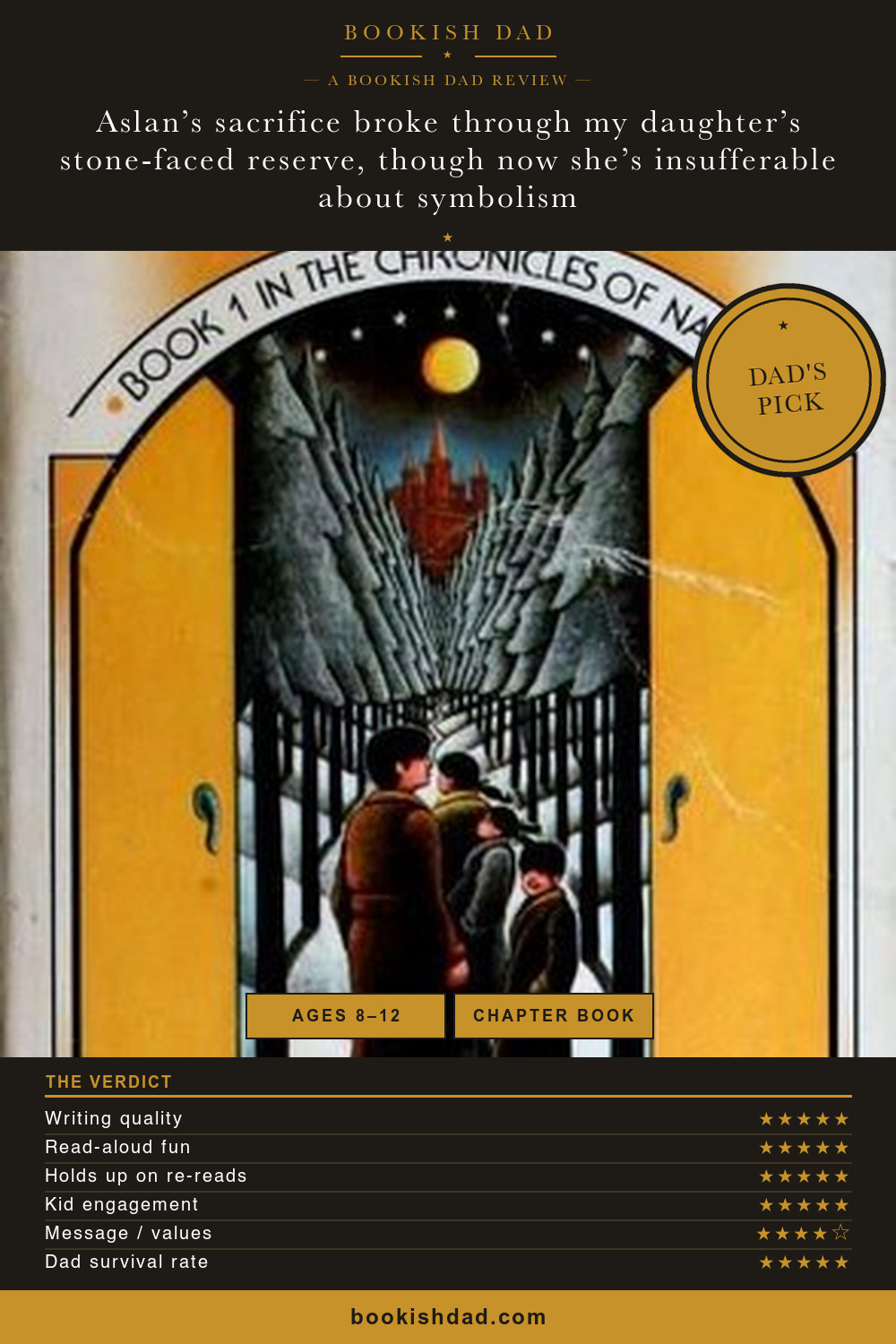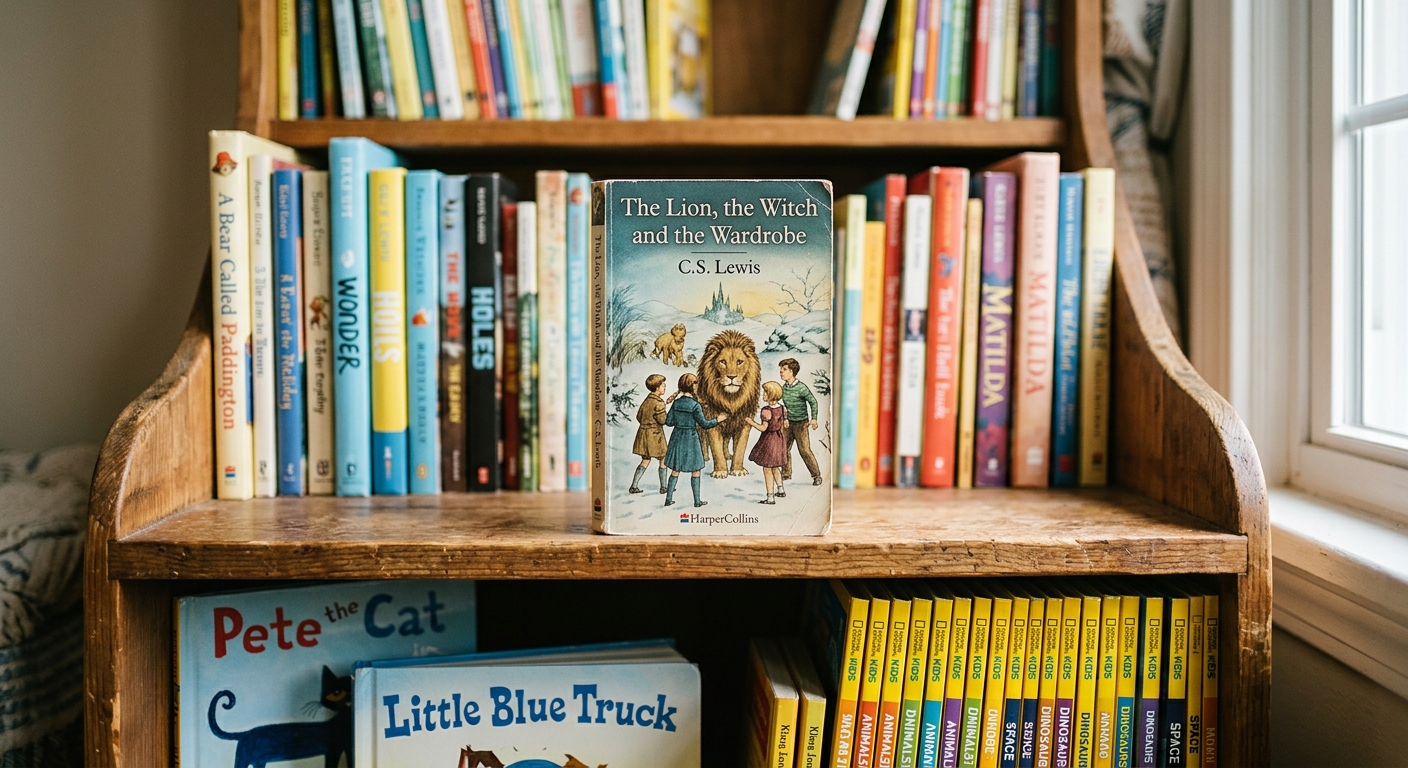

My daughter doesn't cry at books. She sat stone-faced through Charlotte's death. She told me "it's raining" when I wept at The Giving Tree. She caught the symbolism in Phantom Tollbooth before I did and delivered her observations like she was reading them off a grocery list. So when we got to the Stone Table chapter and I looked over to see actual tears on her face, I had to stop reading. Not because I was crying, though I was, but because I needed to confirm I wasn't hallucinating.
I read this book at her age. 1992, third grade, borrowed it from the library after finishing all the Roald Dahl I could find. I remember almost nothing about that first read except the feeling: that books could be bigger than I thought. That they could carry weight. I've reread it twice as an adult, once in college when I was trying to untangle the Christian allegory, once in my twenties when I wasn't. Both times it felt different. This time, reading it aloud to an eight-year-old, it felt like the first time again.
What Still Works After 75 Years
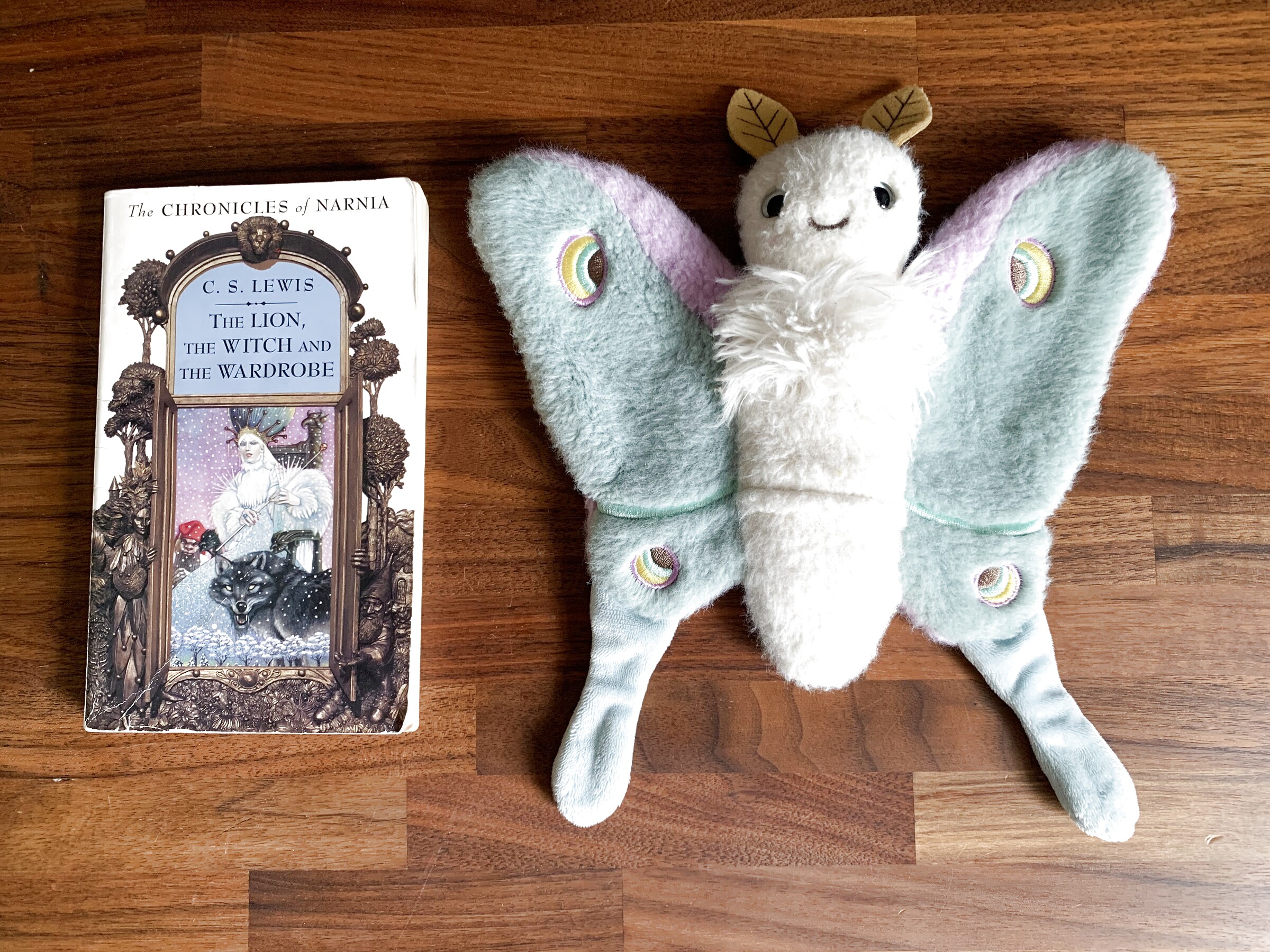
Moth observes that this book contains zero actual moths, which she finds professionally insulting.
The prose is almost invisible. Lewis writes like he's just telling you the story out loud, nothing fancy, and then every few chapters a sentence walks up and knocks the wind out of you. The sentences are short. The descriptions are specific enough to land but never bog down. You can read two chapters before your kid realizes twenty minutes have passed. It's the opposite of every fantasy doorstop published in the last thirty years that treats world-building like a competitive sport.
The pacing is shockingly modern. We're through the wardrobe by chapter two. Edmund's met the Witch by chapter four. Aslan shows up at the exact moment you'd start wondering if this book has a plan. There's no filler. Every chapter moves. I've read plenty of contemporary middle-grade that could learn from this.
And the stakes are real in a way that picture books can't touch and a lot of chapter books won't risk. The Witch turns creatures to stone. Edmund is an actual traitor, not a kid who made a mistake. He chooses the Witch even after he knows who she is. Aslan dies. You watch it happen. The execution scene is brutal. Lewis doesn't flinch. My daughter didn't either, until it was over, and then the tears came all at once.
The Christian Allegory Thing
Yes, it's there. Yes, it's obvious if you're looking for it. Aslan is a Christ figure. The Stone Table is Calvary. The deeper magic is resurrection. I knew all this going in. My daughter did not. And here's what surprised me: it didn't matter. She experienced it as story first, and the story is strong enough to carry its own weight without the scaffolding.
Lewis was a Christian writing for Christian kids in 1950, and the theology is baked in deep. But he's also a storyteller who knows that preaching kills narrative. The magic works because it follows its own internal logic. The sacrifice works because we've spent ten chapters with Aslan and we believe he's worth mourning. If you want to talk about the allegorical layer with your kid, the door's open. If you don't, the book doesn't require it.
I didn't bring it up. My daughter noticed the parallel on her own two days later and said, "Oh. That's why they call it the Stone Table." And that was it. She filed it away and went back to her cereal.
What Hasn't Aged As Well
Susan gets done dirty by this series. Not in this book specifically (she's brave here, she fights, she gets a bow and horn and uses both), but knowing where Lewis takes her character in the later books casts a shadow backward. The moment Father Christmas tells her "battles are ugly when women fight" made my jaw tighten. It's one line. It's also 1950 showing its whole self.
Edmund's betrayal is driven by Turkish delight, and the Witch's ability to manufacture it magically, which... fine. It's a fairy tale. But my daughter asked why he kept going back after the first visit, and the book doesn't quite earn it. He's jealous of Peter, he's angry at Lucy, he wants to be important. Lewis sketches the psychology, but thinly. It works better if you don't think about it too hard.
And the ending is weird. The kids grow up, rule for years, hunt a white stag, stumble back through the wardrobe, and boom, children again, no time has passed. My daughter said, "Wait, what?" I said, "Yeah." Lewis is playing with fairy-tale time rules, and it makes thematic sense, but it's also abrupt in a way that feels like he ran out of pages.
Reading It Aloud
This book was built for reading aloud. The chapters are short, ten to fifteen minutes each. The dialogue is crisp and easy to voice. I did a different register for each character without thinking about it: the Beavers got folksy, the Witch got cold, Aslan got the biggest voice I have. My four-year-old wandered in during chapter ten, heard me do Aslan's roar, and now requests "the giant voice" every night even though he has no idea what's happening.
The descriptions are sensory in a way that makes them easy to picture. Crunching through snow. The lamppost glowing in the dark. The Witch's sledge. My daughter closed her eyes during the coronation scene and I could tell she was seeing it.
There's one chapter, the one after the Stone Table, that I had to read twice because I broke down halfway through the first time. My daughter waited. Then she said, "Try again." I did. She cried too, the second time. We didn't talk about it. We just kept reading.
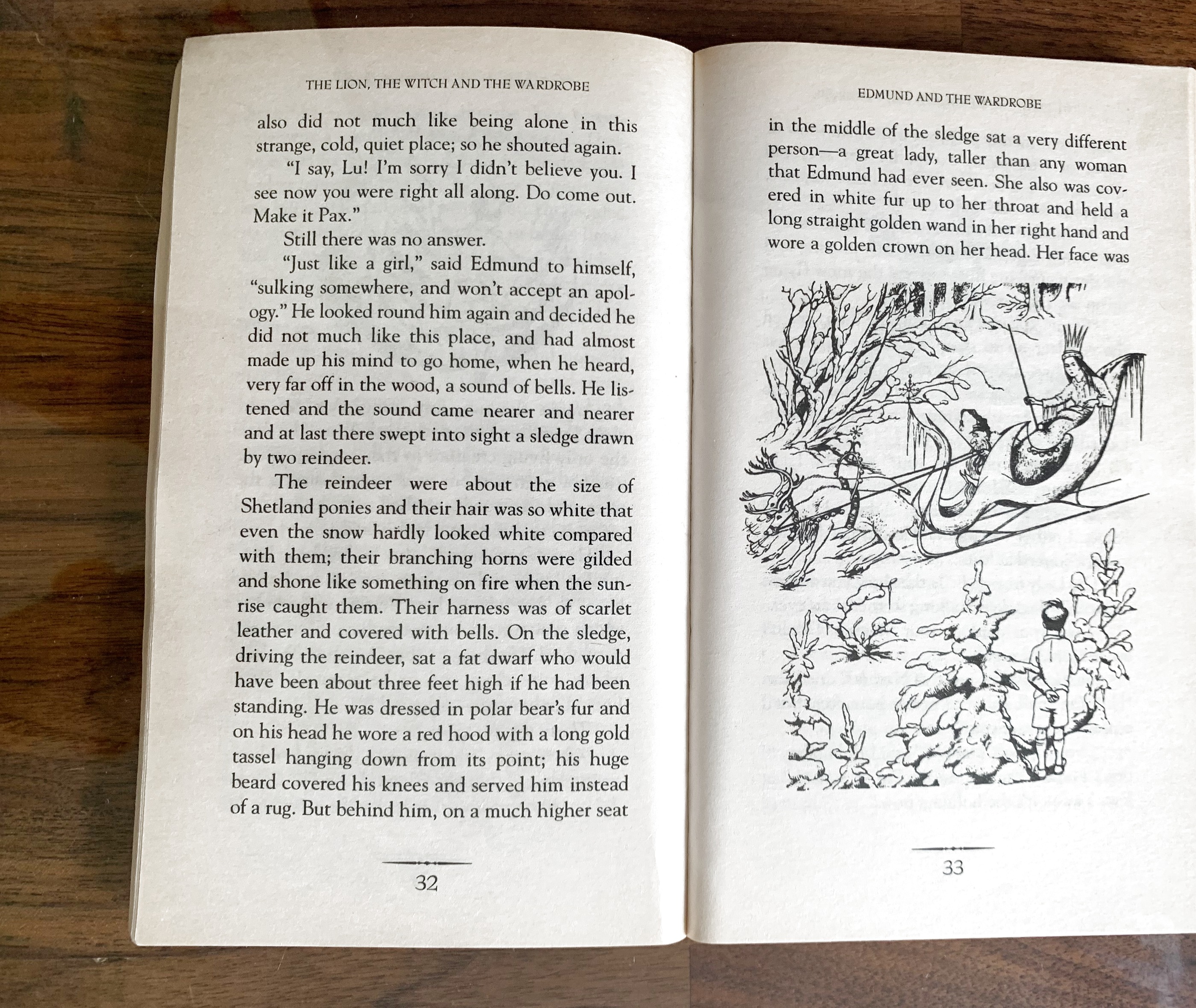
I picked this spread because it's Edmund's first encounter with the Witch, and the illustration does that specific thing where the sledge feels grand and theatrical while the boy at the bottom looks so small and alone. The wrongness of the whole bargain starts right here.
The Bigger Picture
This is the book that opened the door. Not just the wardrobe (though that's the central metaphor and it's perfect), but the door to a certain kind of story, where the world is broken and kids get pulled in to help save it, and the sacrifices along the way actually cost something. Every portal fantasy since 1950 is in conversation with this book whether it knows it or not.
I grew up on this. My daughter's growing up on it now. In thirty years, if she reads it to her own kid, it'll still work. What else do you even call that, if not a classic?
Five stars. And if you ask my daughter about the tears, she will tell you it was raining.