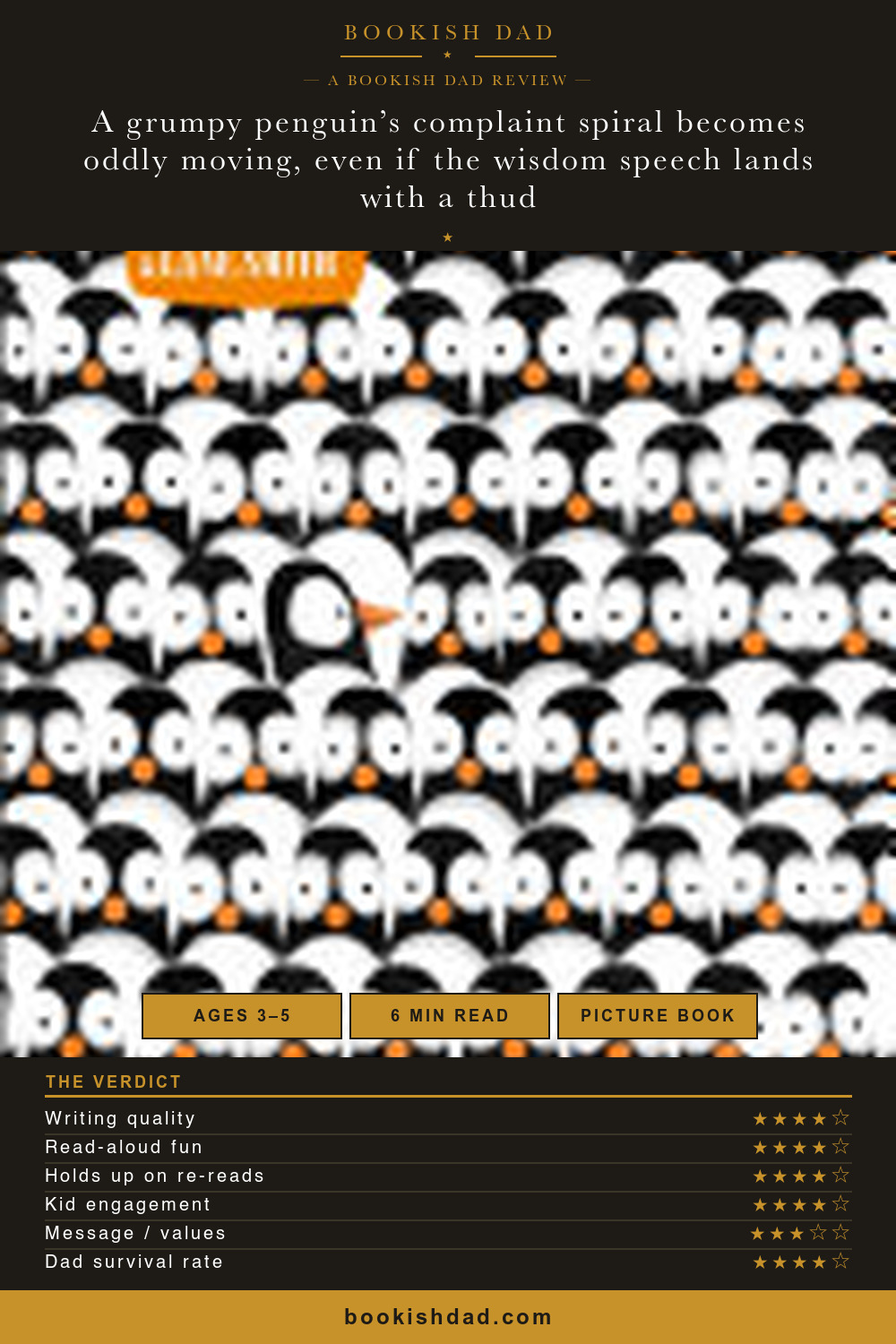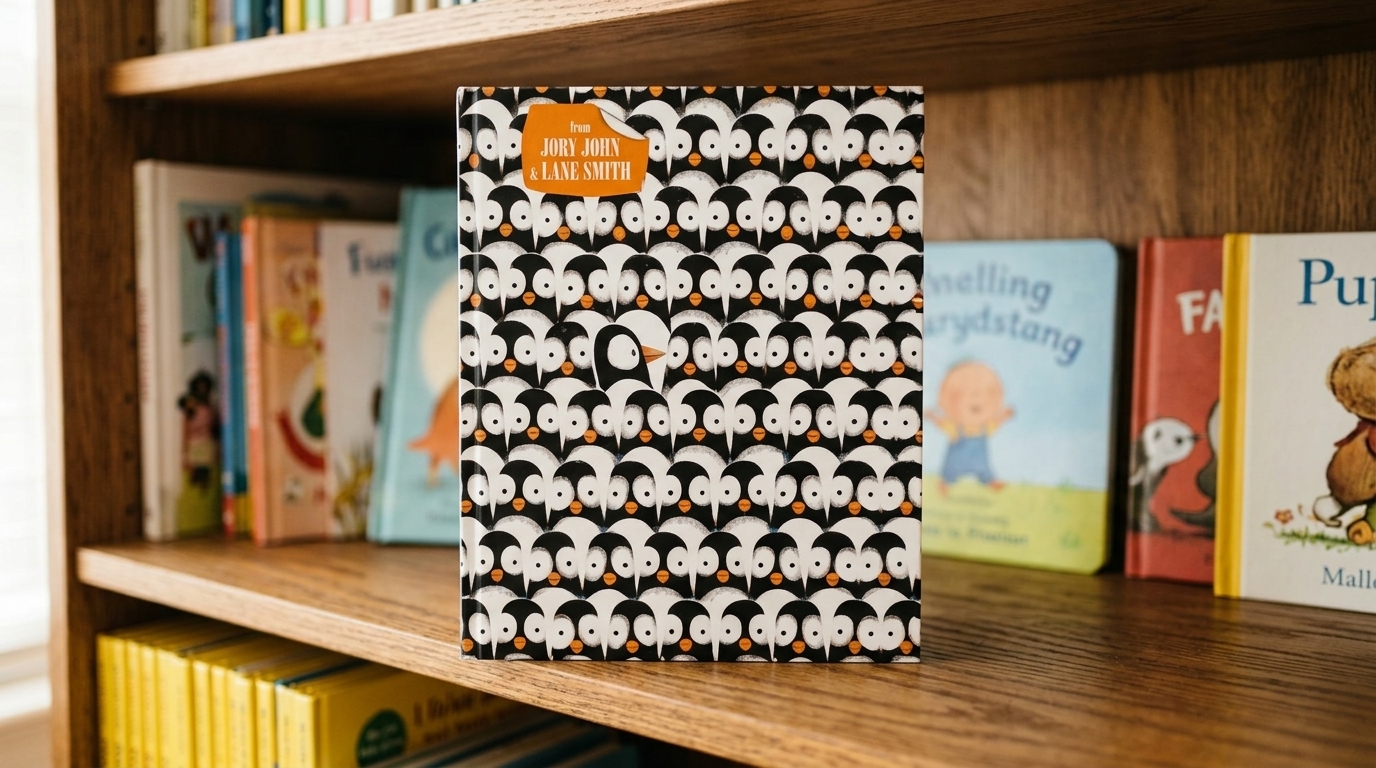

Penguins sell books. This is a thing I have learned not by reading marketing reports but by standing in a library with two children who saw a penguin on a cover and started negotiating like hostage takers. I did not check a single review. I did not crack the book. I threw it in the bag and hoped for the best, which is my general parenting strategy and also my approach to checking the oil in the car.
We got home. We opened it. Oh. It's a grumpy penguin. Of course it's a grumpy penguin.
The Grumpy Animal Industrial Complex
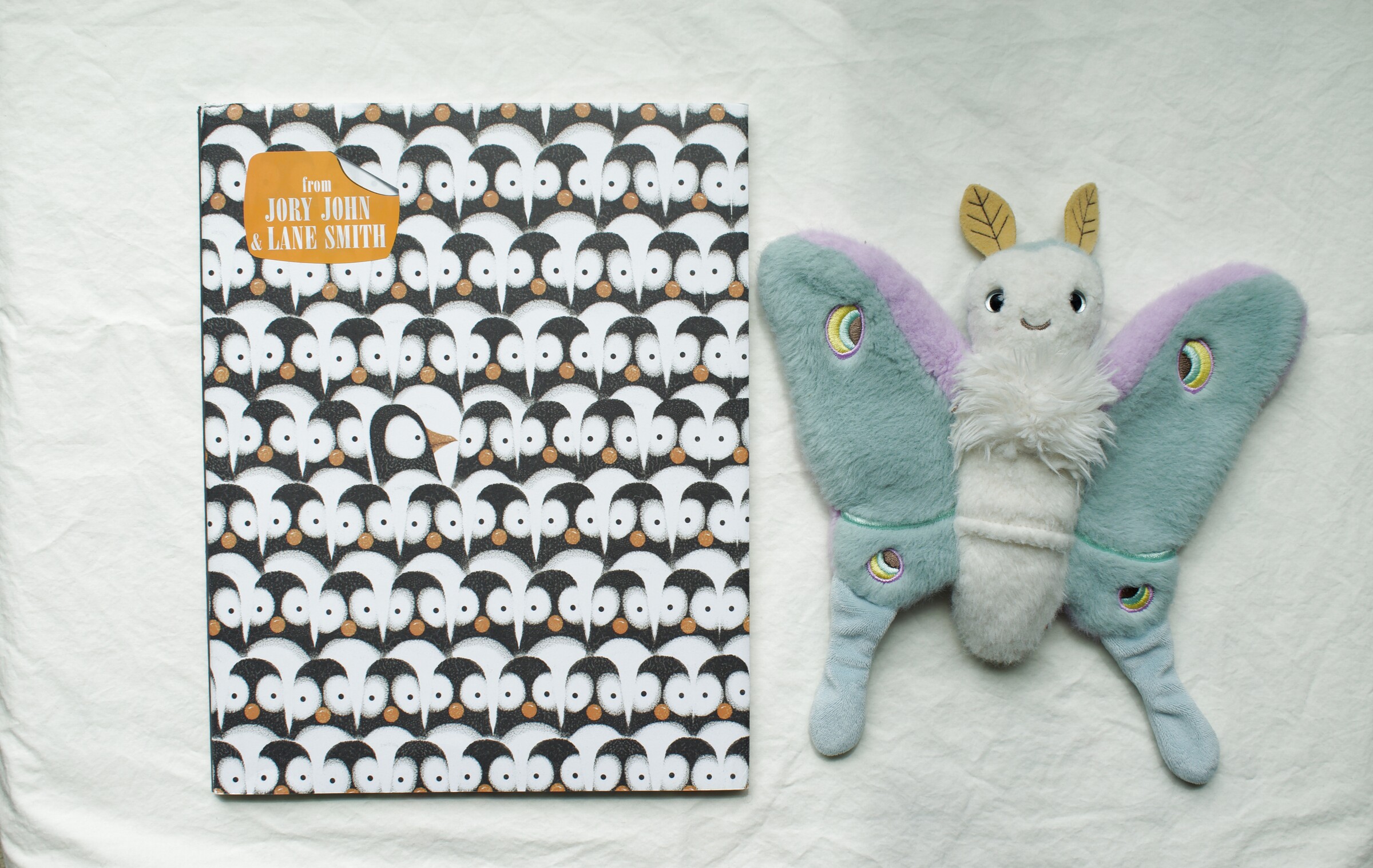
Moth needed both wingspans to size this one up. A hefty read-aloud that demands two hands and the kind of conviction only a plush creature with rainbow eyes can muster.
Somewhere in the last fifteen years, the picture book industry collectively decided that animals had been too cheerful for too long, and now every other new release is a small mammal with a deadpan complaint. I get it. The relentless sunshine of the books I grew up with had a kind of preschool-teacher energy that could curdle if you weren't in the mood. But the pendulum has swung, and we are deep into the era of the sighing protagonist. So I sat down with my kids fully prepared to be unimpressed.
And then the book sort of got me. Not all the way. But a good way.
Jory John's writing is tight. There's a real rhythm to the complaining, and the complaints stack on each other in a way that builds a small comic engine. It's not just one joke repeated; it's the same joke turned slightly each time until you've accidentally learned something about a character. That's actual craft. I am not going to pretend I didn't notice it. The sentences are short and dry, and they leave room for Lane Smith's art to do half the work, which it does. The illustrations have that scratchy, slightly grouchy texture Smith does so well, where even a clean snowdrift looks faintly annoyed. The pairing is genuinely good, and I will not be a hater about it.
Read-Aloud, Or: I Now Have A Penguin Voice
Here is where the book earns its keep. You cannot read this book in your normal voice. You will not. Your mouth won't let you. Within two pages I had developed a put-upon, mid-Atlantic, slightly damp penguin voice that I now cannot get rid of. My son demanded it on the second read. My daughter (eight, stoic to a fault) did one of her tiny mouth-twitches that means she finds something funny and refuses to be on record about it.
The protagonist is never named, which somehow fits a creature whose entire personality is "I would like to file a complaint." There is, however, a side penguin called Mortimer, who introduces himself flatly when our hero mistakes him for his dad, and Mortimer is my guy. I respect Mortimer. If you do voices when you read aloud (and you should, no exceptions), this book hands you a gift.
The Wise Animal Speech Problem
My one real reservation. The book leans, at a key moment, on the wise-older-animal-delivers-a-monologue device, and I have never seen that device fully work in a picture book. Common Sense Media flagged it too, in slightly more diplomatic language. It lands heavier than the rest of the book because the rest of the book is so light. You can feel the gear shift. The page after the speech recovers, and the ending has the right amount of you-can-lead-a-penguin-to-water-but. Still. The speech sits there like a guest who showed up in a tie when everyone else is in pajamas.
I'd argue it's saved by the fact that the book doesn't let the speech "fix" the penguin in any clean, treacly way. There's an honesty to that I appreciate. A book that pretended a grump had been cured by one good talk would be a much worse book. This one knows better.
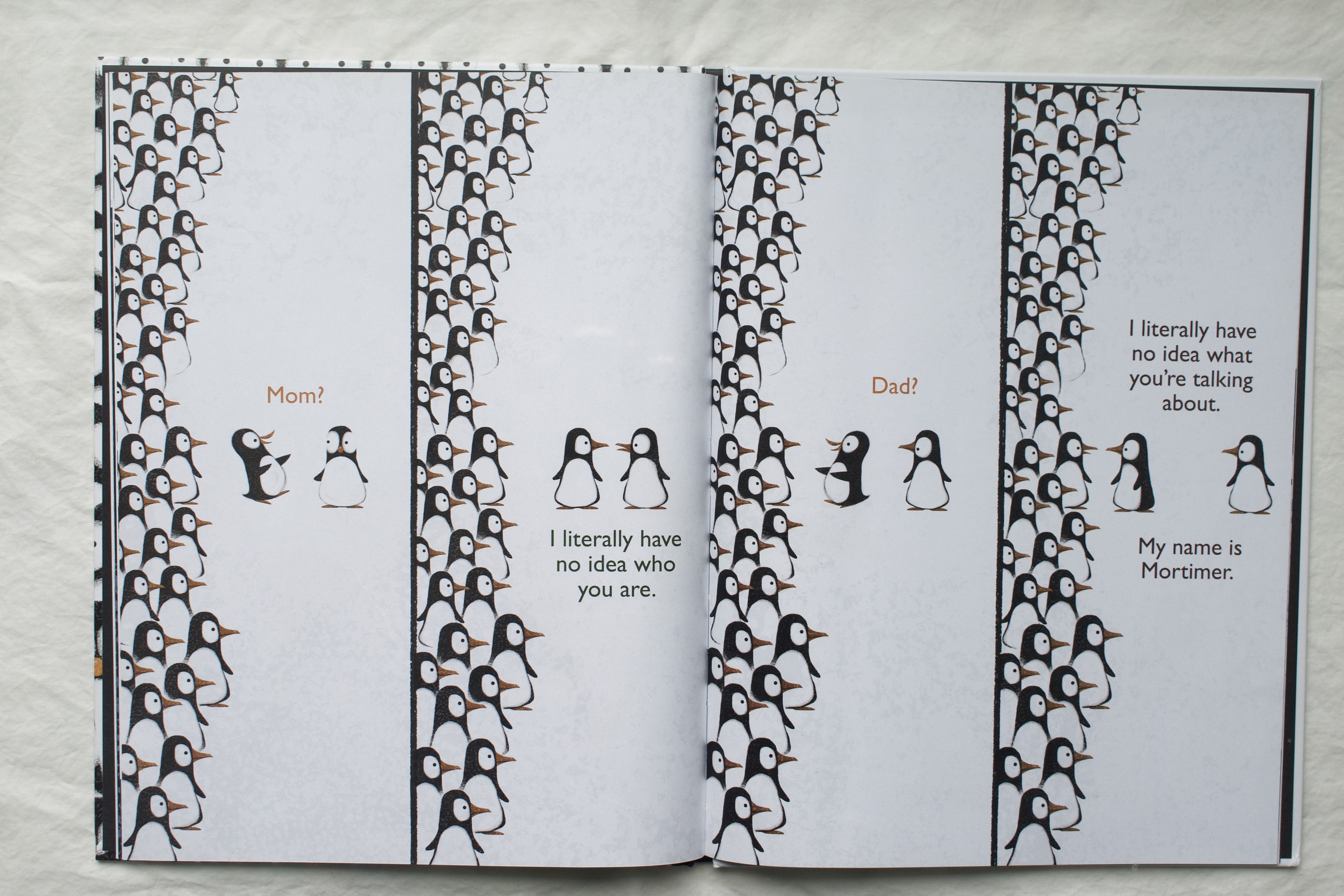
I'm choosing to ignore the fact that this penguin apparently can't identify his own parents, and instead I'm here for Mortimer, who just says his name instead of pretending. That level of no-nonsense honesty is rare in a crowd this big.
Does It Survive Read #15?
This is the question I always come back to, because my son is the kind of kid who finds a book he likes and demands it nightly until you can recite it in the shower. He has not done that with this one, which is actually a point in the book's favor. It is a pleasant rotation book. It comes off the shelf maybe once a week, gets a laugh, and goes back. It doesn't dominate. It doesn't burn out. I've read it enough times to have feelings about it and not enough times to resent it, which is the picture book sweet spot.
What is the book teaching? Not much, and that's correct. It is gently suggesting that other people have problems too, and that complaining is, on some level, a choice. I don't mind my kids absorbing that. It does not shove it down their throats. It plays the message for the joke first and lets the lesson sit underneath, where lessons belong. The four-year-old probably caught about thirty percent of the irony, which means he laughed at the right moments without knowing why, which is the correct preschooler experience of a book like this.
My survival rate is solid. I can do back-to-back reads of this without my voice flattening into late-night golf announcer, which is where I end up when a book has broken me. I'd put Penguin Problems in the category of "books I'm glad we own that I would not have bought on purpose." Sometimes the penguin on the cover knows what it's doing.